


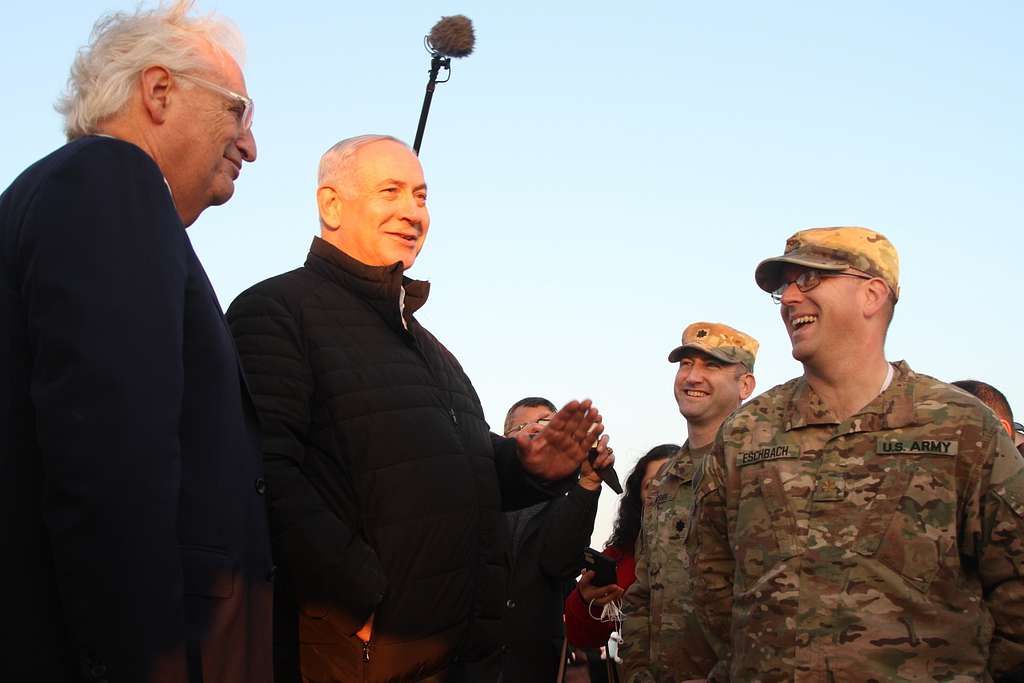
Israeli Prime Minister Benjamin Netanyahu has strongly criticized recent remarks directed at the Chief of Staff of the Israel Defense Forces (IDF), describing them as “shameful” and warning against escalating internal incitement within Israeli society.
The comments were made following reported statements in Bnei Brak, a city known for its large ultra-Orthodox (Haredi) community, where criticism was allegedly directed at senior military leadership, including the IDF Chief of Staff.
🇮🇱 Strong Defense of the Military Leadership
In his statement, Benjamin Netanyahu emphasized that while disagreements exist within Israeli society, there must be clear boundaries when it comes to respect for national institutions.
He stated that there is:
- No place for severe incitement against the IDF
- No justification for attacks on military commanders
- A need to protect unity during sensitive national times
The Prime Minister specifically defended the role of the IDF Chief of Staff, highlighting the military’s responsibility in safeguarding the country.
🪖 The Role of the IDF in Israeli Society
The Israel Defense Forces (IDF) are widely regarded as one of the most central institutions in Israel, responsible for national defense, security operations, and emergency response.
The Chief of Staff, as the highest-ranking military officer, plays a critical role in:
- Strategic military planning
- Operational command
- Coordination across defense branches
- National security decision support
Because of this central role, public criticism of the IDF leadership often becomes politically sensitive.
⚠️ Concerns Over Internal Incitement
The Prime Minister’s remarks reflect broader concerns within Israel about rising internal tensions, particularly between different social and political groups.
Key concerns highlighted in recent debates include:
- Increasing polarization in political discourse
- Tensions between secular and religious communities
- Public criticism of military leadership during ongoing security challenges
- The risk of incitement undermining national cohesion
The statement from Benjamin Netanyahu aims to reinforce a message of restraint and unity.
🏙️ Context of Bnei Brak
Bnei Brak is one of Israel’s most prominent ultra-Orthodox cities and has often been at the center of discussions involving military service obligations, religious identity, and state policies.
Disputes between government institutions and segments of the Haredi community have occasionally led to public tensions, particularly on issues related to conscription and national service.
🤝 Call for Unity Amid Disagreements
Despite political and social differences, the Prime Minister’s message stressed that criticism must not cross into incitement, especially against individuals serving in sensitive national security roles.
His statement reflects a broader call within Israeli leadership for:
- Maintaining respect for security institutions
- Avoiding inflammatory rhetoric
- Preserving national unity during conflict and uncertainty
✨ Conclusion
The condemnation by Benjamin Netanyahu highlights ongoing tensions within Israeli society but also reinforces a strong institutional message: disagreement is acceptable, but incitement against the military leadership is not.
As debates continue within Israel over politics, security, and social divisions, the emphasis on unity and respect for the IDF remains a central theme in national discourse.