


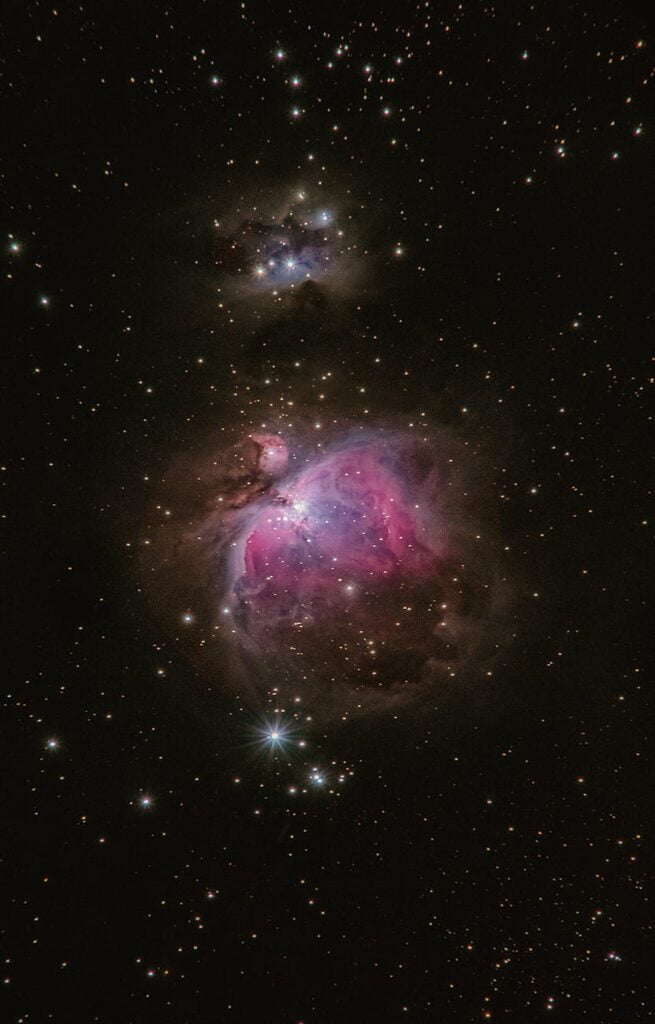
Sky enthusiasts have plenty to look forward to this July as the night sky presents a series of remarkable astronomical events. From a graceful meeting of the Moon and a planet to the appearance of a visiting comet and stunning views of Saturn and the Milky Way, the month promises memorable observing opportunities for both experienced astronomers and casual stargazers.
Many of these celestial sights can be enjoyed without specialized equipment, making July an ideal time for families, students, and photography enthusiasts to spend an evening under the stars.
Moon and Planet Share the Evening Sky
One of the month’s highlights is a lunar-planetary alignment, where the Moon appears close to a bright planet from Earth’s perspective. Although the two objects remain separated by millions of kilometers in space, their apparent proximity creates a striking visual display.
These alignments are among the easiest astronomical events to observe because the Moon serves as a convenient guide for locating nearby planets. Depending on local weather and viewing conditions, the event can be appreciated with the naked eye, while binoculars reveal even greater detail.
A Comet Makes a Rare Appearance
Another exciting attraction is the arrival of a visiting comet, offering skywatchers a chance to observe one of the Solar System’s most fascinating travelers.
Comets are often described as cosmic time capsules because they preserve ancient material left over from the formation of the Solar System billions of years ago. As they approach the Sun, heat causes ice within the comet to vaporize, producing a glowing coma and, in some cases, a spectacular tail stretching across the night sky.
Brightness can vary depending on the comet’s distance from both the Sun and Earth, making each appearance unique.
Saturn Returns to the Spotlight
The ringed giant Saturn also becomes a major attraction during July. Rising higher into the night sky, the planet becomes easier to locate and observe for longer periods before sunrise.
Even small backyard telescopes can reveal Saturn’s famous rings, while larger instruments may show several of its moons and subtle cloud bands surrounding the planet. For many amateur astronomers, Saturn remains one of the most rewarding objects to observe because of its unmistakable beauty.
The Milky Way Shines Across Dark Skies
July is also one of the best months to admire the Milky Way, our home galaxy. Under dark, clear skies away from city lights, the Milky Way appears as a broad, luminous band stretching across the heavens.
The glowing ribbon consists of the combined light of billions of distant stars, along with clouds of gas and dust that form part of our galaxy’s spiral structure. Summer nights provide especially favorable viewing conditions in many parts of the world.
Astrophotographers often take advantage of July’s clear evenings to capture breathtaking images of the Milky Way arching above mountains, forests, deserts, and lakes.
Tips for an Enjoyable Skywatching Experience
Observers can improve their viewing experience by choosing locations with minimal light pollution, allowing their eyes to adjust to the darkness for at least 20 minutes, and checking local weather forecasts for clear skies. Binoculars can enhance views of the Moon, comet, and star fields, while telescopes offer more detailed observations of Saturn.
Smartphone astronomy apps and star charts can also help identify planets, constellations, and other celestial objects throughout the month.
A Month Filled with Cosmic Wonders
July’s combination of planetary alignments, a visiting comet, brilliant views of Saturn, and the dazzling Milky Way offers something for every astronomy enthusiast. Whether watching from a backyard, a countryside field, or a mountaintop, skywatchers have numerous opportunities to connect with the universe and witness the beauty of the night sky.
As darkness falls throughout the month, the heavens will provide a natural spectacle that reminds us of the vast and ever-changing wonders beyond our planet.