


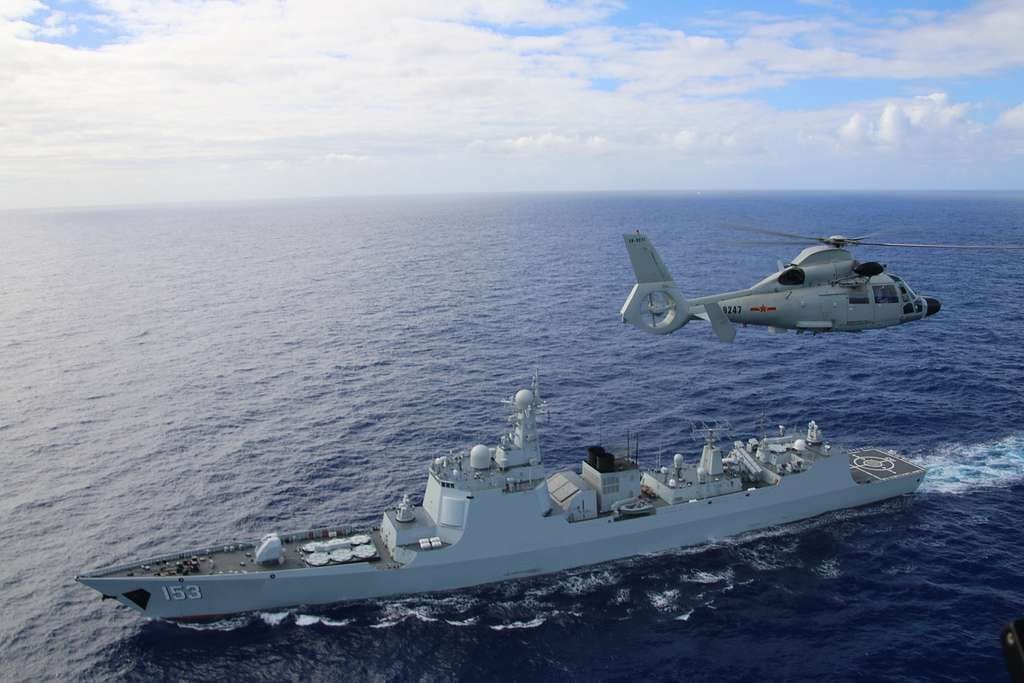
Taipei, Taiwan – Tensions across the Taiwan Strait have once again intensified as China continues to exert military pressure around Taiwan, prompting heightened vigilance from the island’s defense forces. On Saturday, Taiwan’s Ministry of National Defence (MND) reported detecting four Chinese military aircraft and six naval vessels from the People’s Liberation Army Navy (PLAN) operating near Taiwanese waters.
Out of the four aircraft detected, three reportedly crossed the sensitive median line in the Taiwan Strait—an unofficial boundary that traditionally helps prevent direct confrontation. These aircraft entered Taiwan’s northern Air Defense Identification Zone (ADIZ) during the early morning hours, prompting a swift monitoring and response effort from Taiwan’s military.
This latest incursion follows a larger operation reported just a day earlier, when Taiwan tracked 29 Chinese aircraft and six naval ships. These back-to-back military movements point to Beijing’s intensified strategy to reinforce its sovereignty claims over Taiwan. Under its “One China” policy, China regards Taiwan as an inseparable part of its territory and has not ruled out the use of force for reunification.
Despite these provocations, Taiwan maintains its autonomy, having operated with its own elected leadership since the end of the Chinese civil war in 1949. In response to the growing pressure, President Lai Ching-te recently instructed the Taiwanese armed forces to strengthen their surveillance systems and remain alert.
This sustained military presence not only escalates regional tension but also poses a risk of miscalculation in an already fragile Indo-Pacific landscape. With geopolitical stress rising globally, particularly in the Middle East, the situation surrounding Taiwan continues to draw concern from international observers.
Taiwan remains steadfast in defending its democratic values, even as Chinese military maneuvers persist just beyond its borders—an enduring flashpoint in East Asian geopolitics.