


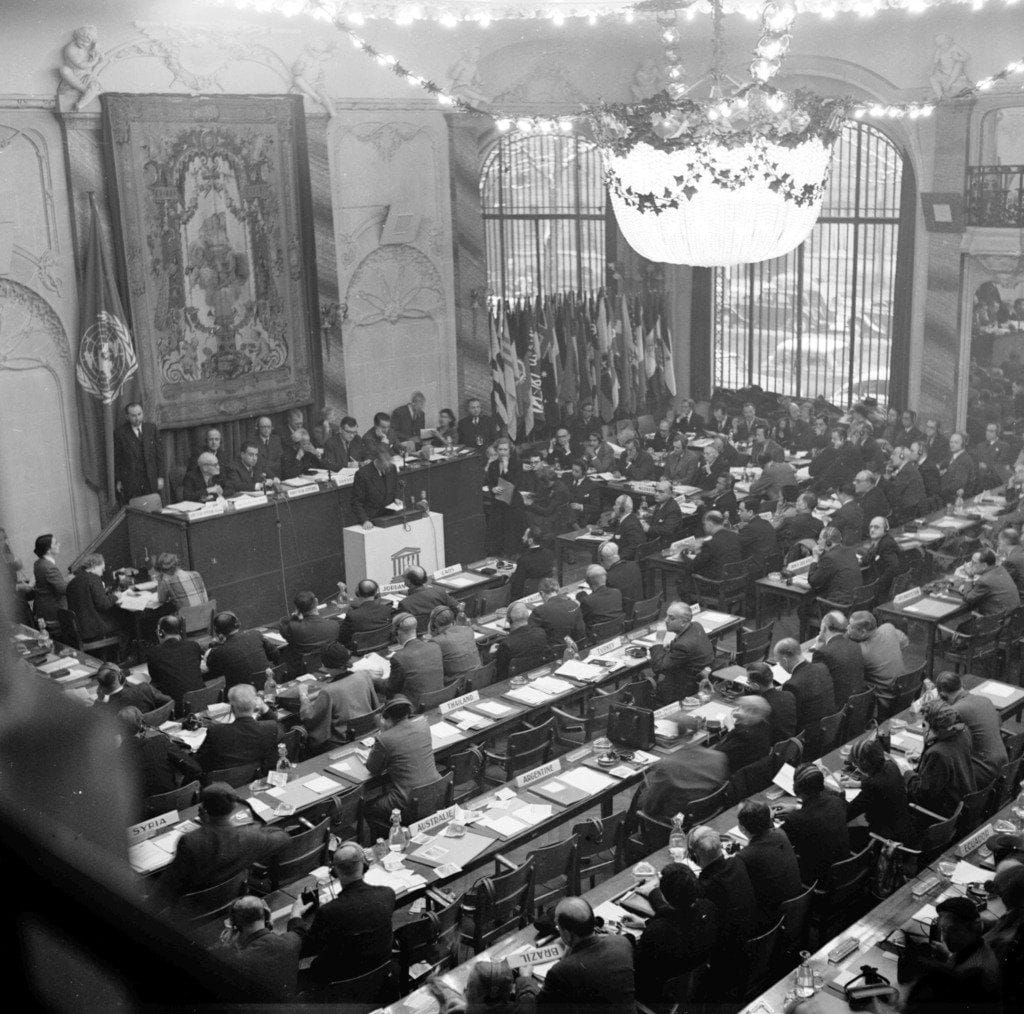
In a powerful reaffirmation of global unity, UNESCO—United Nations Educational, Scientific and Cultural Organization—recently spotlighted the vital role of multilateralism during the opening ceremony of the 47th session of the World Heritage Committee. Director-General Audrey Azoulay’s keynote speech echoed a growing truth in our interconnected era: international collaboration is no longer optional—it is imperative for solving global issues and safeguarding humanity’s collective heritage.
Central to UNESCO’s mission is the World Heritage Convention, a landmark agreement that exemplifies global partnership. With 196 countries having ratified the treaty, it stands among the most universally embraced international accords. This near-universal commitment highlights a shared understanding: the world’s cultural and natural wonders are the inheritance of all people, and their protection requires joint responsibility.
The strength of the Convention lies in its capacity to unite countries across continents and ideologies in the pursuit of a common goal—protecting sites deemed to be of outstanding universal value. These heritage sites, whether they are ancient monuments or pristine natural landscapes, tell the story of our planet’s rich past and its ecological diversity. Protecting them is not just about preservation—it is a pledge to the future, ensuring that generations to come can experience and learn from these priceless legacies.
As the 47th World Heritage Committee (47WHC) gets underway, delegates are set to deliberate on new site proposals, assess the conditions of current sites, and tackle pressing threats including climate change, armed conflict, environmental degradation, and unregulated development. Against this backdrop, Azoulay’s call for deeper multilateral engagement is especially timely. Her message reinforces the importance of dialogue, knowledge-sharing, and coordinated global efforts.
The Convention stands as a shining example of how diplomacy and cooperation can deliver real-world impact. It proves that when nations work hand in hand with a unified purpose, they can achieve what would be impossible in isolation. In an era of global crises and complex challenges, UNESCO’s advocacy for multilateralism through the World Heritage Convention provides a hopeful vision for building a more resilient and united world.