


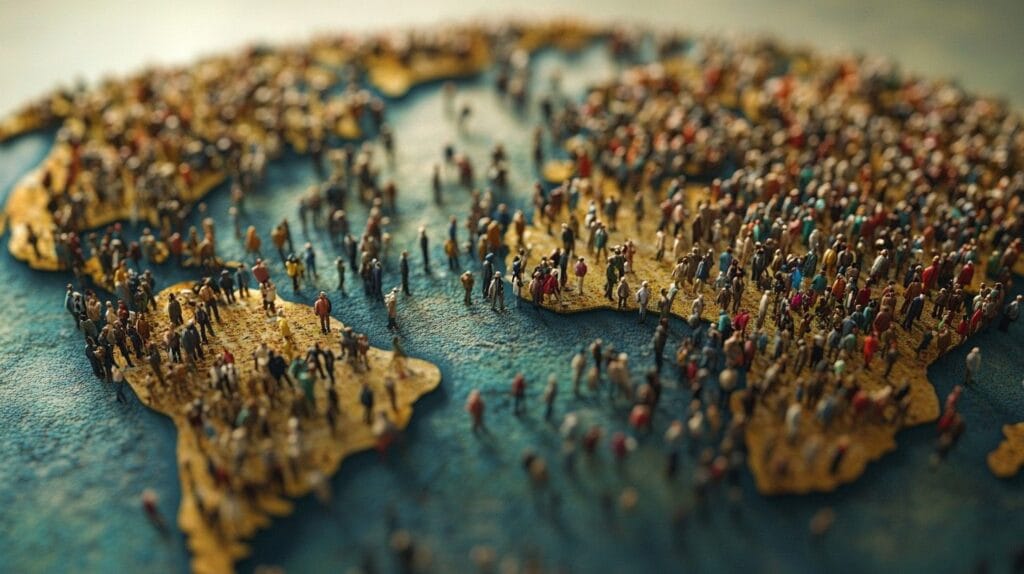
As we progress through the 21st century, dramatic changes are expected in the global population rankings. Forecasts for the year 2100 reveal a transformation in the list of the world’s most populous countries, reshaping international dynamics in profound ways. Based on current demographic patterns and future projections, India is on track to become the world’s most populated nation, with an estimated population of around 1.51 billion by the century’s end—an increase that reflects its sustained birth rate and demographic growth.
China, once the dominant demographic giant, is expected to slide to second place with a significantly lower projected population of approximately 633 million. This sharp decline can be attributed to long-standing population control policies, a shrinking birth rate, and a rapidly aging society.
Perhaps the most striking shift will come from Africa, where several nations are poised for exponential growth. Countries like Pakistan (511 million), Nigeria (477 million), and the Democratic Republic of Congo (431 million) are projected to rank among the top five. These surges are largely driven by persistently high fertility rates combined with improving healthcare systems that contribute to lower infant and maternal mortality.
Interestingly, the United States is expected to be the only developed country that remains in the top ten, with a forecasted population of 421 million. This resilience is due in part to moderate natural growth and steady immigration patterns. Additional countries expected to see significant population rises include Ethiopia (367 million), Indonesia (296 million), Tanzania (263 million), and Bangladesh (209 million)—underscoring ongoing population increases across both Asia and Africa.
These projected demographic shifts will have far-reaching consequences for the global economy, sustainability, and international relations. Countries witnessing population booms will need to address growing demands for education, housing, healthcare, and employment. On the other hand, nations facing demographic decline will confront challenges like labor shortages and the pressure of aging populations on social support systems.
In essence, the population outlook for 2100 serves as a powerful reminder of the need for strategic planning at both national and international levels. Proactive policy-making, investments in human development, and cross-border cooperation will be essential to navigating this complex future.