


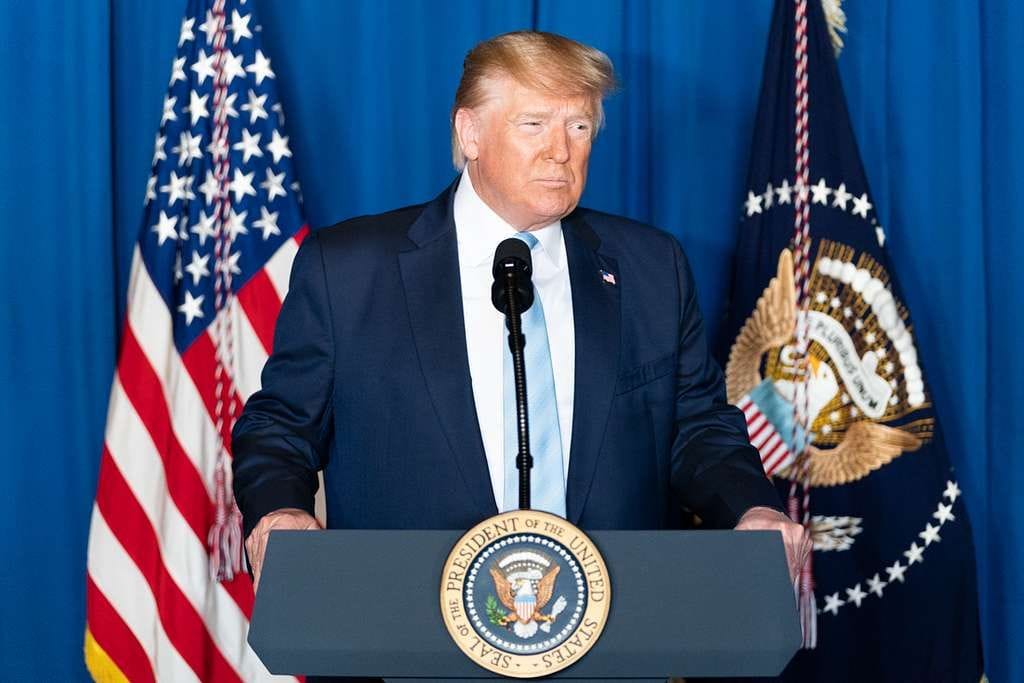
In response to what he described as “highly provocative” and “foolish” comments made by former Russian President Dmitry Medvedev, current U.S. President Donald Trump announced the deployment of two nuclear submarines to strategic regions as a precautionary step. Medvedev, now serving as Deputy Chairman of Russia’s Security Council, recently made statements that Trump warned could carry dangerous implications if left unchecked.
“Words are very important, and can often lead to unintended consequences,” Trump said in an official statement. “I hope this will not be one of those instances.” He emphasized that the decision to reposition U.S. nuclear assets is not an escalation, but rather a necessary move to ensure preparedness in light of rising geopolitical tensions.
Though the specific content of Medvedev’s remarks was not disclosed in the president’s message, Trump described them as inflammatory enough to warrant immediate defensive action. The positioning of the submarines, while undisclosed in detail for security reasons, is intended to reinforce deterrence and send a clear message that the United States will not take hostile rhetoric lightly.
This development adds a new layer of tension to the already strained relationship between Washington and Moscow. While both nations possess vast nuclear arsenals and are bound by long-standing arms control agreements, the use of provocative language by senior officials continues to raise international concerns.
Trump made it clear that while the United States seeks peace and stability, it will act decisively when national security is at stake. “This is a precaution, not a provocation,” he added, urging global leaders to approach diplomacy with seriousness and caution.
As the world watches closely, the emphasis now shifts to de-escalation and responsible communication—critical elements in avoiding the kind of “unintended consequences” the president warned about.