


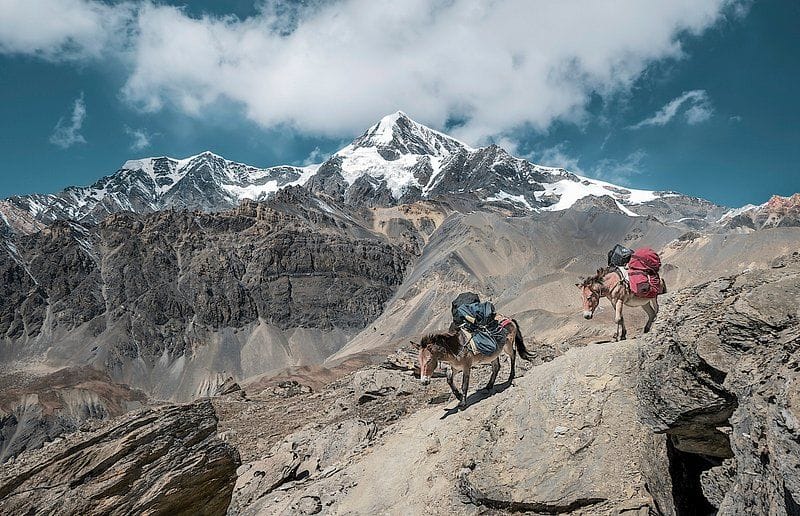
A long-standing territorial sensitivity has resurfaced in the Himalayas this Monday. The Government of India has formally dismissed a protest lodged by Nepal regarding the use of the Lipulekh Pass, a vital mountain gateway used for the annual Kailash Mansarovar Yatra.
The Core of the Dispute
The tension centers on a high-altitude stretch of land where the borders of India, Nepal, and China meet.
- The Indian Position: New Delhi maintains that the road leading to the Lipulekh Pass lies entirely within the Pithoragarh district of Uttarakhand. Officials today termed Nepal’s latest objection “unjustified,” asserting that the route has been traditionally used by pilgrims and locals for decades without territorial ambiguity.
- The Nepalese Objection: Kathmandu has expressed “formal concern” to both New Delhi and Beijing, claiming the area falls within its sovereign borders. This follows a 2020 move where Nepal updated its official map to include the Lipulekh, Kalapani, and Limpiyadhura territories—a move India has consistently refused to recognize.
Strategic and Religious Significance
The Lipulekh Pass is not merely a line on a map; it holds immense value for multiple reasons:
- Pilgrimage Access: The pass is the shortest and most accessible land route for Indian pilgrims traveling to Mount Kailash and Lake Mansarovar in Tibet.
- Trade & Security: Strategically, it serves as a critical watchpoint in the central sector of the Himalayas, overlooking high-altitude terrain that is vital for border security.
- Regional Diplomacy: The dispute is complicated by the involvement of China, as the pass serves as a bilateral trade and transit point between India and the Tibet Autonomous Region.
Rising Rhetoric in Kathmandu
The timing of the objection is being viewed by analysts as a reflection of internal political pressures within Nepal. The Nepalese government is under increasing domestic scrutiny to take a “pro-sovereignty” stance, leading to more frequent diplomatic friction with its southern neighbor.
- The Protest Note: Nepal’s Ministry of Foreign Affairs reportedly sent a diplomatic note to the Indian Embassy today, urging a “halt to any activity” in the disputed area until high-level boundary talks can be convened.
- India’s Rebuttal: India’s Ministry of External Affairs (MEA) responded by stating that the current road construction and transit are well within Indian territory and that “established boundary mechanisms” are the only appropriate forum for such discussions.
What Happens to the Yatra?
Despite the diplomatic sparring, the Kailash Mansarovar Yatra is expected to proceed as planned. Indian authorities have indicated that security and logistics for the pilgrims remain the top priority and will not be impacted by the ongoing border dialogue.
As both nations dig in their heels, the “Kalapani issue” remains one of the most delicate challenges in India-Nepal relations, requiring a careful balance of historical treaties, geographical realities, and modern diplomatic patience.