


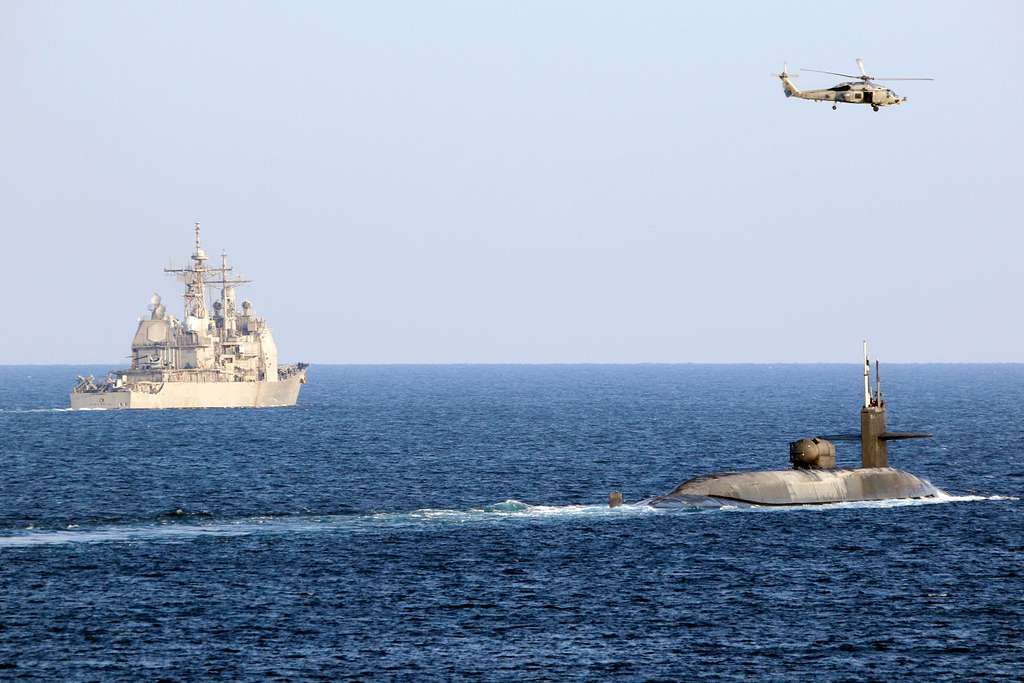
Washington/Dubai: Tensions in the Persian Gulf escalated sharply after a new military confrontation unfolded in the Strait of Hormuz, one of the world’s most strategically important maritime corridors. The incident involved the interception of several Iranian drones by U.S. forces, followed by precision strikes against Iranian military monitoring facilities along the country’s southern coastline.
The latest developments have intensified fears that efforts to maintain stability in the region could face renewed challenges, while international energy markets continue to react nervously to the growing uncertainty.
Drone Encounter Triggers Military Response
According to military officials, U.S. surveillance assets detected multiple armed drones operating near key shipping routes in the Strait of Hormuz. American commanders assessed the aircraft as a potential danger to merchant vessels and naval traffic moving through the narrow waterway.
Fighter aircraft assigned to maritime security operations were subsequently deployed and successfully engaged the drones before they could approach commercial shipping lanes.
Soon afterward, U.S. forces carried out limited air operations targeting radar and surveillance infrastructure located along Iran’s Gulf coast. Defense officials stated that the objective was to reduce the effectiveness of systems used to monitor naval movements in the region.
Strategic Waterway Remains at the Center of the Crisis
The Strait of Hormuz continues to be the focal point of the broader confrontation between Washington and Tehran. The narrow passage serves as a vital gateway connecting Gulf energy producers with international markets.
For months, military and political tensions have disrupted normal activity across the waterway. Increased naval patrols, security inspections, and regional military deployments have transformed one of the world’s busiest shipping routes into a zone of heightened risk.
Analysts note that every major security incident in the strait carries global implications because a significant share of international oil and natural gas exports normally transit through the corridor.
Economic Consequences Spread Beyond the Gulf
Financial markets responded cautiously to reports of the latest confrontation. Energy traders remain concerned that prolonged instability could affect the movement of crude oil, liquefied natural gas, and other strategic commodities.
Industry observers report that shipping companies have already reduced operations in high-risk areas, forcing vessels to seek alternative routes or delay voyages. Such disruptions have contributed to higher transportation costs and increased uncertainty in global supply chains.
Countries heavily dependent on imported energy resources, including India and several Asian economies, are closely monitoring developments. Any sustained interruption in Gulf exports could place additional pressure on fuel prices and industrial production costs.
Agricultural Sector Also Feels the Impact
The repercussions extend beyond energy markets. Fertilizer manufacturers and agricultural suppliers are facing challenges linked to disruptions in regional trade flows. Higher logistics costs and supply constraints have increased concerns about input availability ahead of important planting seasons across Asia.
Economists warn that continued instability in maritime trade routes could eventually influence food production expenses in multiple countries.
Diplomacy Faces New Challenges
The military exchange has complicated ongoing diplomatic efforts aimed at reducing tensions in the Middle East. While international mediators continue to encourage dialogue, disagreements over regional security arrangements remain unresolved.
Iran has repeatedly linked broader negotiations to wider geopolitical issues, while the United States has maintained that freedom of navigation and maritime security remain non-negotiable priorities.
Despite the latest escalation, American officials expressed confidence that the situation remains manageable. However, regional experts caution that further incidents at sea or in the air could quickly increase the risk of a broader confrontation.
Uncertain Outlook
With naval forces from several countries maintaining a significant presence in Gulf waters, the Strait of Hormuz remains under intense international scrutiny. Markets, governments, and shipping operators are now watching closely for signs of either renewed diplomacy or further military escalation.
For the moment, the latest exchange serves as a reminder that the security of one narrow stretch of water can have consequences that reach far beyond the Middle East, affecting economies, trade networks, and energy consumers around the world.