Europe Battles Devastating Wildfire Season as Fatal Helicopter Crash Highlights Risks for Firefighters
Europe’s escalating wildfire season demonstrates how extreme weather, dense vegetation, and prolonged heat can combine to create increasingly destructive fire conditions. The fatal helicopter collision in Greece highlights the immense risks faced by emergency responders, while the widespread fires across France and Spain reinforce the need for stronger wildfire prevention, climate adaptation, improved aerial firefighting safety, and enhanced international cooperation to respond to future climate-driven disasters.
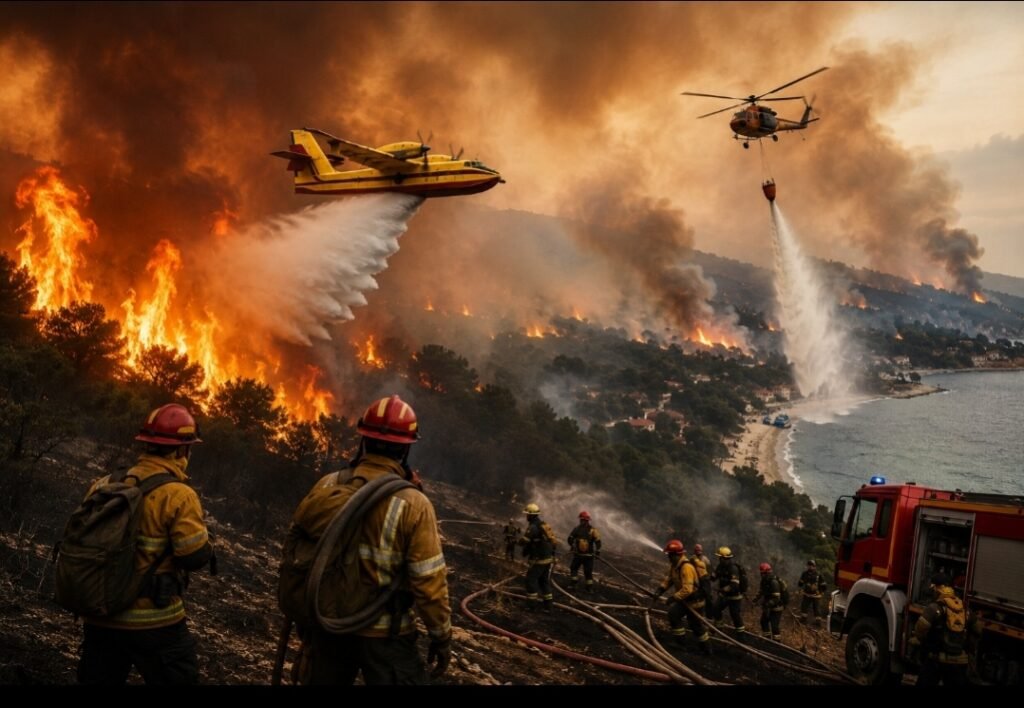
ATHENS — Europe is confronting one of its most demanding wildfire seasons in recent years, with firefighters across several countries racing to contain massive blazes fueled by extreme heat, prolonged dry conditions, and strong winds. The dangers facing emergency crews were tragically underscored when two firefighting helicopters collided while battling a wildfire in Greece, resulting in the deaths of two crew members.
The accident has drawn attention not only to the risks firefighters face every day but also to the growing intensity of wildfire emergencies across southern Europe. From Greece to France and Spain, governments continue deploying thousands of emergency personnel as communities brace for another difficult month of high temperatures.
Tragedy During Firefighting Mission
The fatal collision occurred during an aerial firefighting operation over a wildfire burning west of Athens. Authorities confirmed that the aircraft were assisting ground crews attempting to stop flames from spreading toward populated areas when the mid-air accident took place.
Two members of the firefighting mission lost their lives, including a Greek operations coordinator and a Danish pilot. Officials said the crew aboard the second helicopter survived the incident and were rescued after the collision.
Investigators have begun examining weather conditions, communication records, and flight operations to determine the cause of the crash. The tragedy has prompted renewed discussions about aviation safety during complex emergency operations.
Greece Continues Fighting Dangerous Fires
The helicopter accident comes as Greece continues battling numerous wildfires driven by high temperatures, dry vegetation, and seasonal winds.
Firefighters, military personnel, aircraft, and volunteer teams have been working around the clock to protect homes, forests, and critical infrastructure. Authorities remain concerned that changing wind conditions could quickly alter the direction and intensity of active fires.
Several communities have been placed on high alert, while emergency services continue monitoring new fire outbreaks across the country.
France Faces Massive Evacuations
Elsewhere in Europe, France has experienced one of its largest wildfire emergencies in years.
Large forest fires near the Bordeaux region forced authorities to evacuate hundreds of thousands of residents and visitors as flames threatened homes, roads, and public infrastructure. Although firefighters have managed to slow the expansion of several major fires, many remain active and require constant monitoring.
Thousands of emergency personnel supported by aircraft, helicopters, and specialized equipment continue working to prevent flare-ups as weather conditions remain challenging.
Officials have praised local communities for cooperating with evacuation orders while emphasizing that public safety remains the highest priority.
Spain Reports Gradual Improvement
Spain has reported encouraging progress after weeks of intense firefighting operations.
Authorities say that many of the country’s largest wildfires are now largely under control, although crews remain deployed to extinguish remaining hotspots and prevent fires from reigniting.
Firefighters continue patrolling burned areas while emergency managers closely monitor weather forecasts that could influence containment efforts.
Officials caution that even contained fires can become dangerous again if strong winds and high temperatures return.
Why This Fire Season Has Become So Severe
Scientists and weather experts point to an unusual combination of climatic conditions that has intensified this year’s wildfire season.
A wetter-than-normal winter encouraged the rapid growth of grasses, shrubs, and forest vegetation across many regions. When summer arrived with prolonged periods of extreme heat and limited rainfall, that vegetation dried into highly combustible fuel.
Combined with powerful seasonal winds, these conditions have allowed fires to spread rapidly over large areas, making suppression efforts significantly more difficult.
Climate Change Increases Long-Term Risk
Climate researchers continue warning that rising global temperatures are increasing both the frequency and severity of extreme wildfire seasons.
Repeated heat waves, longer drought periods, and reduced soil moisture create ideal conditions for large-scale forest fires. Scientists emphasize that while individual fires have multiple causes, climate change is making wildfire environments increasingly dangerous across southern Europe.
The growing number of intense wildfire events has encouraged governments to expand investment in prevention, early detection systems, aerial firefighting fleets, and forest management programs.
Firefighters Face Extraordinary Challenges
Thousands of professional firefighters, soldiers, volunteers, pilots, and emergency responders remain deployed across Europe.
Their work often involves operating in hazardous environments with rapidly changing weather, dense smoke, steep terrain, and unpredictable fire behavior. Aerial firefighting crews face additional risks while flying at low altitude in difficult visibility conditions, particularly when multiple aircraft operate simultaneously.
The helicopter collision in Greece serves as a painful reminder of the personal risks undertaken by emergency personnel protecting lives and communities.
August Could Bring Greater Danger
Meteorologists warn that the most difficult period of the wildfire season may still lie ahead.
August traditionally brings some of Europe’s hottest temperatures and driest conditions, increasing the likelihood of new wildfire outbreaks. If heat waves continue, firefighters may face additional pressure as existing fires remain active while new incidents emerge.
Emergency agencies are encouraging residents to avoid activities that could accidentally ignite fires, including outdoor burning, discarded cigarettes, and the use of machinery capable of producing sparks.
International Cooperation Strengthens Response
European countries continue supporting one another through cross-border emergency assistance.
Aircraft, firefighting teams, equipment, and technical specialists have been shared between nations as part of coordinated European civil protection efforts. This cooperation allows countries facing the most severe fire emergencies to receive additional resources quickly when domestic capacity becomes stretched.
Officials say such collaboration has become increasingly important as climate-related disasters grow more frequent.
Looking Ahead
Although firefighters have achieved significant progress in several regions, authorities remain cautious about declaring victory over this year’s wildfire season. Continued high temperatures, dry vegetation, and unpredictable winds mean conditions can change rapidly.
For many communities across Europe, the coming weeks will require continued vigilance, careful planning, and strong cooperation between emergency services and the public. The tragic loss of firefighting personnel in Greece also highlights the courage and sacrifice of those working tirelessly to protect lives, forests, and homes during one of the continent’s most challenging wildfire seasons.