China’s High-Level Opening-Up Creates New Opportunities for Asia-Pacific Economies, Says Kyrgyz Economist
BISHKEK, November 16, 2026: China’s continued efforts to expand high-level opening-up are creating fresh development opportunities for countries across the Asia-Pacific region, a Kyrgyz economist has said, highlighting the importance of international cooperation amid growing global economic uncertainty.
Tolonbek Abdyrov, professor of economics and vice rector of the International Higher School of Medicine in Kyrgyzstan, said that modern economies are increasingly interconnected and that no country can achieve sustainable prosperity in isolation.
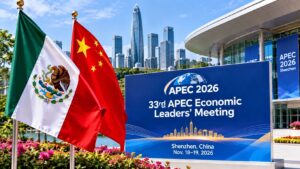
In an interview with Xinhua ahead of the 33rd APEC Economic Leaders’ Meeting, scheduled for November 18–19 in Shenzhen, he emphasised the importance of mutually beneficial economic partnerships.
China Strengthens Its Role in Global Trade
Abdyrov noted that China has developed into one of the world’s most important manufacturing centres while also becoming a major consumer market.
He highlighted China’s efforts to improve transportation corridors, strengthen industrial and supply-chain connections, and expand international trade and investment cooperation.
According to the economist, these developments can provide additional opportunities for businesses and economies throughout the Asia-Pacific region.
He also stressed that stronger regional connectivity could contribute to long-term economic stability and shared prosperity.
Technology and Innovation Drive Economic Development
The Kyrgyz economist identified technological innovation as another important factor supporting China’s economic development.
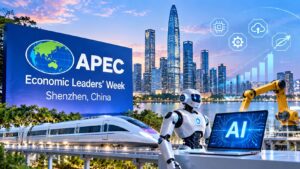
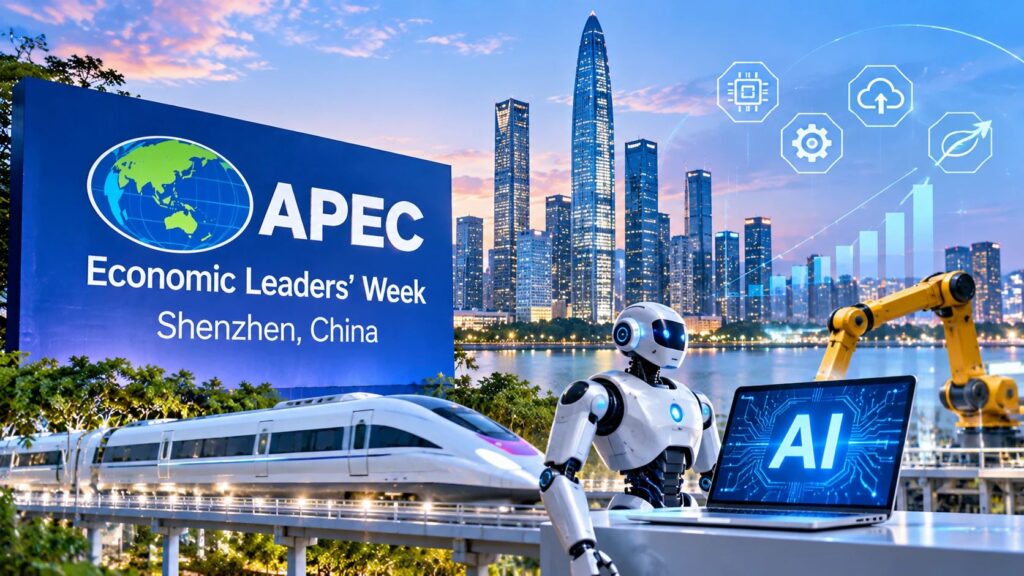
He pointed to the country’s progress in artificial intelligence, electric vehicles, renewable energy, digital platforms and robotics.
Abdyrov explained that improving labour productivity, adopting modern technologies and developing high-value-added products are essential for maintaining sustainable economic growth.
He described these developments as important elements of China’s efforts to build new quality productive forces.
China’s Research Investment Supports Innovation
The economist also highlighted China’s growing investment in scientific research and technological development.
According to figures released by China’s National Bureau of Statistics, the country’s research and development expenditure reached 3.93 trillion yuan, equivalent to approximately 585 billion U.S. dollars, in 2025.
He noted that Chinese technological innovations are increasingly finding practical applications and becoming accessible to consumers in international markets.
Abdyrov said other countries could benefit by strengthening their own scientific capabilities, training skilled professionals and encouraging cooperation between universities and businesses.
Stronger Regional Partnerships Could Support Modernisation
The economist believes that expanding technological cooperation with China could become an important factor in modernising economies across the Asia-Pacific.
Collaboration in research, industrial development, digital technologies and education could help countries improve productivity and strengthen their competitiveness.
Such partnerships may also create new opportunities for innovation-driven businesses and support the development of advanced industries.
APEC Meeting Expected to Highlight Regional Opportunities
The upcoming 33rd APEC Economic Leaders’ Meeting in Shenzhen is expected to provide an important platform for discussions about economic integration, technological innovation and international cooperation.
Abdyrov’s comments underline the importance of maintaining open economic connections and expanding mutually beneficial partnerships.
As global trade conditions continue to evolve, stronger cooperation across the Asia-Pacific could play an increasingly important role in supporting economic growth and long-term regional prosperity.