SpaceX’s Starship Completes 15th Test Flight, Achieves First-Ever Spacecraft Catch by Launch Tower
LOS ANGELES, November 15, 2026: SpaceX’s Starship spacecraft successfully returned to its launch site in Texas and was caught by the launch tower’s mechanical arms on Saturday, marking a major milestone in the company’s efforts to develop a fully reusable rocket system.
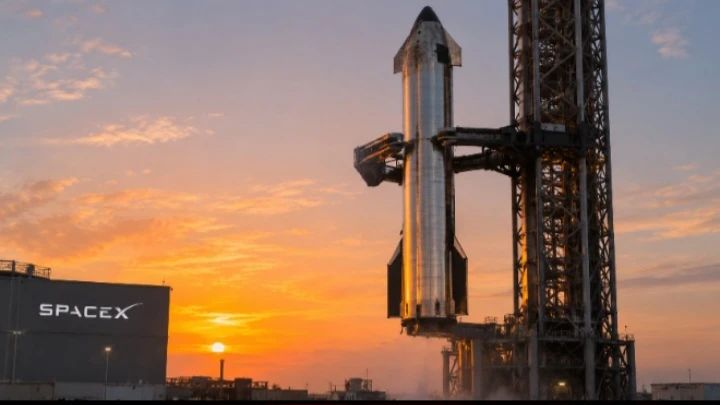
The achievement came during Starship’s 15th flight test, which began with a launch from SpaceX’s Starbase facility in South Texas on Friday afternoon.
The spacecraft returned to the launch site at approximately 3:20 p.m. Central Time on Saturday, following a journey of about 22 and a half hours.
It was the first time a Starship spacecraft had been successfully caught by the launch tower’s mechanical arms after returning from space.
The mission was designed to attempt the recovery of both stages of the rocket, the Super Heavy booster and the Starship spacecraft, using the tower’s mechanical catching system.
However, the Super Heavy booster did not complete its planned return to the launch site. Following stage separation, it was diverted from its intended recovery trajectory and splashed down in the Gulf of Mexico.
The Starship spacecraft continued its flight independently, successfully entering Earth’s orbit and deploying 26 next-generation Starlink V3 satellites.
The deployment was an important part of the mission, demonstrating the spacecraft’s ability to carry and release satellite payloads during an orbital flight.
After completing its orbital operations, Starship began its return journey to Earth. It performed a deorbit manoeuvre before entering the atmosphere and approaching the Starbase launch facility.
During the final stage of the descent, the spacecraft aligned itself with the launch tower, where two large mechanical arms secured it as it returned to the launch site.
The successful catch demonstrated that SpaceX had achieved a key technical objective: recovering the Starship upper stage directly at its launch facility after an orbital mission.
SpaceX has been developing Starship with the aim of making both rocket stages reusable, potentially reducing the cost of transporting satellites, cargo and people into space.
The vehicle is also central to the company’s longer-term plans for lunar exploration and future missions to Mars.
Although the latest flight achieved the first successful tower catch of a returning Starship spacecraft, the recovery of both stages during a single mission remains an outstanding objective.
The results of Flight 15 are expected to provide important technical data for further improvements to the rocket’s flight, landing and recovery systems.