U.S. STOCKS PLUNGE AS AI SELL-OFF DEEPENS AHEAD OF NVIDIA EARNINGS
NEW YORK, November 17 2026 — U.S. stock markets suffered sharp losses on Monday as a growing sell-off in artificial intelligence-related shares intensified ahead of chipmaker Nvidia’s quarterly earnings announcement, raising concerns about investor confidence in the technology sector.
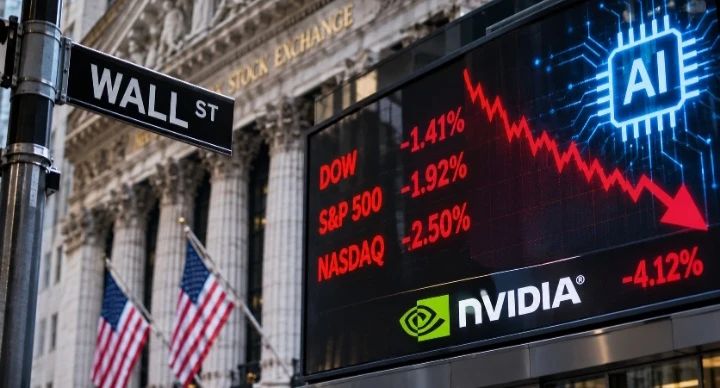
The Dow Jones Industrial Average dropped 739.38 points, or 1.41 percent, to close lower, while the S&P 500 declined 145.08 points, or 1.92 percent. The technology-heavy Nasdaq Composite recorded the steepest fall, losing 626.52 points, or 2.5 percent.
The downturn reflected growing uncertainty surrounding the valuations of major technology companies and the sustainability of massive investments in artificial intelligence. Investors have become increasingly cautious about whether the rapid expansion of AI-related businesses will generate sufficient returns to justify their market valuations.
Technology and communication services were the weakest-performing sectors in the S&P 500, falling 2.98 percent and 2.82 percent, respectively. Nine of the index’s 11 primary sectors ended the session in negative territory, while consumer staples and utilities recorded modest gains.
Nvidia shares fell 4.12 percent, extending recent losses ahead of the company’s quarterly financial results. The earnings announcement is attracting particular attention because it could provide fresh indications of demand for AI chips and the broader outlook for the semiconductor industry.
The company is also facing uncertainty following the resignation of its chief executive, Jensen Huang, last week. CNBC reported that Nvidia’s board was not considering bringing him back, despite reports that he had discussed a possible return with confidants.
The weakness extended across the semiconductor industry. Intel, Micron, Marvell Technology and Arm Holdings each lost more than 6 percent. Advanced Micro Devices declined 5.58 percent, while Broadcom dropped 3.92 percent. Dell Technologies and Oracle also recorded significant losses.
The market volatility gauge, the Cboe Volatility Index, commonly known as the VIX, climbed as much as 25 percent during Monday’s session, reaching an intraday high of 24.52. The increase reflected heightened investor demand for protection against further market fluctuations.
David Kelly, chief global strategist at JPMorgan Asset Management, said investors were facing growing uncertainty over technology stocks and advised greater diversification as the AI investment trade entered a more volatile phase.
Meanwhile, oil prices declined as signs of recovering shipments through the Strait of Hormuz strengthened expectations of improved global supply. West Texas Intermediate crude fell 3.21 percent to 85.72 U.S. dollars per barrel, while Brent crude also moved lower.
Outside the technology sector, Tyson Foods shares surged 8.72 percent after the company reported adjusted fourth-quarter earnings of 61 cents per share, exceeding market expectations. The company also indicated signs of improvement in its previously loss-making beef business.
Economic data added to the mixed market outlook. The New York Federal Reserve’s Empire State Manufacturing Index fell to 7.8 in November from 25.5 in October, significantly below economists’ expectations of approximately 17.
Federal Reserve Chair Kevin Warsh, speaking in San Francisco, provided no indication of an imminent change in interest rates. He said Fed staff were examining three possible scenarios for artificial intelligence’s economic impact, ranging from a major productivity boom to rising unemployment and disappointing returns that could weigh on stock prices.
The sharp decline highlights the sensitivity of U.S. equity markets to developments in artificial intelligence, particularly as investors reassess technology valuations, corporate earnings prospects and the economic returns expected from AI investment.