DRC Faces Fastest-Growing Ebola Outbreak as Bundibugyo Virus Pushes Health System to the Limit
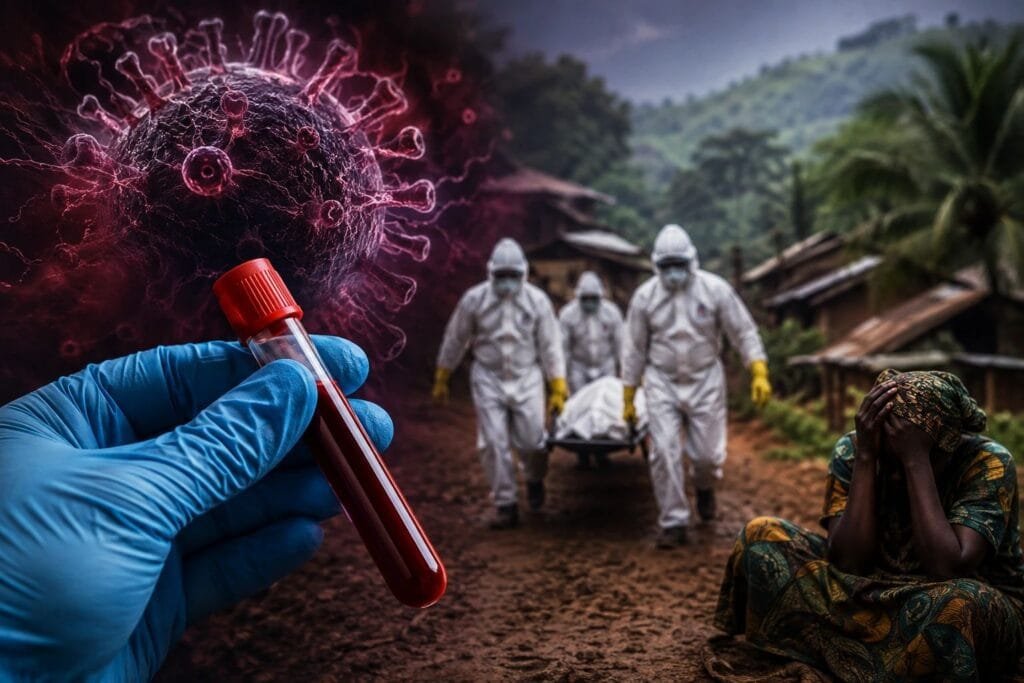
KINSHASA, Democratic Republic of the Congo — The Democratic Republic of the Congo is confronting an unusually aggressive Ebola outbreak that has rapidly overwhelmed health services and exposed serious gaps in disease surveillance, transportation and community protection.
The outbreak, caused by the rare Bundibugyo species of Ebola virus, was officially declared in May 2026. However, genetic investigations indicate that transmission had already been occurring for months before authorities formally recognized the outbreak. Early infections were reportedly mistaken for illnesses such as malaria and typhoid, allowing the virus to circulate before the response was fully activated.
By mid-August, the outbreak had expanded dramatically. Recent reports put confirmed infections at more than 4,400, while deaths among confirmed cases have passed 2,000. The precise totals have changed rapidly as laboratories process additional samples and surveillance expands. Reuters reported 4,449 confirmed cases and 2,061 deaths as of August 11, while a subsequent Associated Press report cited more than 4,700 confirmed cases and over 2,200 deaths.
A Rare Ebola Strain
The outbreak is particularly challenging because it involves Bundibugyo virus, a species distinct from the Zaire Ebola virus responsible for several previous major epidemics.
The World Health Organization says there is currently no licensed vaccine or specific approved treatment for Bundibugyo virus disease. Supportive medical care remains important, while researchers are testing potential therapies. In July, a clinical trial began evaluating antiviral candidates including the monoclonal antibody MBP134 and remdesivir.
The absence of an approved vaccine specifically targeting Bundibugyo virus has made early detection and rapid isolation especially important.
WHO has also added the first molecular diagnostic test for Bundibugyo virus to its Emergency Use Listing, a development intended to improve the speed and accuracy of identifying infections.
Months of Hidden Transmission
One of the most troubling aspects of the outbreak is evidence that transmission began well before the official announcement.
According to recent reporting, genetic sequencing helped investigators establish that the outbreak likely dates back to February. The official declaration came on May 15, meaning several months passed before the wider outbreak was recognized. Early patients were reportedly diagnosed with other illnesses, making it more difficult for health authorities to identify transmission chains.
That delay has had major consequences. Ebola becomes significantly harder to contain when infected people are not identified quickly and their recent contacts cannot be traced.
The problem has been compounded by the fact that many new infections are now appearing outside known contact chains. AP reported that roughly 60% to 70% of newly identified cases are being found among people who were not previously being monitored as contacts, a sign that conventional contact-tracing efforts are struggling to keep pace.
Remote Communities Face the Greatest Risk
Much of the outbreak has centered on Ituri Province, particularly around the city of Bunia and surrounding health zones. WHO has described the area as a difficult environment for outbreak control because of its remote communities, population movement, insecurity and humanitarian pressures.
For many residents, reaching specialized medical facilities can require long journeys over poor roads. Patients who become seriously ill may arrive at treatment centers only after their condition has deteriorated substantially.
Health workers also have to move through areas where roads are unpaved and supplies are difficult to deliver. Shortages of protective equipment and trained personnel add another layer of risk for medical teams working directly with infected patients.
Health Workers Under Pressure
The outbreak is putting extraordinary pressure on healthcare personnel.
Reports indicate that some health workers have gone without salaries, contributing to strikes that have disrupted treatment and response operations. Medical teams are simultaneously dealing with exhaustion, shortages and the danger of infection.
Security problems make the situation even more complicated. Parts of eastern DRC have experienced prolonged conflict involving armed groups, restricting movement and making it difficult for response teams to reach communities or maintain regular contact tracing.
The combination of insecurity, displacement and population movement creates conditions in which infected people can move beyond areas already under surveillance.
Uganda Also Affected
The outbreak has not remained confined to the DRC.
Uganda confirmed Bundibugyo virus infections linked to travel from the DRC. WHO reported imported infections and subsequent transmission among contacts and healthcare workers during the earlier phase of the outbreak. Later, Uganda reported no new cases for a period, with its most recent patient discharged after receiving care and testing negative twice.
The cross-border dimension remains important because Ituri is connected to neighboring countries through trade, migration and other population movements. WHO has therefore emphasized cross-border surveillance and preparedness as part of the international response.
Misinformation Creates Another Barrier
Medical infrastructure is only one part of the challenge.
Public confidence can determine whether infected people seek treatment quickly, whether families report suspected cases and whether communities cooperate with health teams.
Misinformation and distrust have reportedly complicated Ebola-control efforts in some affected communities. In some places, fear surrounding the disease has also contributed to resistance against health interventions.
Experts say community engagement must therefore remain at the center of the response. People who understand how Ebola spreads and recognize its symptoms are more likely to seek help early and report potential cases before transmission expands.
International Response Intensifies
WHO, Africa CDC and other international partners have increased support for the DRC and neighboring countries. Measures include laboratory testing, surveillance, contact tracing, infection-prevention programs, treatment facilities, medical supplies and community outreach.
The WHO has classified the outbreak as a Public Health Emergency of International Concern, highlighting the need for coordinated international action.
Yet the scale and speed of the outbreak are testing the limits of those efforts.
The central challenge is now to restore the chain of surveillance: identify infections quickly, isolate patients, trace their contacts and reach communities before the virus moves further.
A Race Against Time
The current crisis demonstrates how quickly an Ebola outbreak can expand when early cases go unrecognized and healthcare systems are operating under severe pressure.
For the DRC, controlling the outbreak will require more than medical treatment. Reliable salaries for health workers, protective equipment, safe transportation, improved laboratory capacity, stronger security and sustained community cooperation will all be essential.
Most importantly, health authorities need communities to report suspected infections as early as possible. In a disease where delays can create additional chains of transmission, early recognition may ultimately prove to be the most powerful tool available.
The Bundibugyo outbreak has already become a major test for the DRC’s public-health system. Whether the rapid growth can be reversed will depend on how quickly surveillance, treatment, community trust and international assistance can be brought together on the ground.