Trump Orders Lake Ontario Renamed ‘Lake America’ as U.S.-Canada Trade Tensions Intensify
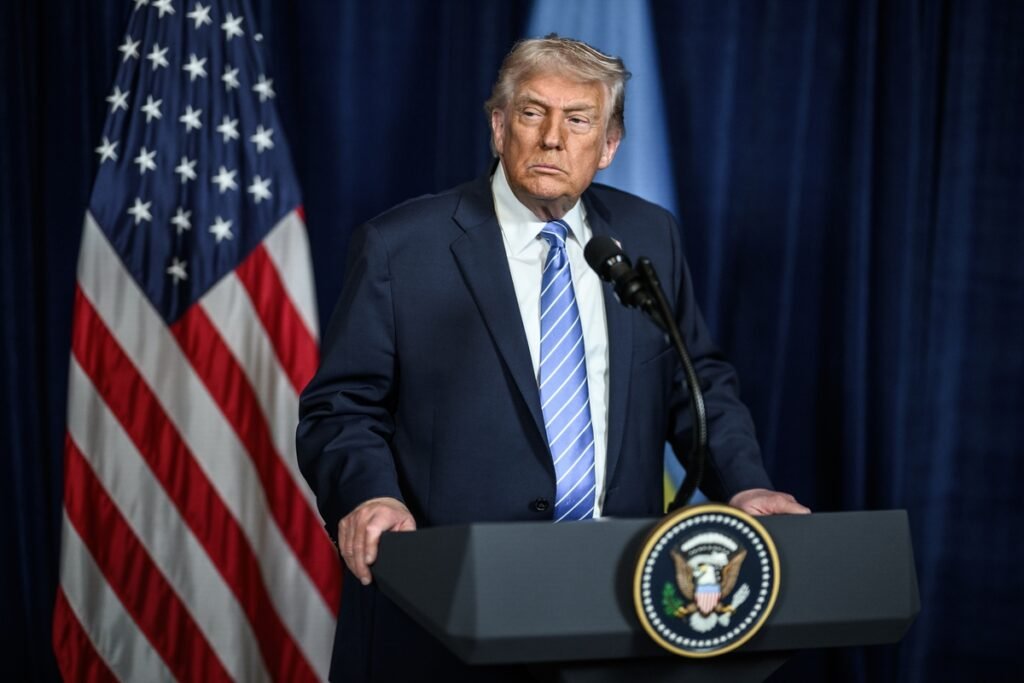
Washington, August 28, 2026: U.S. President Donald Trump has signed an executive order directing the federal government to rename Lake Ontario as “Lake America” in U.S. government records, adding an unusual geographic dimension to already strained relations between Washington and Ottawa.
The order was signed on August 27 as trade tensions between the United States and Canada continued to escalate. The lake, one of North America’s five Great Lakes, is shared by the U.S. state of New York and Canada’s province of Ontario.
A Geographic Name Change With Political Meaning
The executive order instructs the U.S. Interior Department and the U.S. Board on Geographic Names to update federal records and maps.
According to the White House order, the existing name is to be replaced in the U.S. government’s Geographic Names Information System. Federal agencies will also be directed to use the new designation in relevant maps, documents and communications.
However, the U.S. government cannot compel Canada, international organizations or private companies outside federal jurisdiction to adopt the new name.
That means the change could produce different names for the same body of water depending on which country’s official documents or maps are being used.
Lake Ontario Remains a Shared Waterway
Lake Ontario occupies an important geographical position between the United States and Canada.
Its southern and eastern shores are bordered by New York, while much of its northern and western shoreline lies in Ontario, Canada.
The lake is connected to the St. Lawrence River system and forms part of the Great Lakes transportation network.
Beyond its geographical importance, the lake supports commercial shipping, tourism, recreation, fisheries and communities on both sides of the international border.
Trump Links Move to America’s Role in the Great Lakes
The White House order presents the renaming as recognition of the United States’ historical and economic relationship with the Great Lakes.
It highlights American investment in the region, including infrastructure, shipping support and environmental protection.
The order also cites the U.S. Coast Guard’s role in maintaining commercial navigation and the country’s spending on Great Lakes environmental initiatives.
The administration argues that these contributions justify placing greater emphasis on the lake’s connection to American history and commerce.
Canada Rejects the New Name
The decision has not been accepted by Canadian officials.
Canadian Prime Minister Mark Carney has said that Canadians will continue to call the body of water Lake Ontario.
His response reflects a broader Canadian position that the U.S. government can determine terminology used by its own agencies but cannot unilaterally redefine how Canada refers to a shared geographical feature.
Canadian politicians have also treated the move largely as a symbolic gesture rather than a practical change to the lake itself.
Trade Dispute Forms the Backdrop
The renaming comes during a period of serious economic tension between the two North American neighbours.
Washington and Ottawa have been engaged in disputes over tariffs, trade policies and market access.
Recent negotiations have failed to produce a broader agreement, while both governments have introduced or threatened additional measures affecting cross-border commerce.
Against this background, the Lake America decision has been interpreted by many observers as another symbolic expression of the deteriorating relationship.
A Repeat of the Gulf of Mexico Dispute
The Lake Ontario decision follows another geographical naming controversy from Trump’s administration.
In January 2025, Trump ordered the U.S. government to use “Gulf of America” instead of “Gulf of Mexico” in federal usage.
That earlier decision similarly raised questions about whether a U.S. government can change terminology for geographical features that are shared with or internationally associated with other countries.
The Lake Ontario order follows the same basic pattern: the U.S. government can establish terminology for its own official records, but other governments remain free to use their preferred names.
International Recognition Is Not Automatic
Changing a name in a U.S. federal database does not automatically change international geographic terminology.
Canada has its own governmental mapping and geographic-naming institutions. International organizations and private map providers also make independent decisions about geographic labels.
Consequently, the same lake could potentially appear under different names on different platforms.
The situation could be particularly visible to travellers, shipping companies and businesses operating across the U.S.-Canada border.
The Lake’s Historical Name
Lake Ontario’s name has a long history predating the creation of modern Canada and the United States.
The name is associated with Indigenous linguistic traditions and has been used for centuries.
That historical background has made the renaming debate about more than modern politics. It has also raised questions about Indigenous history, cultural continuity and the way governments assign names to long-established geographical features.
Economic Importance Remains Unchanged
Whatever name appears on a government map, the lake’s economic role will remain the same.
Ships will continue using established waterways, communities will continue relying on the lake’s freshwater resources, and businesses will continue operating on both sides of the border.
The renaming does not alter the physical boundary between the United States and Canada or change ownership arrangements governing the lake.
It is primarily an administrative and political decision concerning terminology used by the U.S. federal government.
Potential Impact on Cross-Border Cooperation
The more significant issue may be the political atmosphere surrounding the decision.
The United States and Canada cooperate extensively on Great Lakes environmental management, water quality, navigation, fisheries and emergency response.
A deterioration in diplomatic relations could make cooperation more politically difficult even though existing agreements and institutions remain in place.
For residents living around the lake, practical issues such as water quality and economic stability are likely to matter far more than the name printed on a map.
Trump Hints at More Geographic Changes
The president has also suggested that other bodies of water could receive America-themed names.
During the Oval Office signing, Trump joked about the possibility of eventually renaming an ocean, following his previous Gulf of Mexico decision and the Lake Ontario order.
Such comments have added to speculation that geographical naming could remain part of his administration’s political messaging.
A Symbolic Move in a Larger Dispute
The Lake America decision is unlikely to transform the physical or legal relationship between the United States and Canada.
Its significance is instead political.
The move comes at a time when the two countries are arguing over trade, tariffs and economic policy. By changing the terminology used by U.S. federal agencies for a shared lake, the administration has once again turned geography into a subject of international politics.
For Canada, the response has been clear: the lake will continue to be called Lake Ontario.
For the United States federal government, official documents will move toward the new designation of Lake America.
The disagreement therefore creates an unusual situation in which a single body of water may carry different official names on opposite sides of the border.
Note: The executive order changes U.S. federal geographic usage; it does not require Canada, international bodies or independent private organizations to adopt the name “Lake America.”