Thousands Rally in Tel Aviv Demanding Jewish-Arab Coalition to Form Israel’s Next Government
TEL AVIV, Israel — November 1, 2026
Thousands of people gathered in Tel Aviv on Saturday, October 31, calling on Israel’s opposition parties to cooperate with Arab political groups and form a new coalition government following a closely contested general election.
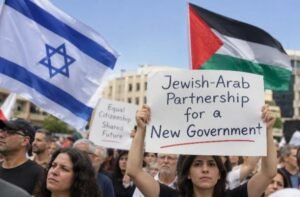
The demonstration took place at Habima Square before protesters marched towards Rabin Square, carrying placards supporting equality, political cooperation and a change in government. Participants chanted slogans including “Jews and Arabs refuse to be enemies” and called for a political partnership capable of replacing Prime Minister Benjamin Netanyahu.
According to reports, approximately 2,000 people attended the main rally. Smaller demonstrations supporting Jewish-Arab cooperation were also reported in Jerusalem and Haifa.
Election Results Create a Political Deadlock
The demonstrations followed an election in which neither major political bloc secured enough parliamentary seats to form a government independently.
Netanyahu’s bloc won 53 seats in the 120-member Knesset, while opposition parties led by Gadi Eisenkot secured 48 seats. Arab-led political parties won the remaining 19 seats, placing them in a potentially decisive position during coalition negotiations.
A minimum of 61 seats is required to secure a parliamentary majority.
The opposition could theoretically reach 67 seats by cooperating with Arab-led parties. However, several Jewish-led opposition groups have previously ruled out forming a coalition with them, creating a significant political obstacle.
Protesters Demand Equality and Political Partnership
The rally was led by activists supporting cooperation between Jewish and Arab communities. Demonstrators argued that the election results created an opportunity for political change and that elected representatives should consider working together despite ideological differences.
Many participants carried signs calling for equality, shared political representation and an end to racism.
The movement’s message extended beyond the immediate question of who should become prime minister. Protesters also highlighted the importance of Arab citizens having a meaningful role in national decision-making.
Counterprotesters Oppose Arab Parties Joining Government
The demonstration also attracted a smaller counterprotest by supporters of Netanyahu and other right-wing activists.
Counterprotesters opposed the participation of Arab-led parties in a future government and questioned the legitimacy of political cooperation with them. Heated exchanges and confrontations in language were reported between opposing groups.
The rival gatherings demonstrated the deep divisions within Israeli society over political representation, national identity and the future direction of the country.
Arab Parties Hold a Crucial Position
The election has significantly increased the influence of Arab-led parties in the coalition-building process.
Their combined 19 seats could provide the parliamentary support needed for an alternative government. However, negotiations remain complicated because several opposition leaders face political pressure from voters and allies who oppose such an arrangement.
The final outcome will depend on whether political leaders are prepared to compromise and establish a workable parliamentary partnership.
What Happens Next?
The new Knesset is expected to convene on November 10, while coalition negotiations are likely to remain a major focus of Israeli politics in the coming days.
For Netanyahu, retaining power will require securing additional support or finding a new political arrangement. For the opposition, forming an alternative government may depend on overcoming longstanding objections to cooperation with Arab parties.
The Tel Aviv demonstration has brought this debate into the streets, showing that the formation of Israel’s next government is not simply a parliamentary calculation but also a question of political identity, representation and public trust.