South Korean President Urges Asia-Pacific Economies to Maintain Open Trade and Strengthen Regional Cooperation
SHENZHEN, CHINA: South Korean President Lee Jae Myung has urged economies across the Asia-Pacific region to maintain their commitment to open markets, expand international trade and strengthen economic cooperation despite growing protectionism and global uncertainties.
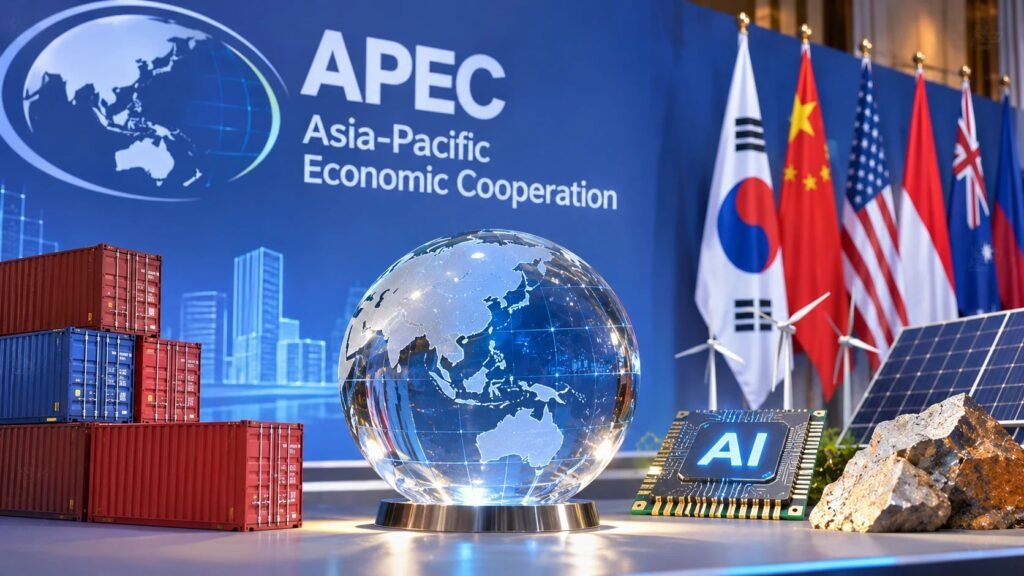
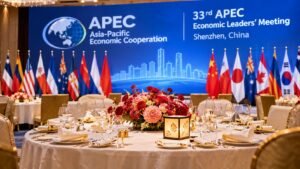
Addressing the Asia-Pacific Economic Cooperation (APEC) CEO Summit in Shenzhen, China, Lee emphasised that regional economies must work together to protect trade connections, improve supply chain stability and ensure that technological progress benefits businesses and communities across the region.
His remarks came as international trade faces increasing challenges from geopolitical tensions, economic fragmentation and changing global industrial structures.
Rising Protectionism Creates Economic Challenges
Lee warned that increasing trade barriers and geopolitical conflicts are creating uncertainty for businesses and disrupting international economic relationships.
He noted that recent supply chain disruptions have demonstrated how closely connected the economies and industries of the Asia-Pacific region have become.
According to the South Korean president, instability affecting one economy can have wider consequences for businesses, industries and consumers across multiple countries.
He stressed that maintaining open markets and expanding regional trade should remain important priorities for APEC members.
Expanding Trade and Investment Across Asia-Pacific
The South Korean leader identified stronger trade and investment as essential drivers of future regional economic growth.
He called for greater cooperation among APEC economies to create new opportunities for businesses, encourage investment and improve access to international markets.
He also supported a practical approach to economic integration that delivers visible benefits for companies and industries.
Greater coordination could help businesses diversify their suppliers, strengthen international partnerships and respond more effectively to changes in global demand.
Artificial Intelligence Should Benefit Everyone
Artificial intelligence was another major focus of Lee’s address.
He argued that the benefits of the AI revolution should not remain concentrated among a small group of technologically advanced countries and large corporations.
Instead, more economies and businesses should have opportunities to participate in technological innovation.
Lee highlighted South Korea’s Manufacturing AI Transformation (Manufacturing AX) initiative, which aims to combine artificial intelligence with the country’s established manufacturing capabilities.
The initiative is intended to improve industrial productivity, encourage technological development and create new industries and markets.
He also emphasised the importance of reducing technological inequalities so that smaller businesses and developing economies can benefit from AI-driven growth.
Strengthening Critical Mineral and Energy Supply Chains
Lee called for stronger international cooperation to protect the supply of critical minerals and energy resources.
He proposed developing systems that can identify potential supply chain risks at an early stage, allowing governments and businesses to respond before disruptions become serious.
Critical minerals are essential for manufacturing semiconductors, batteries, electric vehicles and renewable energy technologies.
Ensuring stable supplies of these materials is therefore increasingly important for industrial development and national economic security.
South Korea believes that closer cooperation among regional partners can help build more reliable supply networks and reduce vulnerabilities.
Shenzhen Highlights the Importance of Innovation
During his address, Lee also referred to Shenzhen as an example of how technological innovation can transform societies and industrial development.
The Chinese city has developed into a major international centre for advanced manufacturing, electronics and digital technology.
He suggested that the rapid adoption of technologies once considered futuristic demonstrates the importance of embracing innovation and preparing for economic change.
The experience of Shenzhen also highlights the potential benefits of cooperation between businesses, research institutions and governments.
APEC Cooperation Remains Essential
The APEC forum brings together 21 member economies representing a substantial share of global economic activity.
Its discussions cover trade, investment, technology, economic integration and sustainable development.
Lee’s remarks reflected South Korea’s support for maintaining an open and connected regional economic system.
He encouraged participating economies to strengthen cooperation rather than allowing protectionism and geopolitical tensions to weaken their economic relationships.
Building a More Inclusive Asia-Pacific Economy
The South Korean president’s message highlighted three major priorities for the region: open trade, inclusive technological innovation and resilient supply chains.
As artificial intelligence reshapes industries and international trade patterns continue to evolve, cooperation between economies will become increasingly important.
South Korea is seeking to work with regional partners to promote technological development, strengthen manufacturing networks and create new investment opportunities.
Lee’s appeal underscores the importance of ensuring that economic growth remains inclusive and that the benefits of innovation reach businesses and communities throughout the Asia-Pacific region.