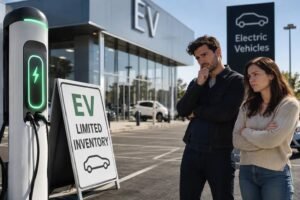
EV Buyers Face Limited Choices as Electric Car Inventory Tightens Across US Dealerships
Rising Interest in Electric Vehicles Meets Uneven Supply, Creating New Challenges for American Car Shoppers

The American electric vehicle market is facing a challenging situation as consumers interested in switching to battery-powered cars encounter limited choices at dealerships. While interest in electric mobility remains alive, automakers are adjusting production plans, leaving some popular models harder to find across the United States.
The changing market environment is creating a gap between consumer expectations and the vehicles currently available on showroom floors. Buyers searching for specific electric cars, competitive prices and attractive features may need to visit multiple dealerships or wait longer for their preferred models.
Automakers Reconsider Their Electric Vehicle Strategies
Several major automobile manufacturers have reassessed their electric vehicle investment plans following changes in government incentives, consumer purchasing patterns and production costs.
The expiration of federal electric vehicle tax credits in September 2025 significantly changed the financial environment for American EV buyers. Previously, eligible customers could receive substantial purchase incentives, making electric cars more affordable.
Following the policy change, some manufacturers reduced production targets, delayed upcoming models or redirected investment toward hybrid and conventional vehicles.
These decisions are now influencing dealership inventory and the variety of electric vehicles available to customers.
Buyers Face Higher Prices and Fewer Options
Limited availability can make the shopping experience more complicated, particularly for consumers looking for affordable electric vehicles.
When dealerships have fewer examples of popular models, buyers may have less negotiating power. Discounts can become smaller, while certain configurations, battery options and vehicle colors may be difficult to obtain.
According to Cox Automotive’s October 2026 market analysis, the average transaction price of a new electric vehicle reached approximately $56,221. New EV inventory stood at around 85 days of supply, although availability varied considerably between manufacturers.
This suggests that the market is not experiencing an identical shortage across every brand. Instead, some manufacturers have considerably more vehicles available than others.
Hybrid Cars Gain Ground as EV Production Changes
Hybrid vehicles are benefiting from the changing automotive landscape. Many consumers want better fuel efficiency without depending entirely on charging infrastructure.
Unlike fully electric vehicles, conventional hybrids do not require external charging. This makes them attractive to drivers who frequently travel long distances or have limited access to home charging facilities.
The US Energy Information Administration reported that hybrids accounted for 16% of new light-duty vehicle sales during the third quarter of 2026. Meanwhile, battery-electric vehicles represented approximately 6%.
The figures highlight how consumer preferences and manufacturer production decisions are reshaping the competition between different vehicle technologies.
Some Automakers Could Benefit From the Market Shift
The changing competitive environment may create opportunities for companies that continue introducing attractive electric models while maintaining sufficient dealership inventory.
Manufacturers offering reasonably priced electric SUVs, practical driving ranges and reliable charging capabilities could attract customers who are disappointed by limited options elsewhere.
Toyota and Subaru have been expanding their presence in the American EV market with new electric SUV offerings. Their collaboration also allows them to share development resources and reduce some production costs.
Meanwhile, established EV manufacturers face the challenge of balancing production expenses, pricing strategies and uncertain demand.
What Should Electric Vehicle Buyers Expect Next?
The future of the American EV market will depend on several important factors, including battery prices, government policies, charging infrastructure and manufacturers’ willingness to invest in new models.
For customers planning to purchase an electric vehicle, comparing dealerships and exploring different brands could become increasingly important.
Used electric vehicles may also provide an alternative for budget-conscious buyers, although battery condition, warranty coverage and vehicle history should be carefully examined before making a purchase.
Automakers that can maintain consistent production while offering competitive prices may gain an advantage as the market evolves.
Conclusion
The changing availability of electric vehicles across American dealerships highlights the complicated relationship between consumer demand, government policy and automotive production.
Although the EV industry continues to face uncertainty, interest in cleaner transportation has not disappeared. The companies that successfully match vehicle availability with customer expectations could be better positioned to compete in the next phase of America’s electric mobility transition.