Estonia to Shut All Border Crossings With Russia From December 1 After Suspected Sabotage Attack on Defence CompanyEight Suspects Detained Over Attempted Arson Attack
The latest security incident has intensified concerns in Estonia over possible foreign interference and sabotage targeting strategically important industries.
According to Estonian authorities, eight people were detained overnight on suspicion of participating in an attempted arson attack against Threod Systems.
The company is involved in manufacturing drones and defence-related technology, making it an important part of Estonia’s defence industrial sector.
Estonian officials have alleged that the attempted attack was organised on the instructions of Russia’s GRU military intelligence service.
The investigation is focused on establishing the circumstances surrounding the incident, the identities and roles of the suspects, and the alleged involvement of foreign intelligence networks.
The arrests represent a significant development in Estonia’s efforts to prevent suspected sabotage activities and protect businesses connected to national defence capabilities.
However, the allegations against Russia remain the position of Estonian authorities and have not been independently established in the Reuters report.
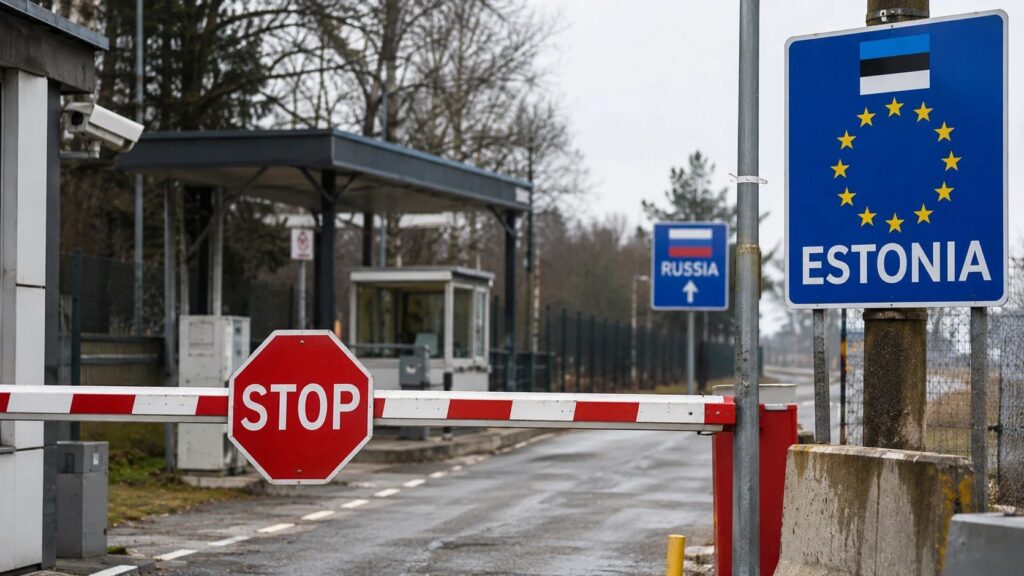
Estonia Announces Closure of Three Border Crossings
Foreign Minister Margus Tsahkna said all Estonian-Russian border crossing points would close from December 1.
The announcement means that the three existing operational crossings will be affected:
- Narva: One of the main crossing points between Estonia and Russia.
- Luhamaa: An important road crossing in southeastern Estonia.
- Koidula: Another operational crossing used for pedestrian and freight movement.
The crossings currently provide limited opportunities for people and commercial goods to travel between the neighbouring countries.
Their closure would significantly restrict regular land-border movement between Estonia and Russia.
Tsahkna did not specify how long the restrictions would remain in place or whether the government had established a date for reopening the crossings.
The decision reflects the government’s assessment that additional security measures are necessary following the suspected sabotage incident.
Foreign Minister Warns Russia of Consequences
Announcing the decision, Tsahkna issued a strong warning to Moscow.
He said Russia must understand that hostile actions against Estonia would carry consequences.
The foreign minister communicated the government’s position through a post on the social media platform X.
His statement indicates that Tallinn views the border closure as part of a broader response to security threats rather than simply an administrative adjustment to border operations.
The Estonian government has increasingly focused on protecting critical infrastructure, defence-related businesses and national security institutions against potential external interference.
The latest announcement demonstrates its willingness to introduce additional restrictions when authorities believe national security is at risk.
Moscow Has Not Immediately Responded to Estonia’s Allegations
Russia had not issued an immediate response to Estonia’s accusations or the announcement of the border closure at the time of the Reuters report.
Moscow has regularly rejected allegations from European governments that Russian intelligence agencies are involved in sabotage operations across Europe.
The latest incident therefore adds another point of disagreement between Russia and European countries over alleged covert activities, national security and regional stability.
The accusations are particularly sensitive because they involve a defence company whose products are connected to the rapidly developing drone industry.
Estonia has not publicly established through an independent judicial process the responsibility of the Russian state for the alleged operation.
The investigation and any subsequent legal proceedings will be important in determining the circumstances of the incident.
Estonia’s NATO and European Union Membership Adds Strategic Importance
Estonia is a member of both NATO and the European Union and has remained a strong supporter of Ukraine since Russia launched its full-scale invasion in February 2022.
Its geographical position on the eastern edge of NATO and the EU makes its relationship with Russia particularly sensitive.
The country shares a border with Russia and has maintained security arrangements designed to protect its territory and critical infrastructure.
The decision to close the border crossings comes against a wider backdrop of heightened European concerns about military security, intelligence activities and possible hybrid operations.
For Estonia, protecting its defence industry is particularly important because the country has been strengthening its military capabilities and supporting Ukraine.
The latest restrictions could also influence cross-border movement, commercial transportation and regional travel arrangements.
Drone Manufacturing Becomes an Important Security Priority
The targeting of Threod Systems has drawn attention to the growing strategic importance of the European drone manufacturing industry.
Unmanned aerial systems have become increasingly important in modern defence operations, surveillance, reconnaissance and military intelligence.
Companies manufacturing these technologies are therefore becoming strategically significant to national defence capabilities.
Estonia’s decision to strengthen security following the suspected attack reflects concerns about protecting businesses that contribute to military technology and defence production.
The incident also highlights the importance of cooperation between private companies and government security institutions.
Protecting industrial facilities, monitoring potential threats and maintaining effective law enforcement responses are becoming increasingly important responsibilities for European governments.
Border Closure Could Affect Travel and Commercial Movement
The planned shutdown of the three operational crossings will have practical consequences for people and businesses using the Estonia-Russia land border.
Narva, Luhamaa and Koidula currently facilitate pedestrian and freight movement, according to Estonian public broadcaster ERR, as cited by Reuters.
Once the closures take effect, travellers and transport operators will need to consider alternative arrangements.
The restrictions could create additional difficulties for cross-border movement and affect commercial activities that depend on the remaining land connections.
However, the Estonian government has not specified the expected economic impact or the precise duration of the restrictions.
The immediate priority, according to the government’s announcement, is strengthening security and reducing risks associated with suspected hostile activities.
Baltic Region Faces Continuing Security Challenges
Estonia’s decision comes at a time when security concerns remain high across the Baltic region.
Estonia, Latvia and Lithuania are strategically important members of NATO and the European Union because of their geographical proximity to Russia and their support for Ukraine.
The countries have increasingly focused on strengthening border security, protecting infrastructure and improving cooperation against potential security threats.
Estonia’s latest move demonstrates how suspected sabotage incidents can lead to significant policy decisions affecting international movement and regional relations.
The situation could also encourage additional discussions among European governments about protecting defence industries and improving cooperation between intelligence and law enforcement agencies.
What Happens Next?
The closure of Estonia’s Russian border crossings is scheduled to begin on December 1, 2026.
In the meantime, Estonian authorities are expected to continue investigating the attempted arson attack and the alleged involvement of Russia’s GRU intelligence service.
The duration of the border closure remains uncertain because Tsahkna did not announce a reopening date.
The investigation will also determine the extent of the suspects’ alleged involvement and whether further legal or security measures are required.
For Estonia, the incident has become a significant national security issue, linking the protection of defence manufacturing facilities with the country’s broader relationship with Russia.
The decision to close all three operational crossings sends a strong political and security message from Tallinn.
As tensions continue, developments surrounding the investigation and the implementation of border restrictions will remain important indicators of the future direction of Estonia-Russia relations.