US Homebuilder Confidence Falls to Lowest Level in 14 Years as High Mortgage Rates Hurt Demand
Confidence among American homebuilders has deteriorated sharply, reaching its weakest level in more than 14 years as elevated mortgage rates, rising construction expenses and declining buyer demand continue to weigh on the housing market.
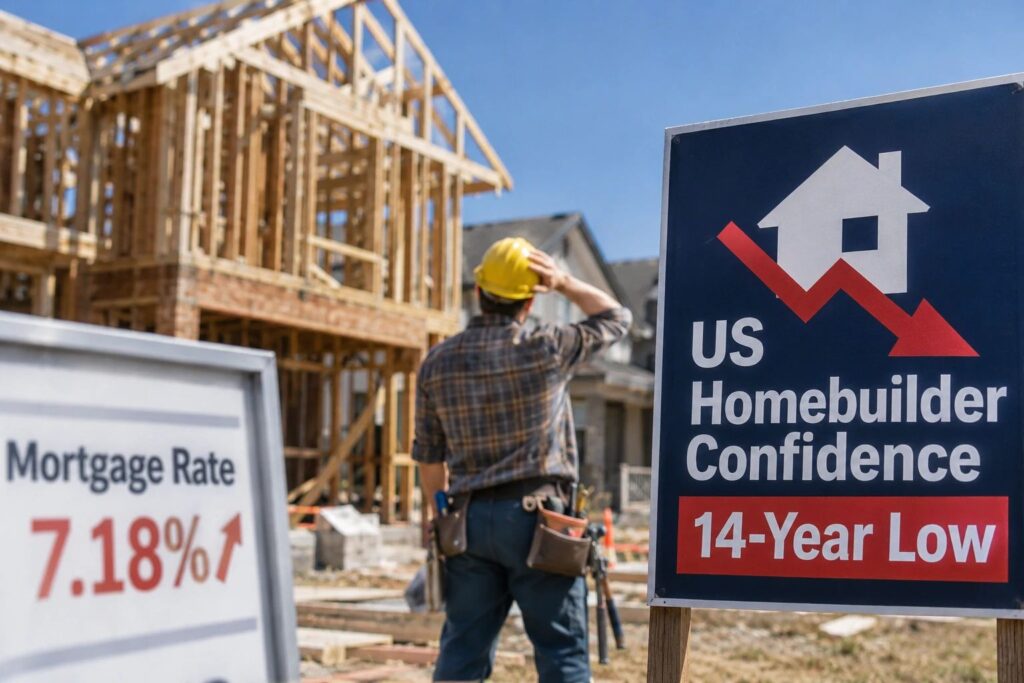
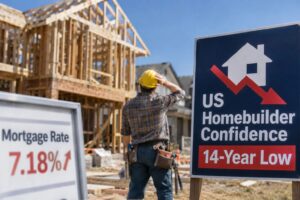
The National Association of Home Builders (NAHB) and Wells Fargo Housing Market Index fell four points to 25 in November 2026, marking its lowest reading since April 2012.
The latest figures highlight the growing difficulties facing residential construction companies as potential homebuyers struggle with affordability and financing costs.
Mortgage Rates Keep Potential Buyers Away
High borrowing costs remain one of the biggest challenges for the US housing industry.
Mortgage rates above 7% have made home purchases increasingly expensive, discouraging many households from entering the market.
The average 30-year fixed mortgage rate reached 7.40% in mid-October, its highest level in three years, before easing to approximately 7.18%.
Even with the recent decline, financing costs remain elevated enough to limit purchasing power and weaken demand for newly constructed properties.
Builders Increasingly Offer Discounts
Weak demand is forcing construction companies to introduce more attractive purchasing incentives to secure customers.
According to the November NAHB survey, 46% of homebuilders reduced selling prices, representing the highest proportion during the post-pandemic period.
The average price reduction remained at 6% for the eighth consecutive month.
Meanwhile, 68% of builders reported offering sales incentives, including mortgage-rate assistance and other promotional benefits.
These measures demonstrate the increasing pressure on developers to maintain sales activity in a challenging housing environment.
Construction Costs Create Additional Challenges
Homebuilders are also facing rising operating expenses that are making residential projects more difficult to manage.
Higher fuel prices, expensive building materials, import tariffs and shortages of construction workers have contributed to increased development costs.
NAHB Chairman Bill Owens said stepped-up immigration enforcement was keeping some legal workers away from construction sites, worsening labor shortages and increasing expenses for builders.
Higher transportation and subcontractor costs are adding further pressure to construction budgets.
Sales Expectations Continue to Weaken
The latest survey showed declines across all three major components of the housing market index.
The measure of current single-family home sales conditions dropped six points to 28.
The index tracking sales expectations over the next six months declined two points to 30.
Meanwhile, prospective buyer traffic fell two points to 16, reaching its weakest level in 15 years outside the early pandemic period.
All three indicators suggest that builders are facing difficulties attracting customers and maintaining confidence in future market conditions.
Housing Market Faces a Difficult Period
The combination of expensive mortgages, elevated construction costs and cautious consumers is creating a challenging environment for the American residential property sector.
Builders are increasingly relying on discounts and financial incentives to attract buyers, while some companies are reconsidering construction plans amid uncertainty over future demand.
The weakness in homebuilder confidence also reflects broader affordability problems affecting the US housing market.
Unless borrowing costs decline and household purchasing power improves, residential construction companies may continue facing pressure on sales and profitability.
The November confidence figures provide another indication that the US housing industry is struggling to regain momentum, with higher financing costs remaining a major obstacle for both builders and prospective homeowners.