Netanyahu Reaffirms Opposition to Palestinian State, Warns Against Iranian Influence
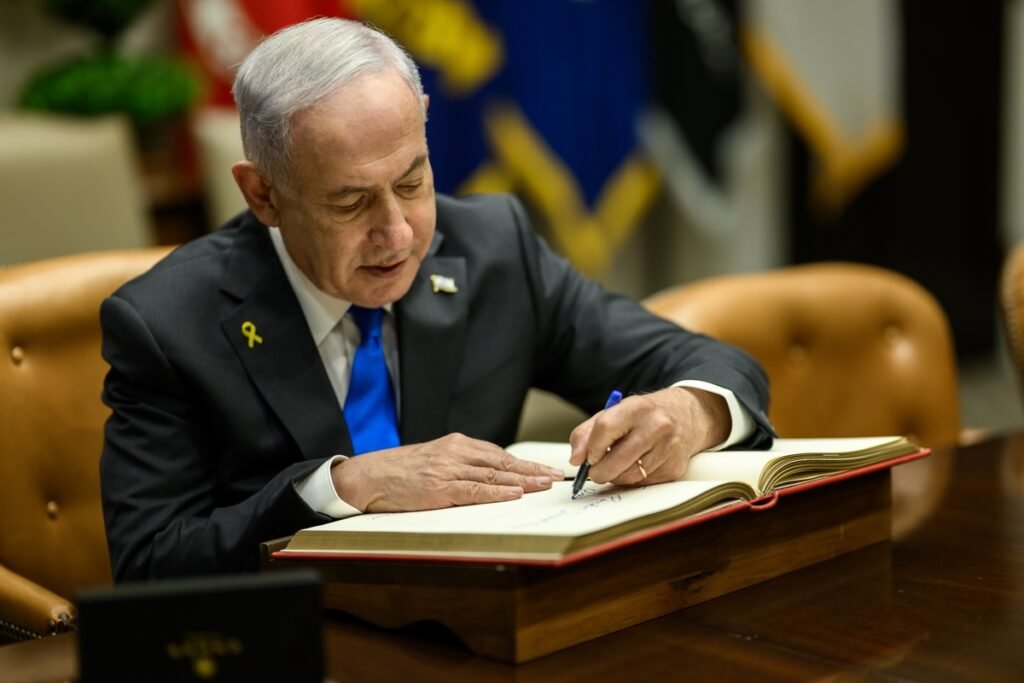
Jerusalem, August 23, 2026: Israeli Prime Minister Benjamin Netanyahu has again ruled out the establishment of a Palestinian state under his leadership, saying Israel will not allow a Palestinian entity that he believes could come under Iranian influence.
In a statement shared on social media, Netanyahu said that as long as he remains prime minister, a Palestinian state would not be established in Gaza or in Judea and Samaria, Israel’s term for the West Bank.
His latest comments come amid continuing disagreements over the future political and security arrangements for Gaza and the broader Israeli-Palestinian conflict.
Netanyahu links statehood to security concerns
Netanyahu has repeatedly argued that Palestinian statehood could create a security threat to Israel if territory were controlled by groups aligned with Iran or other armed organisations.
His position has hardened amid the continuing Gaza conflict and negotiations over a U.S.-backed framework for ending the war. Earlier this month, Netanyahu rejected a U.S.-backed Gaza plan and said Israel would not withdraw its forces until Hamas is genuinely disarmed.
On August 20, an Israeli official also said Netanyahu had made his opposition to Palestinian statehood clear during a meeting with Jared Kushner, a senior adviser to U.S. President Donald Trump.
Tensions over Gaza peace proposal
Netanyahu’s position has created a difficult situation for efforts to establish a long-term political settlement. The U.S.-backed proposal envisions steps toward ending the Gaza conflict, including Hamas disarmament and changes in the administration and security arrangements inside the territory.
Israel has insisted that Hamas must be fully disarmed before major steps such as reconstruction and an Israeli military withdrawal can proceed. Netanyahu reiterated that position this week, saying Gaza reconstruction should not begin until Hamas has surrendered its weapons.
The disagreement has also produced an unusual public tension between Netanyahu and the Trump administration, despite their close political relationship. Reports have described the Israeli leader’s rejection of the U.S.-backed plan as a significant point of friction.
Political battle inside Israel
Netanyahu’s comments also come as Israel approaches another politically important period, with the country’s political parties preparing for elections.
His government faces pressure from both the right and opposition groups over how Israel should handle Gaza, the West Bank and negotiations with the United States.
Netanyahu has previously said that he does not support the creation of a Palestinian state and has argued that Israel needs to retain strong security control to prevent attacks. In June, he said there was no room for a two-state arrangement between the Mediterranean Sea and the Jordan River.
Meanwhile, international pressure for a political solution continues to grow. Several governments and international figures continue to support a two-state framework, while Israeli leaders opposing Palestinian statehood argue that such an arrangement would threaten Israel’s security.
Future of Palestinian statehood remains uncertain
Netanyahu’s latest statement makes clear that Palestinian statehood remains a major political red line for his government.
The future of Gaza, the status of the West Bank and the possibility of a Palestinian state are expected to remain central issues in negotiations involving Israel, the United States and regional powers.
With fundamental disagreements still unresolved, the path toward a lasting political settlement remains uncertain. The coming months could determine whether diplomatic efforts produce a new framework or whether the divide over Palestinian statehood becomes an even greater obstacle to peace.