India and China Give Fresh Momentum to Border Talks With New Communication Measures
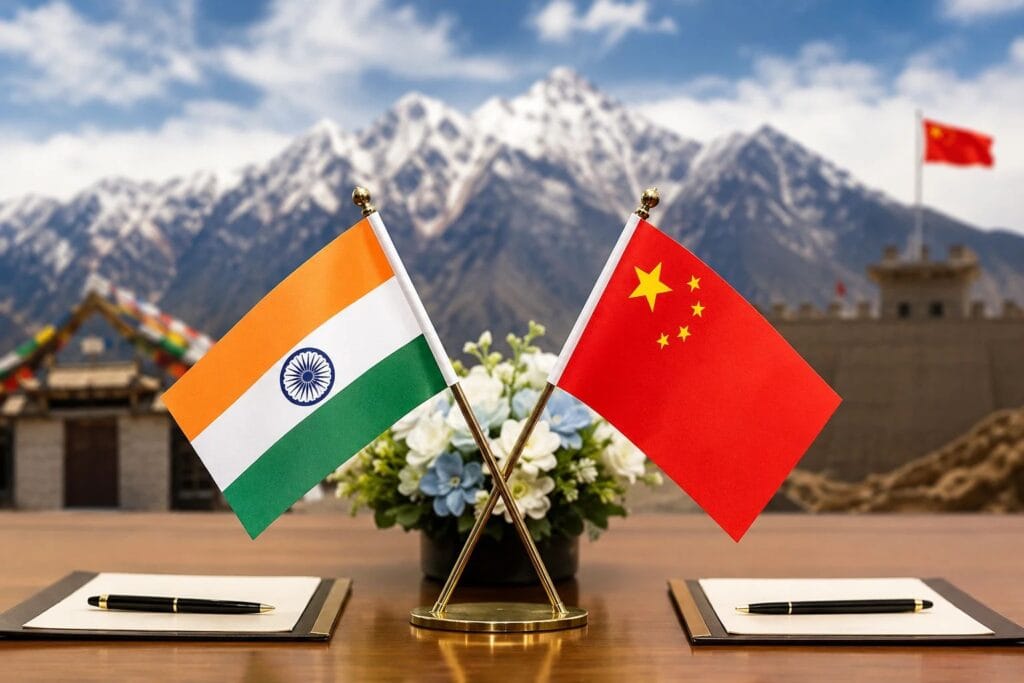
India and China have taken a new step toward managing their long-running Himalayan boundary dispute, agreeing to accelerate discussions on selected aspects of boundary delimitation while expanding direct communication between their military commanders.
The development followed the 25th round of Special Representatives’ talks held in Beijing on August 25, 2026. India’s National Security Adviser Ajit Doval and China’s Foreign Minister Wang Yi led the discussions, which produced an eight-point set of outcomes and areas of consensus.
Focus on an “Early and Substantial Harvest”
One of the most notable decisions was to advance work toward what both sides described as an “Early and Substantial Harvest” on boundary delimitation and border management.
Under the arrangement, an Expert Group on Boundary Delimitation and a Working Group on Border Management will take forward the respective discussions under the Working Mechanism for Consultation and Coordination on India-China Border Affairs, or WMCC.
Their immediate task will be to establish the terms of reference that will guide their future work.
The phrase “early harvest” suggests an effort to make progress on comparatively manageable portions of the broader dispute rather than waiting for a complete settlement of the entire frontier.
However, the latest agreement does not represent a final settlement of the India-China boundary dispute. Both countries continue to support negotiations aimed at reaching a fair, reasonable and mutually acceptable solution under the framework established by the 2005 agreement and subsequent Special Representatives’ discussions.
Two Additional Military Hotlines
The two countries have also agreed to create two additional military hotline channels covering the Eastern and Middle sectors.
The move is designed to improve communication between military authorities and reduce the possibility that incidents along the Line of Actual Control could escalate because of misunderstanding or delayed communication.
The Eastern Sector includes areas such as Arunachal Pradesh and Sikkim, while the Middle Sector covers Himachal Pradesh and Uttarakhand.
In addition, two new locations will be available for senior military commander-level meetings. These mechanisms are intended to provide additional channels for discussing problems that arise on the ground.
Preventing Misunderstandings Along the LAC
India and China agreed that developments on the ground should be dealt with quickly through existing diplomatic and military mechanisms.
These include the WMCC, meetings between local commanders and other established communication channels.
The objective is to resolve outstanding issues before they develop into larger confrontations and to reduce the risk of accidental escalation along the disputed frontier.
The two sides also discussed ways to improve their understanding of the Line of Actual Control in selected areas as part of better border management.
Cooperation Beyond the Border Dispute
The latest discussions also covered areas of practical cooperation.
India welcomed China’s efforts to increase the number of batches participating in the Kailash Manasarovar pilgrimage. The two countries also noted the reopening of three designated border trading points and agreed to encourage further cooperation in border trade, pilgrimage and other areas.
The developments indicate that both sides are attempting to broaden engagement while continuing to manage their unresolved territorial differences.
Trans-Border Rivers on the Agenda
Water-related cooperation was another important part of the outcome.
India and China agreed to hold the next meeting of their Expert-Level Mechanism on trans-border rivers in September. The countries will continue discussions on matters including hydrological data sharing and the renewal of relevant memorandums of understanding.
The mechanism is particularly important because rivers originating on the Tibetan Plateau flow into India and other downstream countries. Timely hydrological information can assist with flood forecasting and water-resource management.
The Next Round Is Planned for India
The two countries have also agreed that the 26th round of Special Representatives’ talks will be held in India in 2027.
The continuation of the Special Representatives’ mechanism demonstrates that diplomatic dialogue remains an important avenue for managing the dispute.
India and China share a long and largely disputed Himalayan frontier, and tensions escalated sharply after the 2020 military confrontation in eastern Ladakh. Since then, both sides have worked through diplomatic and military channels to reduce tensions and maintain stability.
A Carefully Managed Step Forward
The latest agreement represents progress in communication and border management, but it should not be interpreted as an immediate breakthrough on the territorial dispute.
The most significant development is the decision to pursue incremental progress while simultaneously strengthening mechanisms designed to prevent incidents from escalating.
For India and China, maintaining peace along the frontier is closely connected to the broader effort to improve bilateral relations. The new hotlines, additional meeting points, river discussions and renewed boundary negotiations could provide additional opportunities for both countries to manage differences.
Whether the “early and substantial harvest” produces concrete results will depend on the negotiations that follow. For now, the latest round has established a new framework for continued engagement and created additional safeguards against misunderstandings along the Line of Actual Control.