Nigeria’s Naira Faces Fresh Pressure as Election Uncertainty Makes Investors Cautious
November 23, 2026
Nigeria’s national currency, the naira, is facing renewed pressure in the foreign exchange market as growing political uncertainty ahead of the 2027 general elections encourages investors to adopt a more cautious approach toward the country’s economy.
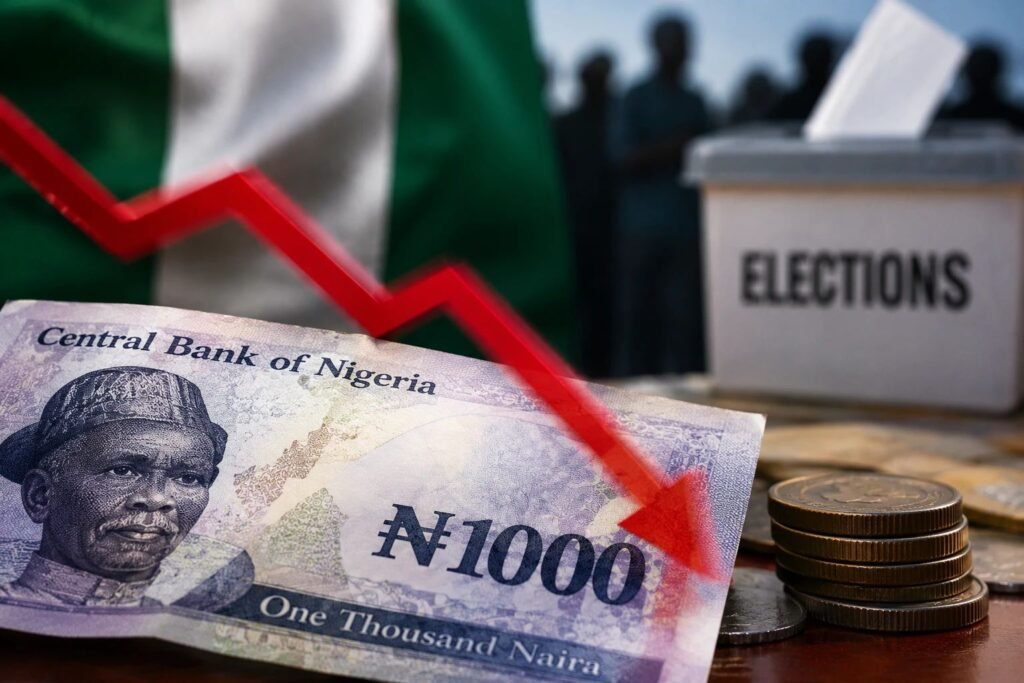
The currency has weakened against the US dollar in recent trading sessions, raising concerns about the stability of Nigeria’s foreign exchange market. Market participants are increasingly monitoring political developments, capital movements and the availability of foreign currency as the country approaches another important electoral cycle.
Political Uncertainty Weighs on Investor Confidence
Investors are becoming more careful about making financial commitments in Nigeria as questions surrounding the upcoming elections create uncertainty about the country’s future economic direction.
Foreign portfolio investors, who provide an important source of dollar liquidity, may delay investment decisions when political and economic conditions appear unpredictable.
Some investors could also decide to move funds into safer international markets until there is greater clarity about the election outlook and the policies that may follow.
Such decisions could create additional challenges for the naira because reduced foreign investment inflows mean fewer dollars entering the domestic financial system.
Dollar Demand Adds to Currency Challenges
Beyond political concerns, increasing demand for foreign exchange is contributing to the pressure on Nigeria’s currency.
Businesses require dollars to purchase imported goods, machinery, industrial materials and other essential supplies. Individuals also need foreign currency for international travel, education and overseas transactions.
Demand typically increases toward the end of the year as companies prepare for the festive season and consumers make additional purchases.
The combination of higher dollar demand and cautious foreign investors is creating an increasingly difficult environment for exchange rate stability.
Central Bank Faces Another Important Test
The Central Bank of Nigeria (CBN) faces the challenge of maintaining sufficient foreign exchange liquidity while protecting the country’s external reserves.
Recent market developments indicate that the monetary authority has increased its foreign currency interventions to improve dollar availability and reduce excessive exchange rate movements.
However, continuous intervention may not provide a lasting solution if demand consistently exceeds available supply.
Nigeria’s external reserves also remain an important factor in determining the central bank’s ability to support the domestic currency during periods of heightened market pressure.
Maintaining investor confidence, encouraging foreign exchange inflows and strengthening the country’s productive sectors will therefore remain important priorities.
Possible Impact on Businesses and Households
A weaker naira could have consequences extending well beyond the financial markets.
Nigeria relies on imports for various consumer products, industrial inputs, machinery and other essential goods. When the local currency loses value, importing these products becomes more expensive.
Businesses may respond by increasing selling prices, reducing profit margins or postponing expansion plans.
For ordinary households, higher import costs could contribute to rising prices and make it more difficult to manage everyday expenses.
Small businesses that depend on imported materials may face particularly difficult conditions if exchange rate instability continues.
What Investors Will Watch Next
The coming weeks could prove important for Nigeria’s currency market as investors assess political developments, central bank decisions, foreign exchange supply and movements in external reserves.
The government’s ability to maintain economic policy consistency during the election period could also influence international investor sentiment.
Although currency depreciation does not automatically indicate a broader economic crisis, prolonged uncertainty could discourage investment and complicate efforts to achieve stable economic growth.
For now, the naira’s performance will depend on several interconnected factors, including political confidence, dollar availability, monetary policy and the strength of foreign investment inflows.
Nigeria’s challenge will be to reassure financial markets that the approaching election season will not undermine the progress made toward improving economic stability.
Tags: Nigeria Economy, Nigerian Naira, Naira Exchange Rate, Foreign Exchange Market, Nigeria Elections 2027, Central Bank of Nigeria, CBN, US Dollar, African Financial Markets, Foreign Investors, Currency Depreciation, Emerging Markets, Economic News, Nigeria Business News, Investment Confidence.