Scientists Discover New Underground Amphibian in India’s Western Ghats, Named After Local Marathi Dialect
Kolhapur, Maharashtra, November India’s Western Ghats have revealed another fascinating example of hidden biodiversity. Scientists have formally identified a previously undocumented species of underground, legless amphibian in Maharashtra’s Kolhapur district, adding an important discovery to India’s rich wildlife diversity.
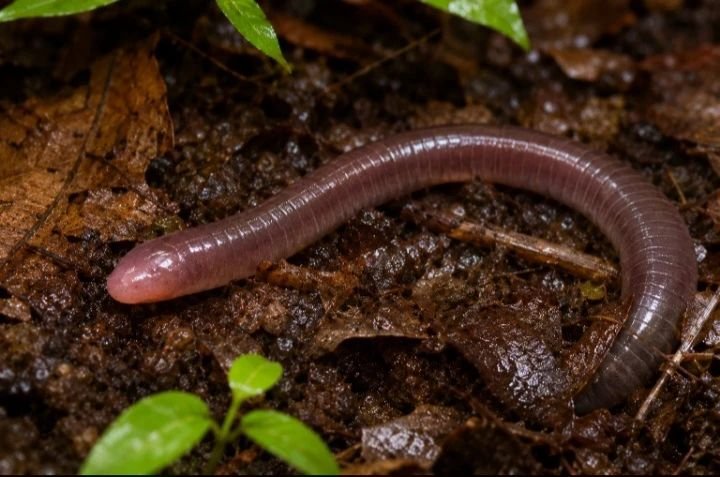
The newly described species has been named Gegeneophis chandgadi, in honour of the Chandgadi dialect of Marathi spoken in and around the Chandgad region.
The discovery was made in Buzawade village, located in Chandgad taluka of Kolhapur district. Researchers found the unusual amphibian beneath decaying wooden material, organic waste and bamboo leaf litter during the monsoon season in August 2025. Its scientific description was published in September 2026.
An Unusual Amphibian That Looks Like an Earthworm
The newly identified animal belongs to a group of amphibians called caecilians.
Unlike frogs and salamanders, caecilians do not have visible limbs. Their elongated bodies allow them to move through soil and underground spaces.
Because of their appearance, these creatures are frequently mistaken for earthworms or small snakes.
They spend most of their lives underground, making them difficult to observe during ordinary wildlife surveys.
The newly described species has a dark brown to flesh-coloured upper body, a lighter pinkish head and a translucent underside.
Adult specimens measure approximately 105 to 185 millimetres in length.
How Scientists Identified the New Species
Identifying the amphibian required detailed scientific investigation.
Researchers examined its physical characteristics, body structure and distinctive rings, known as annuli. They also conducted molecular genetic analysis to compare its DNA with that of other known caecilian species.
The combined evidence established that the specimens represented a distinct species rather than an already documented amphibian.
The research involved scientists from several institutions, including the Zoological Survey of India, Savitribai Phule Pune University, Yashwantrao Chavan Mahavidyalaya and the Mhadei Research Centre in Goa.
Why Was It Named Gegeneophis Chandgadi?
The scientific name carries a special connection to the local community.
Researchers selected the name chandgadi to recognise the Chandgadi dialect spoken in the Chandgad region.
This naming approach highlights the relationship between scientific discoveries and local cultural identity.
Residents also played an important role in helping researchers understand the local environment and locate the elusive underground animal.
The discovery demonstrates how traditional ecological knowledge and modern scientific research can work together to document previously unknown wildlife.
Western Ghats: A Treasure House of Hidden Biodiversity
The Western Ghats are among India’s most important biodiversity regions and are recognised internationally for their exceptional ecological importance.
Stretching along India’s western coastline, this mountain range supports numerous species of plants, reptiles, amphibians, birds and mammals.
Many species found here are endemic, meaning they naturally occur nowhere else in the world.
The discovery of Gegeneophis chandgadi further strengthens the scientific importance of the northern Western Ghats.
Researchers have also identified several additional genetic lineages that could represent species not yet formally described.
This suggests that more biodiversity discoveries may emerge from the region through continued exploration.
Why This Discovery Matters for Conservation
The discovery is particularly significant because the species was found in a village landscape rather than exclusively inside a protected forest.
Its presence around residential and agricultural areas suggests that ordinary rural environments can also support valuable wildlife.
However, researchers currently have limited information about its geographical distribution and population size.
The species is therefore recommended for classification as Data Deficient under the International Union for Conservation of Nature’s Red List criteria until further research becomes available.
Scientists have also highlighted the dangers facing amphibians worldwide. Habitat destruction, pollution, excessive pesticide use and environmental changes can threaten these sensitive animals.
Protecting soil quality, natural vegetation and suitable underground habitats will be important for conserving such species.
Conclusion
The discovery of Gegeneophis chandgadi is a reminder that remarkable wildlife can remain hidden in familiar landscapes.
A seemingly ordinary village backyard in Maharashtra has helped scientists uncover a previously undocumented amphibian and expand knowledge of India’s biodiversity.
As researchers continue exploring the Western Ghats, more unexpected discoveries could emerge from beneath the soil.
The finding also reinforces an important conservation message: protecting biodiversity requires attention not only to large forests and famous wildlife reserves but also to the smaller habitats that support life beneath our feet.