Google AI in Schools Faces Scrutiny After Lawsuit Raises Concerns About Teen Mental Health
The growing use of artificial intelligence in classrooms is facing renewed scrutiny after a lawsuit reportedly alleged that Google’s AI technology contributed to a teenager’s mental health crisis.
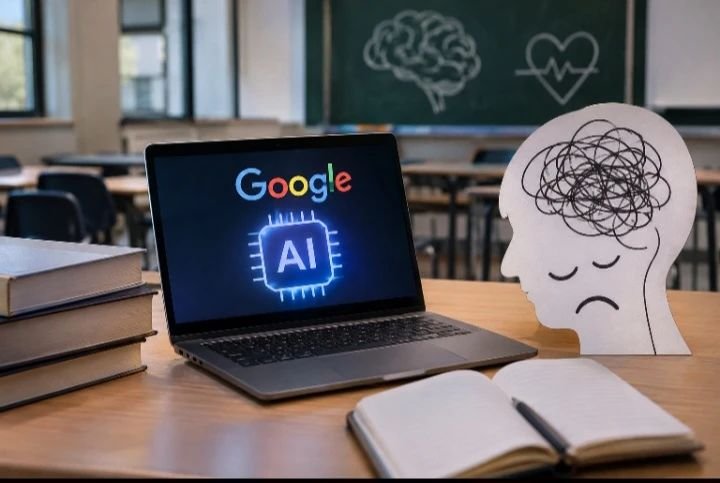
The case raises important questions about how artificial intelligence interacts with young users, particularly students who may rely on digital tools for academic assistance, personal guidance, and emotional support.
AI in Education: When Digital Assistance Raises Safety Concerns
Artificial intelligence has rapidly become part of modern education. Students increasingly use AI-powered applications to understand difficult subjects, complete assignments, explore new ideas, and receive personalized explanations.
Google has been among the major technology companies expanding AI capabilities across educational products. Its Gemini technology and AI-powered learning features are designed to make information more accessible and support classroom activities.
However, the expansion of these tools has also raised questions about their potential impact on young people’s emotional well-being.
Children and teenagers are still developing their ability to evaluate information, understand digital interactions, and distinguish between automated responses and meaningful human guidance. Consequently, interactions with sophisticated AI systems may require additional safeguards.
Lawsuit Raises Questions About Google’s Responsibility
The November 5 Bloomberg report describes a lawsuit alleging that Google’s AI technology, used in a school-related setting, contributed to a teenager’s mental health crisis.
These allegations raise important questions about the responsibilities of technology companies when their products are used by minors.
Among the central issues are:
- Whether AI systems provide appropriate responses to emotionally vulnerable teenagers.
- Whether existing safety mechanisms adequately recognize signs of psychological distress.
- Whether parents and educational institutions receive sufficient information about potential risks.
- Whether technology companies should introduce stronger protections for school-age users.
- How responsibility should be determined when AI interactions are alleged to contribute to personal harm.
The allegations should not be treated as established facts. Their validity and any legal responsibility must be determined through the legal process.
Why AI Safety in Schools Matters
Schools have traditionally provided structured environments where students can receive academic instruction, emotional support, and guidance from qualified adults.
AI applications introduce another layer into this environment.
Although these technologies can make education more accessible, they also create challenges involving privacy, supervision, reliability, and age-appropriate interactions.
Educational institutions need clear policies governing how students interact with AI applications. Teachers and parents should understand what these systems can and cannot do.
Importantly, AI tools should complement human relationships rather than replace teachers, counselors, parents, or qualified mental health professionals.
Google and the Changing Debate Around AI for Children
The lawsuit arrives amid broader discussions about the safety of artificial intelligence products designed for younger audiences.
Google has faced growing attention over how its educational technology handles student access to AI. On November 4, 2026, Bloomberg also reported on changes to Google’s school-account settings, including controls for Gemini and other AI features. Bloomberg +1
The wider debate extends beyond a single company.
Technology developers, school administrators, regulators, and families must consider how to balance the educational advantages of AI with the responsibility to protect children.
Previous legal disputes involving AI chatbots and alleged harm to teenagers have also intensified discussions about safeguards and corporate accountability. Reuters +1
What This Could Mean for the Future of AI Education
The case could contribute to a wider discussion about the standards that should govern AI-powered educational products.
Several measures deserve consideration:
- Stronger age-appropriate safeguards: AI platforms should recognize that younger users require additional protections.
- Improved emotional safety: Systems should respond carefully when conversations indicate distress or vulnerability.
- Greater parental involvement: Parents should have meaningful information about how educational AI tools are used.
- School-level oversight: Administrators should establish transparent policies for AI adoption.
- Independent safety assessments: Educational AI products should undergo appropriate evaluations before widespread student deployment.
Ultimately, the future of AI in education should be measured not only by technological innovation but also by its ability to support students safely.
Conclusion
The lawsuit involving Google’s AI technology highlights an important challenge facing the education sector: ensuring that technological progress does not come at the expense of children’s well-being.
Artificial intelligence has considerable potential to improve learning, encourage creativity, and provide personalized educational assistance. However, responsible implementation requires meaningful safeguards, transparency, and human oversight.
As the legal case develops, its allegations may become part of a broader conversation about how technology companies should protect young users in an increasingly AI-driven educational environment.
The central question is no longer simply how AI can transform education, but how it can do so responsibly.