Two Oil Tankers Catch Fire Near Strait of Hormuz After Reported Mine Explosions, Iran Says
TEHRAN, November 13, 2026 — Tensions around the strategically important Strait of Hormuz have intensified after Iran’s army reported that two oil tankers caught fire following explosions involving naval mines in waters east of the narrow shipping passage.
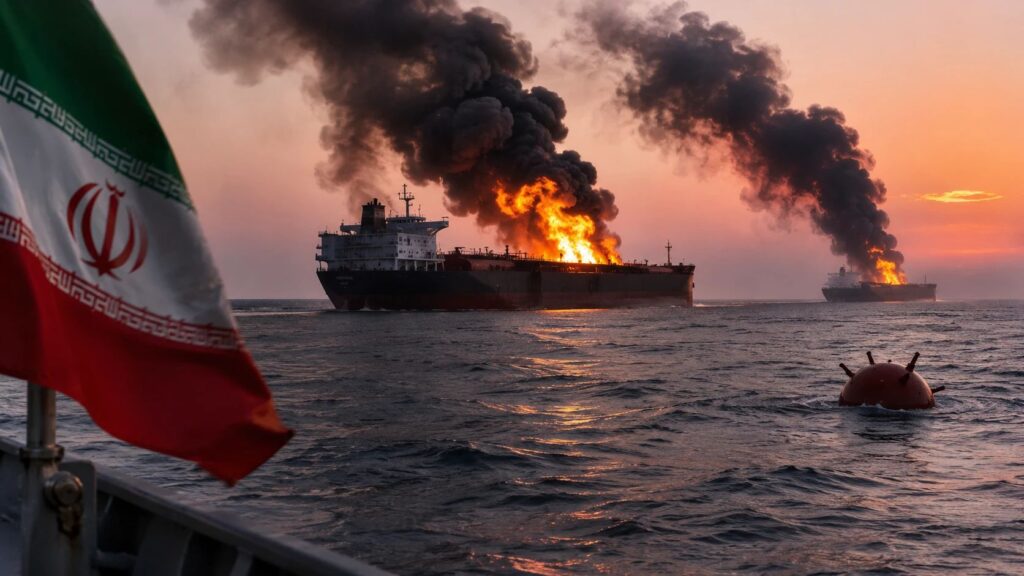
According to a statement released by the Iranian Army, the incidents occurred on Thursday afternoon after the vessels allegedly entered a restricted maritime zone described by Tehran as forbidden and unsafe.
Iranian military authorities claimed that the ships ignored repeated warnings before entering the area. The army also alleged that both vessels had switched off their radar systems before the explosions occurred.
The latest development has raised fresh concerns about maritime security in one of the world’s most important energy transportation corridors.
Iran Accuses Tankers of Ignoring Maritime Warnings
Iran’s army said the two vessels entered a designated restricted area despite warnings about potential dangers. Military officials claimed that the tankers subsequently struck naval mines, triggering fires aboard the ships.
The Iranian authorities have described the vessels as violating maritime restrictions. However, independent confirmation of the circumstances surrounding the explosions and the ships’ activities was not immediately available.
The incident comes amid heightened military tensions in the region, where restrictions on commercial shipping have become an increasingly significant international concern.
IRGC Previously Reported Explosions Involving Two Supertankers
Earlier on Thursday, the naval forces of Iran’s Islamic Revolutionary Guard Corps (IRGC) reported that two supertankers carrying more than four million barrels of oil had been disabled following explosions while attempting to cross the Strait of Hormuz on Wednesday night.
According to the IRGC, the vessels continued through a maritime route that Iranian authorities had repeatedly identified as unauthorized and unsafe.
The two announcements highlight the growing security risks facing commercial shipping operators navigating waters around the strait.
Iranian Military Issues Strong Warning
Iranian Army Chief Commander Amir Hatami also stressed the country’s military readiness, particularly the capabilities of its air defence forces.
Hatami warned that any further aggression against Iran would trigger a stronger response from the country’s armed forces.
His remarks underline Tehran’s determination to maintain military readiness as tensions continue to affect the wider Gulf region.
Why the Strait of Hormuz Matters to Global Oil Markets
The Strait of Hormuz is one of the world’s most strategically important maritime routes. It connects the Persian Gulf with the Gulf of Oman and the Arabian Sea, making it a vital passage for international energy shipments.
Millions of barrels of crude oil and petroleum products normally pass through the narrow waterway, supplying major markets across Asia and other regions.
Any disruption to shipping operations can create uncertainty for oil producers, international traders, shipping companies and energy-importing countries.
For countries heavily dependent on imported petroleum, prolonged instability could increase transportation expenses, complicate supply arrangements and contribute to fluctuations in global energy prices.
International Shipping Faces Renewed Uncertainty
The latest reported explosions could further complicate commercial navigation in the Gulf, particularly if additional restrictions or security measures are introduced.
Shipping companies may need to reassess vessel routes, insurance arrangements and operational risks before sending tankers through the affected waters.
The situation also raises questions about how regional and international stakeholders will respond to the growing maritime security challenge.
For now, the full circumstances of the reported incidents remain unclear. Independent verification, further information about the vessels and clarification of the damage will be important in determining the wider consequences.
As tensions continue around the Strait of Hormuz, international attention is likely to remain focused on the safety of commercial shipping and the potential implications for global energy supplies.