Ukraine Warns SpaceX Starshield Restrictions Could Weaken Defences Against Russian Drones Ahead of Winter
KYIV, Ukraine — Ukraine has warned that restrictions affecting its Starshield satellite communications system are weakening its ability to intercept Russian drones, raising fresh concerns about the country’s capacity to protect critical energy infrastructure as winter approaches.
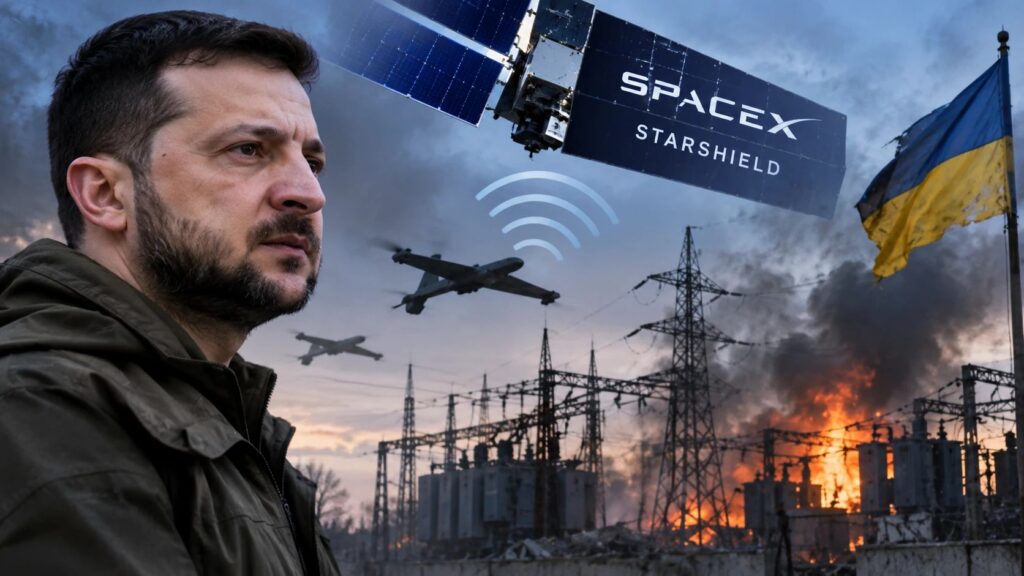
President Volodymyr Zelenskyy said limitations on the satellite communications service operated by Elon Musk’s SpaceX were causing Ukrainian interceptor drones to lose contact with their operators during flight.
The disruption could significantly affect Ukraine’s air defence capabilities at a time when Russia is continuing attacks on electricity networks, energy facilities and other critical infrastructure.
Zelenskyy said Ukrainian interceptor drones were experiencing communication problems when travelling faster than 161 kilometres per hour along the front line and over Russian-occupied territory. The loss of connectivity makes it difficult for operators to control the drones and intercept incoming Russian Shahed attack drones.
The Ukrainian president has called for the restrictions to be lifted, warning that the country’s ability to protect civilians and energy infrastructure before winter depends partly on restoring reliable satellite communications.
Zelenskyy Seeks Urgent Intervention From Washington and SpaceX
Zelenskyy said Ukraine was expecting the restrictions affecting Starshield to be removed and instructed the country’s Ministry of Foreign Affairs, Ministry of Defence and Presidential Office to work closely with American officials and SpaceX.
He emphasised that reliable communications were essential to protecting Ukrainian lives and defending important infrastructure against Russian aerial attacks.
The Ukrainian government is particularly concerned because the country faces another difficult winter amid continued Russian efforts to damage electricity generation and distribution facilities.
Satellite communications have become an important component of Ukraine’s military operations, supporting coordination between operators, surveillance systems and unmanned aerial vehicles.
Any interruption to these services can create serious operational difficulties, particularly when interceptor drones are required to respond quickly to incoming threats.
Zelenskyy also questioned whether the restrictions were caused by technical problems or had been deliberately imposed by SpaceX.
He referred to earlier assurances from US Secretary of State Marco Rubio that Starshield was subject to greater control by the American government.
Starshield Dispute Raises Questions About Private Companies in Warfare
The dispute has highlighted the growing influence of private technology companies in modern military conflicts.
SpaceX’s satellite communications technology has played an important role in maintaining connectivity for Ukrainian forces since Russia launched its full-scale invasion.
The Starlink and Starshield systems have helped provide communications in areas where conventional telecommunications infrastructure has been damaged or destroyed.
However, the latest restrictions have raised questions about the extent to which private companies should control technology that has become essential to a country’s defence capabilities.
Ukraine depends on reliable communications to coordinate military operations and operate certain unmanned systems.
The situation also demonstrates the complicated relationship between technology companies, governments and military organisations when commercial infrastructure becomes part of national security operations.
For Ukraine, the immediate priority is restoring dependable connectivity and ensuring that interceptor drones can continue operating effectively.
Russian Strike Damages Energy Infrastructure in Odesa Region
Meanwhile, Russian attacks have continued to damage Ukrainian infrastructure.
A Russian strike on Chornomorsk, a port city in the Odesa region, injured six people and damaged energy infrastructure, according to regional governor Oleh Kiper.
The attack also damaged a gas pipeline and nearby residential buildings. Two parked vehicles caught fire following the explosion and falling debris.
A facility operated by DTEK Odesa Electric Networks was also hit, temporarily leaving approximately 41,000 customers without electricity.
The incident demonstrates the continuing vulnerability of Ukraine’s energy infrastructure as the country prepares for colder weather.
Electricity distribution facilities are particularly important because damage to substations and power networks can affect large numbers of households and businesses.
Restoring electricity supplies can also become more difficult when attacks continue to target infrastructure across different regions.
Zaporizhzhia Also Hit by Overnight Russian Airstrikes
The southeastern Ukrainian city of Zaporizhzhia experienced additional Russian attacks overnight.
According to Ukraine’s State Emergency Service, six people were injured, including a two-year-old child.
The attacks added to the pressure on emergency responders and local authorities already dealing with the consequences of repeated aerial strikes.
Zelenskyy said Russia had launched more than 2,300 drones, 1,590 guided aerial bombs and 15 missiles of various types against Ukraine over the preceding week.
The scale of the attacks highlights the continuing intensity of aerial warfare and the importance of maintaining effective air defence systems.
Ukrainian Drone Attacks Damage Russian Infrastructure
The fighting has also continued inside Russian territory.
Ukrainian drone strikes damaged two electrical substations in Russia’s Rostov region, killing a chief engineer, according to regional governor Yuri Slyusar.
Four other people were injured when debris from intercepted drones fell on their vehicles. Another person was wounded after debris struck an industrial facility in the village of Troitskoye.
Ukrainian forces also targeted Russia’s Tatarstan region.
The mayor of Nizhnekamsk, Radmir Belyaev, reported damage to the city’s industrial zone following what he described as a large-scale and prolonged attack.
Six people were injured, while heating and hot-water supplies were disrupted in some parts of the city.
Ukraine’s General Staff said the attacks targeted Nizhnekamskneftekhim, a major petrochemical complex, and a production facility operated by Sibur. An oil refinery in the area was also reportedly hit.
Russia’s Defence Ministry said its forces had intercepted 533 Ukrainian drones overnight across multiple Russian regions and surrounding areas.
Black Sea Shipping Faces New Security Concerns
The conflict has also raised concerns about maritime security in the Black Sea.
Romanian Prime Minister Luca Niculescu said three commercial vessels were struck by drones overnight, adding to growing fears that the conflict could create further risks for international shipping.
Romania’s Defence Ministry reported that a Greek-flagged oil tanker was hit by a drone, causing a fire that was extinguished by its crew.
Two additional commercial vessels were subsequently struck, with their crews also managing to extinguish fires.
No casualties were reported in the incidents.
Romanian authorities did not establish the origin of the drones involved in the attacks.
The incidents have increased concern about the safety of commercial shipping routes near NATO territory and the potential consequences of the continuing conflict.
Romania has called for stronger maritime security cooperation with its regional partners and NATO allies.
Ukraine Faces a Difficult Winter
The latest developments underline the growing challenges facing Ukraine as winter approaches.
The country must protect its electricity infrastructure, maintain essential services and ensure that military communications remain operational despite repeated attacks.
The Starshield restrictions have added another complication to an already difficult security situation.
If interceptor drones continue losing communication with their operators, Ukraine could face additional difficulties responding to incoming Russian aerial threats.
At the same time, damage to electricity networks and gas infrastructure could increase pressure on households and businesses during the colder months.
The Ukrainian government is therefore seeking urgent cooperation with Washington and SpaceX to resolve the communications problem.
The dispute also raises broader questions about the role of commercial satellite networks in modern warfare and the responsibilities of private technology companies whose systems have become essential to national defence.
For Ukraine, restoring reliable communications is not simply a technological concern. It is closely connected to protecting civilians, defending energy facilities and maintaining the country’s ability to withstand another winter of war.