Thousands Take Part in Cuba’s Marabana Marathon as Runners Protest US Economic Sanctions
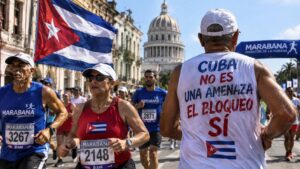
HAVANA, Cuba — Thousands of runners took to the streets of Havana for the 40th edition of the Marabana international marathon, with many participants using the sporting event to express opposition to US economic sanctions against the Caribbean island.
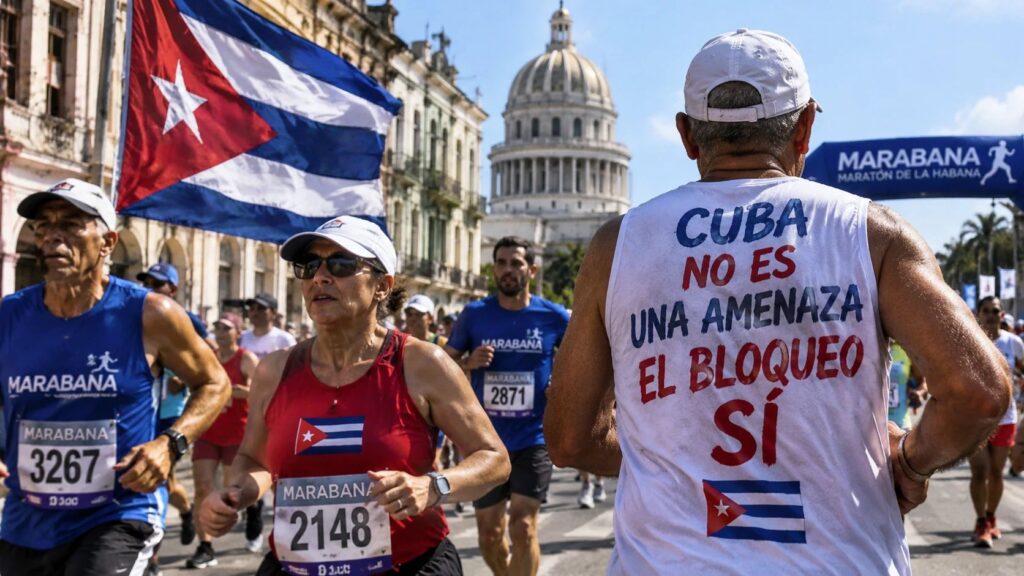
The annual marathon, organised every November to commemorate the founding of Havana, brought together approximately 3,000 participants, including international runners, families, people with disabilities and local residents.
The race passed through some of the Cuban capital’s most recognisable locations, including Paseo del Prado and the Capitol building. While many participants joined to compete in the sporting event, others used the occasion to communicate their concerns about the country’s economic difficulties and the impact of American restrictions.
Several runners wore messages on their backs declaring, “Cuba is not a threat; the blockade is.”
The event became an unusual combination of international sporting competition and public expression of solidarity with Cuba as the country continues to experience an economic and energy crisis.
Marathon Becomes a Platform for Protest Against US Sanctions
The 40th Marabana marathon attracted attention not only because of its sporting significance but also because of the messages displayed by participants.
Runners wore signs opposing the American economic embargo and expressing support for the Cuban population.
Yuraldi Cava, a 58-year-old state employee participating in the race, said the economic blockade was suffocating ordinary Cubans.
He expressed confidence that the country would overcome the difficulties.
Some foreign participants also demonstrated solidarity with Cuba. Around 70 international runners took part, including visitors from countries such as Mexico, Italy, Vietnam, France, Germany and Chile.
Several wore red-and-white sweatshirts carrying the message “Cuba is not alone.”
The participation of foreign runners added an international dimension to the event and highlighted how the country’s economic situation has attracted attention beyond its borders.
US Economic Restrictions Deepen Cuba’s Energy Crisis
Cuba has experienced prolonged economic difficulties, with American sanctions contributing to restrictions on trade, finance and access to international resources.
The United States first imposed its economic embargo against Cuba in 1960, following the revolution led by Fidel Castro that overthrew the government of Fulgencio Batista and resulted in the nationalisation of properties belonging to American citizens and companies.
Relations between Washington and Havana have remained strained for decades.
The latest pressure intensified after US President Donald Trump announced in January that tariffs would be imposed on countries supplying oil to Cuba.
The announcement has effectively restricted fuel supplies to the island, adding to existing shortages and worsening its energy problems.
The resulting electricity shortages have disrupted everyday life across the country.
Power outages have affected water supplies, internet connectivity and telephone services, creating additional difficulties for households, businesses and public institutions.
The energy crisis has also increased pressure on Cuba’s already struggling economy.
Longstanding International Marathon Faces Financial Difficulties
Organising the 40th edition of Marabana required considerable effort amid the country’s economic difficulties.
Mayté Vigoa, Havana’s provincial government coordinator for sports, said maintaining the international competition had been challenging because of the island’s precarious financial situation.
She confirmed that Adidas, a longtime sponsor of the marathon, did not provide support for this year’s event.
Other international companies with longstanding business relationships in Cuba have also announced withdrawals.
Spanish hotel group Meliá Hotels International was among the companies reported to be withdrawing from the island amid increasing pressure associated with American sanctions.
The absence of established sponsors presents additional challenges for organisers attempting to maintain an internationally recognised sporting competition.
Despite these difficulties, the organisers managed to bring together thousands of participants and continue the annual tradition.
Families and People With Disabilities Join the Competition
The marathon was not limited to professional athletes and experienced long-distance runners.
Families with children and people with disabilities also participated, wearing sports clothing and carrying water bottles as they moved through Havana’s streets.
Spectators gathered along the route to encourage participants and celebrate the event.
The broad participation reflected the community character of Marabana, which has developed into an important sporting occasion for residents and international visitors.
For many participants, the event offered an opportunity to enjoy physical activity while expressing solidarity with their country.
Marabana Maintains Its International Sporting Recognition
Marabana is recognised by the Association of International Marathons and Distance Races (AIMS), an international organisation supporting recognised long-distance running competitions.
The event includes a full marathon covering 42.195 kilometres, as well as a half-marathon and shorter races over 10 kilometres and five kilometres.
Runners completing recognised distances can use their official finishing times as qualifying marks for other international competitions, subject to the relevant event requirements.
The competition has become one of Cuba’s most important annual international sporting events and attracts participants from different countries.
Its 40th edition was particularly significant because organisers had to overcome financial and logistical difficulties to maintain the event.
Economic Challenges Continue to Affect Everyday Life in Cuba
The marathon took place against the background of an increasingly difficult economic situation.
Fuel shortages and prolonged electricity interruptions have affected several essential services.
Power outages have disrupted water distribution, telecommunications and internet access, making daily activities more complicated for residents.
Businesses have also faced difficulties operating consistently because of unreliable electricity supplies and limited access to fuel.
The withdrawal of international companies and the reduction of external support have added further pressure to the country’s economic environment.
The situation has made it increasingly difficult for organisations to arrange international events and maintain commercial activities.
A Sporting Event With an International Message
The 40th Marabana marathon demonstrated how a major sporting competition can also become a platform for expressing social and political concerns.
Although the primary purpose of the event was athletic participation, many runners used the occasion to communicate messages about economic restrictions and solidarity with Cuba.
The presence of international participants also gave the competition a wider dimension.
For Havana, successfully organising the marathon despite financial difficulties was an opportunity to maintain an important annual tradition and demonstrate the city’s commitment to international sporting activities.
As Cuba continues to face energy shortages, economic pressures and international political tensions, the challenges highlighted during the marathon are likely to remain important issues for the country.
The event brought together sport, community participation and public expression, turning the streets of Havana into a gathering place for runners and supporters from Cuba and abroad.