Middle East Tensions Escalate as Houthi Rebels Threaten Aden and Tanker Attack Sparks Maritime Fears
ADEN, Yemen, November 17, 2026 — Security tensions across the Middle East are rising once again as Saudi-backed military forces strengthen their positions near the Yemeni port city of Aden amid fears of a possible advance by Iran-supported Houthi rebels.

The latest developments have added another layer of uncertainty to an already unstable regional situation. From Yemen’s battlefields to the strategically important Strait of Hormuz, military confrontations and threats to international shipping are raising concerns about a wider regional crisis.
Saudi-Backed Forces Reinforce Defenses Near Aden
Military forces aligned with Yemen’s internationally recognized government have deployed additional troops and military equipment around Tur al-Baha, a strategically important district approximately 85 kilometers from Aden.
The area is considered a crucial defensive position protecting the southern port city, which serves as the seat of Yemen’s internationally recognized government.
According to Yemeni military officials, Houthi fighters have been attempting to gain control of the district for several weeks. Government-aligned forces have resisted these advances and are now strengthening their defensive positions.
The latest troop movements suggest that military commanders are preparing for a potentially difficult confrontation if the rebels attempt another major offensive.
The Houthis, however, have repeatedly stated that they do not intend to attack Aden.
Houthi Withdrawal Changes the Security Situation
Recent movements by Saudi-backed forces near the Bab el-Mandeb Strait have also changed the military balance in the region.
Government-aligned forces reportedly withdrew from certain positions over the weekend to avoid being surrounded by Houthi fighters and to concentrate their resources on protecting Aden.
This withdrawal has provided the Houthis with an opportunity to strengthen their influence around the strategically important maritime passage.
The Institute for the Study of War has warned that the withdrawal may offer only temporary protection, pointing to weaknesses within the Saudi-backed forces, including poor coordination, fragmentation and overstretched military resources.
Airstrikes Reported Across Houthi-Controlled Yemen
Meanwhile, Yemen’s Houthi authorities reported several airstrikes targeting locations across territories under their control.
One particularly serious incident involved an alleged strike on a sponge manufacturing facility in the Red Sea port city of Hodeida.
Houthi health officials claimed that at least seven people were killed and nine others injured.
Additional casualties were reported in Saada province, while another strike reportedly wounded people at a shoe factory in the capital, Sanaa.
The Houthis accused Saudi Arabia of carrying out the attacks. Riyadh had not publicly commented on these allegations at the time of reporting.
The reported strikes demonstrate how Yemen’s prolonged conflict continues to threaten civilian communities and commercial infrastructure.
Tanker Attack Raises Alarm in the Strait of Hormuz
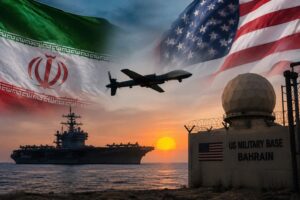
The security situation has also deteriorated around the Strait of Hormuz, one of the world’s most important energy transportation routes.
The United Kingdom Maritime Trade Operations organization reported that a tanker was attacked north of Oman on Tuesday.
The incident caused a fire inside the vessel’s engine room. Authorities had not immediately established the full extent of the damage or whether the incident caused environmental contamination.
The Strait of Hormuz is particularly important because approximately one-fifth of the world’s traded oil and gas passed through the waterway before the US-Iran conflict began in February 2026.
Any prolonged disruption could create serious consequences for international energy markets, shipping companies and countries dependent on imported fuel.
Iran Claims Another American Drone Was Captured
Iranian state television reported that the country’s Revolutionary Guard had captured another American drone intact after bringing it down near Qeshm Island in the Persian Gulf.
The reported aircraft was identified as an MQM-170 Outlaw.
Iranian media claimed that the country had captured several American drones since the beginning of the conflict.
However, previous Iranian claims involving captured drones have been disputed by the US military. American Central Command had not immediately responded to the latest report.
The incident highlights the growing importance of surveillance technology, electronic warfare and unmanned aircraft in the regional confrontation.
Trump Issues Strong Warning to Tehran
US President Donald Trump issued another warning to Iran, saying Tehran would face severe consequences if it carried out threats against the American capital.
His comments came amid questions about whether Washington believed there was an immediate security threat.
The statement reflects the continuing deterioration in relations between Washington and Tehran, despite diplomatic efforts aimed at reducing tensions.
Regional governments are increasingly concerned that another major military confrontation could affect neighboring countries and international trade.
Britain Announces New Sanctions Over West Bank Settlements
In another important development, the United Kingdom announced sanctions against eight property development and construction companies connected to Israeli settlement expansion in the occupied West Bank.
The British government also targeted the Israeli activist organization Tzav 9, accusing it of obstructing humanitarian assistance intended for Gaza.
The measures reflect growing European concerns about settlement construction and its potential impact on the possibility of a future two-state solution.
British officials said the sanctions were intended to restrict financial support for settlement-related development and address obstacles to humanitarian aid.
Sudan’s Humanitarian Crisis Deepens
The wider Middle East and surrounding region are also facing another devastating humanitarian emergency in Sudan.
According to the United Nations human rights office, 2,230 civilian deaths were documented in Sudan between January and the end of October 2026.
More than two-thirds of those deaths were attributed to drone strikes.
The conflict between Sudan’s military and the paramilitary Rapid Support Forces has displaced millions of people and pushed communities into severe food insecurity and famine.
The United Nations has warned that drone warfare is becoming an increasingly defining feature of the conflict.
A Region Facing Multiple Security Challenges
The latest developments reveal how interconnected the Middle East’s security challenges have become.
Fighting in Yemen threatens important maritime routes, attacks on commercial vessels raise concerns about global energy supplies, and tensions between Iran and the United States continue to create uncertainty.
At the same time, developments involving Israel, the Palestinians and Sudan demonstrate that the region faces several overlapping political, military and humanitarian crises.
For international governments, protecting shipping routes, preventing further military escalation and maintaining diplomatic communication will remain major priorities.
Whether these efforts can prevent another wider conflict remains uncertain as military forces across the region continue preparing for possible new confrontations.