Japan Records $3 Billion Trade Deficit in October as Import Costs Outpace Export Growth
Japan recorded a trade deficit of 476.5 billion yen (approximately 3 billion U.S. dollars) in October 2026, marking the sixth consecutive month that the country imported more goods than it exported.
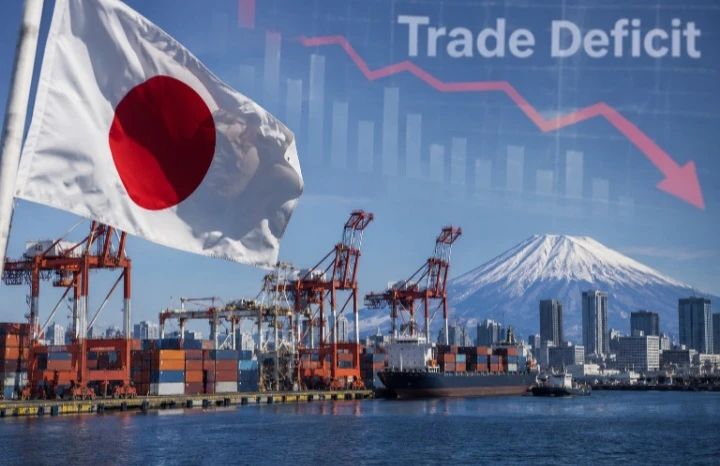
The latest figures, released by Japan’s Ministry of Finance on November 18, highlight the pressure facing the country’s external trade balance as import costs continue to increase.
Both exports and imports reached record levels for October, but the faster growth in purchases from overseas widened the gap between the value of goods entering and leaving the Japanese economy.
Imports Grow Faster Than Exports
Japan’s exports increased 20.5 percent year on year to 11.77 trillion yen in October.
However, imports recorded stronger growth, rising 21.6 percent to approximately 12.25 trillion yen.
The difference between the two figures resulted in the country’s latest monthly trade deficit.
The data demonstrate that strong international demand for Japanese products has not been sufficient to offset the increasing value of imported goods.
Middle East Tensions Put Pressure on Import Costs
Persistently high crude oil prices were among the factors contributing to Japan’s import bill.
As a major energy-importing economy, Japan remains exposed to fluctuations in international oil and gas markets.
Prolonged tensions in the Middle East have increased uncertainty surrounding energy supplies and transportation costs, creating additional pressure on countries that depend heavily on imported fuel.
Higher energy prices can also affect manufacturing expenses, electricity generation and transportation across the Japanese economy.
Exports to Major Markets Increase
Japan recorded strong export growth across several important international markets during October.
Shipments to the United States increased 23.9 percent compared with the same month last year.
Exports to the European Union climbed 22.1 percent, while deliveries to Asian destinations increased 22 percent.
The figures suggest that Japanese products continued to experience strong demand across major trading regions.
However, the growth in export values was still outpaced by the increase in imports.
Higher Prices Rather Than Shipment Volumes Drive Trade Values
A closer examination of the trade figures reveals an important distinction between the value and physical volume of international shipments.
Japan’s total export volume increased 5.8 percent year on year, while import volumes declined slightly by 0.2 percent.
This suggests that the substantial increase in the monetary value of imports was largely associated with higher prices rather than a significant expansion in the actual quantity of imported goods.
Rising commodity and energy costs therefore played an important role in shaping the country’s October trade performance.
Japan Faces Continuing External Trade Challenges
The latest deficit highlights the challenges confronting Japan as it balances strong export activity with rising import expenses.
The country’s dependence on imported energy and raw materials makes its trade position particularly sensitive to international commodity prices and geopolitical developments.
Although Japanese exporters continue to benefit from demand in major overseas markets, elevated import costs could limit improvements in the overall trade balance.
Outlook for Japan’s International Trade
Developments in global energy markets, exchange rates and international demand will remain important factors influencing Japan’s trade performance in the coming months.
The October figures demonstrate that export growth alone may not be enough to restore a trade surplus when import prices rise more rapidly.
Japan’s ability to manage energy costs, maintain export competitiveness and diversify supply sources will remain important to its broader economic outlook.