Strait of Hormuz Shipping Crisis Deepens as Tanker Attacks Bring Commercial Traffic Close to a Standstill
DUBAI, November 1, 2026: International shipping through the strategically important Strait of Hormuz has slowed dramatically following a series of attacks on commercial vessels, raising fresh concerns about global energy supplies, maritime security and the future of international trade.
Recent shipping data indicates that commercial traffic through the narrow waterway has fallen to exceptionally low levels. The decline comes as tensions between Iran and the United States continue and diplomatic efforts to resolve the regional conflict remain uncertain.
According to ship-tracking data from maritime analytics company Kpler, only five commodity vessels crossed the strait on Saturday, while no crossings were recorded on Sunday in the available data. During the previous weekend, 31 vessels had completed the same journey.
Tanker Attacks Increase Maritime Security Fears
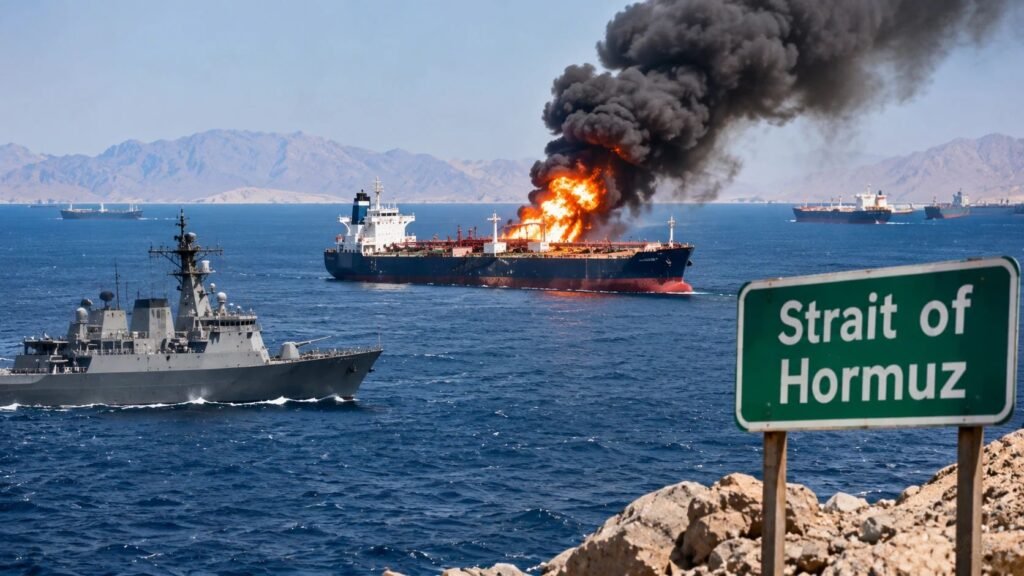
The sharp reduction in shipping activity follows several incidents involving commercial tankers in and around the Strait of Hormuz.
The United Arab Emirates recently reported that three vessels operated by the Abu Dhabi National Oil Company (ADNOC) were attacked while travelling through the waterway.
In another incident, a Panama-flagged tanker named Louise 1 was struck by explosive devices attached to its hull. The explosion caused a fire in the engine room and temporarily disabled the vessel.
The United Kingdom Maritime Trade Operations agency reported that all crew members were safe, the fire had been extinguished and no environmental damage had been reported.
Meanwhile, Iran’s Revolutionary Guard Navy claimed that several oil tankers had caught fire after attempting to navigate routes that Tehran considered unauthorised. These claims could not all be independently verified.
Iran and the United States Remain at Odds
The shipping crisis is unfolding alongside continuing diplomatic disagreements between Tehran and Washington.
Iranian Foreign Minister Abbas Araghchi has maintained that the United States must accept Iran’s conditions before normal maritime traffic can resume.
Washington, meanwhile, has indicated that it is prepared to maintain pressure on Iran while continuing efforts to protect international shipping routes.
The disagreement over maritime access has become one of the central obstacles in negotiations between the two countries.
Global Oil and Energy Markets Face Fresh Uncertainty
The Strait of Hormuz is among the world’s most important energy transportation routes.
Before the conflict, approximately one-fifth of global oil and liquefied natural gas shipments passed through this narrow passage connecting the Persian Gulf with the Gulf of Oman.
A prolonged disruption could create serious challenges for major energy exporters, including Saudi Arabia, Iraq, Kuwait, Qatar and the United Arab Emirates.
Countries heavily dependent on imported energy could also face higher fuel costs, increased transportation expenses and additional inflationary pressure.
Shipping companies may be forced to reconsider routes, insurance arrangements and delivery schedules as security risks increase.
Hundreds of Ships Face Uncertainty
The decline in maritime traffic is creating difficulties for shipping operators and businesses dependent on international energy transportation.
Vessels waiting to enter or leave the Persian Gulf face uncertainty over when normal passage conditions might return.
Some ships are reportedly using alternative arrangements and routes, while others are delaying journeys because of security concerns.
The reduction in visible shipping movements also makes it increasingly difficult for energy traders to predict the timing of future deliveries.
What Happens Next?
The future of the Strait of Hormuz will largely depend on developments in US-Iran negotiations and the security situation across the Gulf region.
A diplomatic agreement could help restore confidence among shipping companies and gradually increase commercial traffic.
However, continued attacks and disagreements over navigation arrangements could prolong the disruption.
For international markets, the situation represents more than a regional security dispute. It is a major challenge to the global energy supply chain, with consequences that could extend far beyond the Middle East.