US Catholic Bishops Face New Political Challenges as Election Results Reshape National Debate
Baltimore, USA: The Catholic Church in the United States is preparing to navigate a changing political environment following significant Democratic gains in the midterm elections. The latest electoral outcome has brought renewed attention to several issues that remain central to the Church’s public positions, including immigration, abortion and the growing influence of artificial intelligence.
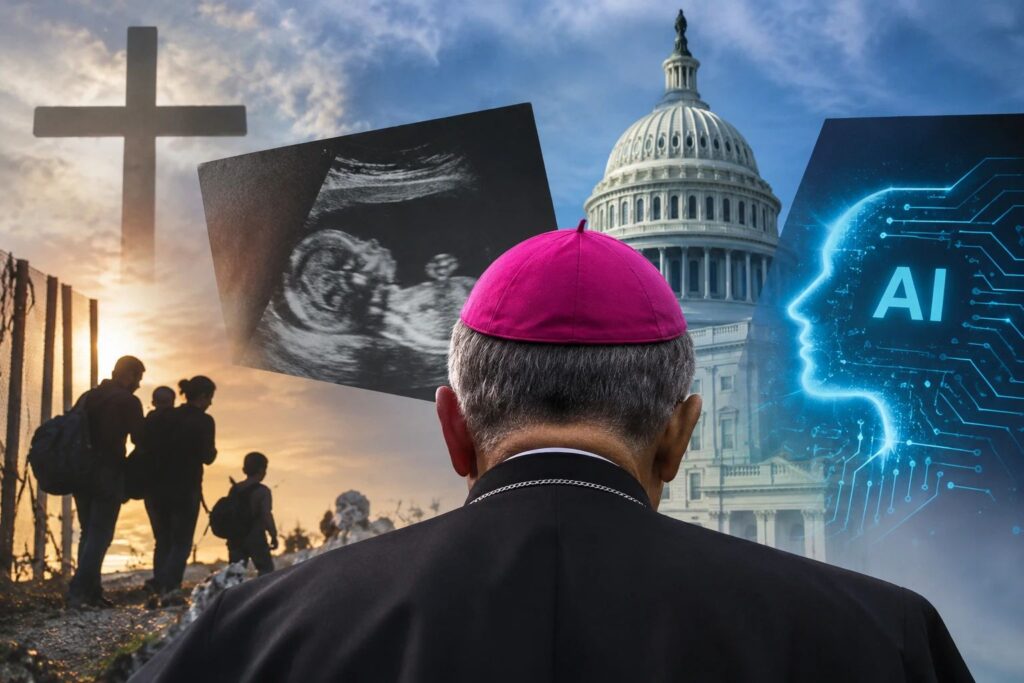
American Catholic bishops gathered in Baltimore for their annual autumn meeting at a time when political divisions are creating fresh challenges for religious institutions seeking to influence national discussions. With power divided across the federal government, Church leaders must consider how to communicate their moral priorities while engaging with political representatives from both major parties.
Immigration Remains a Major Concern
Immigration policy continues to be one of the most important areas of disagreement between Catholic leaders and the Republican administration.
During recent months, bishops have voiced concerns about strict immigration enforcement measures, particularly policies involving large-scale deportations and the treatment of undocumented communities. Church representatives have argued that migrants should not be treated without dignity or compassion, regardless of their legal circumstances.
The bishops previously issued an unusual collective statement expressing opposition to approaches they believed could undermine the basic rights and humanity of immigrant families.
Public opinion also suggests that immigration remains a sensitive political issue among Catholic voters. Survey findings indicate that more than half of Catholic respondents believe the administration’s immigration enforcement measures have gone too far.
These concerns could influence how religious leaders approach policymakers in the coming months.
Abortion Continues to Divide Political and Religious Positions
Although Catholic bishops have challenged the administration’s immigration policies, their disagreements with Democratic politicians remain significant.
Abortion is one of the most prominent issues separating Church leadership from many Democratic lawmakers. Catholic teaching strongly opposes abortion, and bishops have repeatedly urged elected representatives to support policies that protect unborn life.
This position places the Church in a complicated political situation. While some Republican policies have attracted criticism from religious leaders, Democratic support for abortion rights has also created tensions.
Consequently, the bishops are attempting to maintain an independent moral position rather than becoming closely associated with either political party.
Catholic Voters Reflect America’s Political Differences
The election results also highlight the diversity of political opinions within the Catholic community.
Catholic voters do not form a single political bloc. Voting patterns show considerable differences between white and Latino Catholics, particularly when choosing candidates for the US House of Representatives.
White Catholic voters leaned more toward Republican candidates, while Latino Catholics demonstrated stronger support for Democratic candidates.
This political diversity presents an important challenge for Church leaders. Their message must reach communities with different cultural backgrounds, economic experiences and political priorities.
The bishops have therefore emphasized that religious values should remain more important than party loyalty when Catholics make decisions at the ballot box.
Artificial Intelligence Enters the Church’s Agenda
Beyond traditional political and social concerns, artificial intelligence is becoming another subject of discussion among American Catholic leaders.
The bishops are expected to receive updates from a newly established task force examining how AI technology could affect human dignity.
As artificial intelligence becomes increasingly influential in education, employment, communication and public life, religious institutions are considering questions about privacy, responsibility, fairness and the protection of vulnerable people.
For Catholic leadership, the challenge is to ensure that technological progress serves humanity rather than weakening fundamental human values.
Bishops Seek Distance From Party Politics
The election period has also renewed questions about the relationship between religious leadership and political power.
Before the midterms, Catholic bishops encouraged members of their communities to participate in elections while making decisions guided by faith rather than political pressure.
However, an incident involving Catholic bishops praying with President Donald Trump in the White House Oval Office attracted criticism after photographs and video footage were publicly released.
The episode prompted concerns that religious activities could be interpreted as political endorsements. Some bishops later expressed regret about how the meeting was presented.
Church representatives have since emphasized the importance of engaging with elected officials without allowing religious institutions to become instruments of political campaigns.
A Difficult Road Ahead for American Catholic Leadership
The changing political landscape presents both opportunities and difficulties for the Catholic Church in the United States.
Democratic electoral gains may create new possibilities for discussions about immigration and social welfare, but disagreements over abortion are likely to remain unresolved.
At the same time, developments in artificial intelligence and other emerging technologies are expanding the range of ethical questions facing religious institutions.
The bishops’ central challenge will be maintaining a consistent moral voice while addressing a politically divided society.
Rather than following the priorities of a particular political party, Church leaders appear determined to defend their positions on human dignity, immigration, the protection of unborn life and responsible technological development.
Their approach in the months ahead could shape how the Catholic Church participates in America’s political and social debates.