US Debt Ceiling Battle Could Trigger Political Standoff After 2026 Midterm Elections
The United States could face another major political confrontation over government borrowing as the November 2026 midterm elections approach. Growing national debt and disagreements between Republicans and Democrats are raising concerns about a possible debt ceiling standoff in 2027.
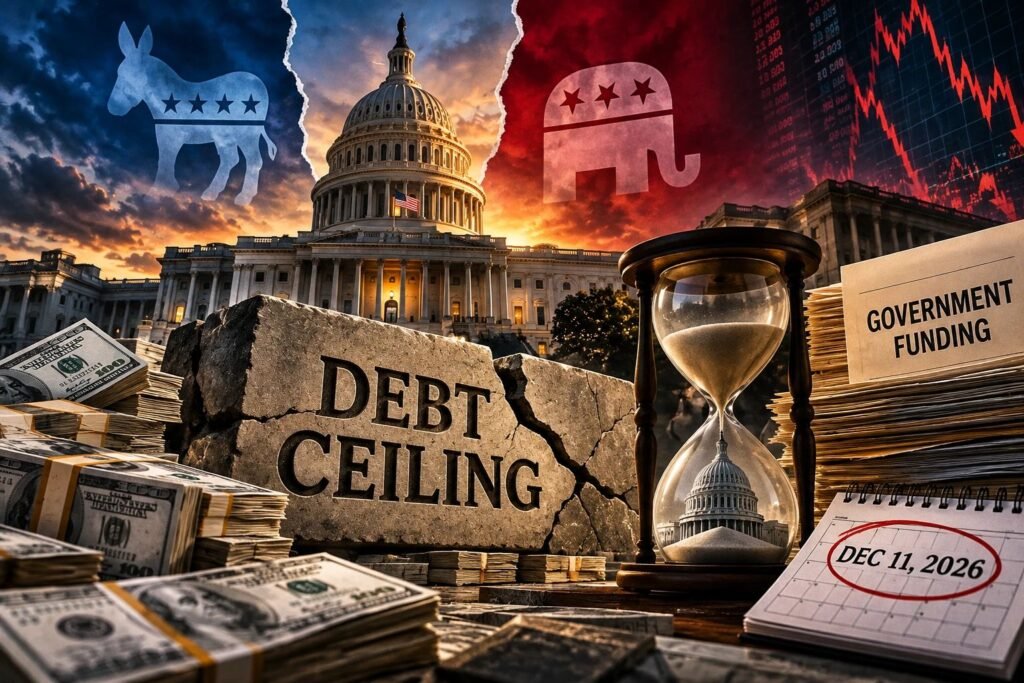
The issue is attracting attention from financial institutions and economic analysts because the outcome of the elections could influence how Congress approaches government spending, taxation and future borrowing limits.
With President Donald Trump continuing to pursue his economic agenda, the balance of power in Congress could become an important factor in determining the direction of upcoming fiscal negotiations.
Rising National Debt Creates Fresh Pressure on Washington
America’s national debt has crossed the $40 trillion mark, increasing concerns about the government’s long-term financial position. The growing cost of interest payments and persistent budget deficits are adding pressure to federal finances.
The debt ceiling is the legal limit on how much money the federal government can borrow to meet its financial obligations. Congress must approve an increase or suspension of this limit when additional borrowing authority becomes necessary.
Although the United States has previously experienced difficult negotiations over its borrowing limit, another confrontation could create uncertainty for government operations and financial markets.
Midterm Elections Could Change Congressional Negotiations
The November 3, 2026, midterm elections will determine whether Republicans retain control of Congress or Democrats gain greater influence in the House of Representatives and Senate.
A change in congressional control could significantly affect negotiations over government spending and borrowing.
If Democrats gain control of one or both chambers, they could demand changes to federal spending priorities and seek concessions on healthcare, social security and taxation before supporting future borrowing legislation.
Republicans, meanwhile, could resist proposals they consider inconsistent with their fiscal and economic priorities.
A divided Congress could therefore make negotiations more complicated, particularly if both parties take opposing positions on government expenditure.
Why Investors Are Concerned About a Debt Ceiling Crisis
Financial market participants are closely monitoring the situation because political disagreements over government borrowing can affect investor confidence.
A prolonged confrontation could create uncertainty surrounding US Treasury securities, government financing and the broader economic outlook.
Reuters reported that investors are already concerned about America’s deteriorating fiscal position ahead of the midterm elections. Analysts also warned that a divided Congress could increase the possibility of difficult negotiations over the debt ceiling and federal spending.
The growing national debt and rising interest expenses could remain major challenges regardless of which party gains congressional control.
Possible Impact on Global Financial Markets
Any serious dispute over the US borrowing limit could have consequences beyond American borders.
International investors closely monitor US Treasury securities because they play an important role in global financial markets. Uncertainty surrounding government payments could affect borrowing costs, currency movements and investment decisions.
Emerging economies, including India, could also experience indirect pressure if global investors become more cautious about financial risks.
A stronger US dollar, changing Treasury yields and fluctuations in international capital flows could create additional challenges for developing economies.
December Funding Deadline Adds to Political Pressure
Another important issue facing Washington is the federal government’s fiscal 2027 funding agreement.
Congress faces a December 11, 2026, deadline to reach an agreement on government funding. Failure to approve the necessary legislation could create another confrontation over federal operations.
The possibility of disagreements over spending legislation, combined with future debt ceiling negotiations, makes the coming months particularly important for American fiscal policy.
However, the debt ceiling itself is not expected to become an immediate payment deadline in late 2026. Current estimates place the next major borrowing-limit challenge in 2027.
What Happens Next?
The political situation will become clearer after Americans vote in the November midterm elections. The resulting balance of power in Congress will influence negotiations over spending priorities, borrowing authority and the federal budget.
Both political parties will face pressure to reach an agreement that allows the government to meet its financial obligations while addressing disagreements over public expenditure.
For now, the possibility of another debt ceiling confrontation remains an important concern for investors and policymakers.
The central challenge for Washington will be finding common ground on America’s growing debt while preventing political disagreements from creating unnecessary financial instability.