Weightlifting Risks Becoming Irrelevant Without Major Changes, Warns International Federation Official
November 7, 2026 | Ningbo, China
Weightlifting must modernise its presentation, attract younger audiences and strengthen its commitment to clean competition if it wants to remain relevant in the changing global sports industry, a senior International Weightlifting Federation (IWF) official has warned.
Jose Quinones, secretary general of the International Weightlifting Federation, believes the Olympic sport faces an important challenge as younger generations increasingly turn towards new forms of sporting entertainment.
Speaking to Xinhua on the sidelines of the World Weightlifting Championships in Ningbo, China, Quinones warned that traditional Olympic sports risk losing their appeal unless they adapt to changing audience expectations.
He cautioned that weightlifting could become outdated if the sport fails to introduce meaningful changes while protecting its fundamental values.
Weightlifting Needs to Attract a Younger Generation
One of the biggest challenges facing international weightlifting is its ageing audience.
According to Quinones, traditional Olympic sports are struggling to maintain the attention of younger spectators, while newer sporting activities and entertainment formats are attracting increasing interest.
He believes weightlifting must find innovative ways to present competitions without sacrificing its sporting identity.
The federation is therefore exploring different approaches to make competitions more entertaining, accessible and attractive to younger viewers.
These efforts include introducing music, DJs, mixed-team competitions and taking sporting events beyond conventional indoor arenas.
The objective is to bring weightlifting closer to audiences rather than expecting spectators to visit traditional competition venues.
Fighting Doping Remains a Top Priority
Alongside attracting younger audiences, maintaining clean competition remains one of the most important priorities for international weightlifting.
The sport has faced serious reputational challenges following doping violations discovered through the retesting of samples from the 2008 Beijing and 2012 London Olympic Games.
Those violations contributed to a reduction in the number of weightlifting athlete quotas at subsequent Olympic Games.
Quinones said the IWF has introduced significant reforms to strengthen anti-doping supervision and improve transparency.
One of the most important changes has been transferring responsibility for doping controls to the independent International Testing Authority (ITA).
Under this arrangement, the IWF does not independently determine which athletes are selected for testing. Its responsibility includes deciding sanctions when positive cases are established.
The federation has also expanded out-of-competition testing and allocated a fixed proportion of its international budget to anti-doping activities, athlete education and awareness programmes.
Quinones said the last two Olympic Games had recorded zero doping cases in weightlifting, highlighting what he described as progress in rebuilding confidence in the sport.
New Competition Formats Could Transform the Sport
The IWF is considering several changes designed to make weightlifting competitions more engaging.
One proposal involves a mixed-team competition featuring two male and two female athletes.
The format was tested earlier in 2026 and could provide a more dynamic way of presenting the sport to international audiences.
The federation is also exploring entertainment elements such as music and DJs, taking inspiration from sports that have successfully introduced more spectator-friendly formats.
Another proposal involves organising competitions in public spaces, shopping centres and prominent city locations.
Quinones believes weightlifting should move beyond conventional sporting arenas and become more accessible to ordinary people.
This approach could help introduce the sport to audiences who might otherwise have little exposure to international weightlifting competitions.
New International Competition Format Planned for 2028
The federation is also preparing a new international competition format expected to begin after the 2028 Los Angeles Olympic Games.
The proposed structure could include as many as five invitation-only events annually.
Each competition would last approximately two or three days and feature between eight and 10 leading athletes in each weight category.
Prize money could also become part of the new format, providing additional financial incentives for elite competitors.
The initiative is intended to create more high-profile competitions, increase international visibility and give leading weightlifters additional opportunities to compete.
If implemented successfully, the new structure could help establish a more commercially attractive international weightlifting calendar.
China and North Korea Remain Major Forces
Quinones also highlighted the strength of Asian countries in international weightlifting.
He identified China and the Democratic People’s Republic of Korea (DPRK) as two of the sport’s leading nations ahead of the Los Angeles 2028 Olympics.
Both countries have developed strong weightlifting programmes and produced athletes capable of competing at the highest international level.
He also pointed to the impressive performance of Asian weightlifters at the Asian Games in Nagoya, Japan, where athletes established 47 world records.
The achievements underline Asia’s growing importance in the international weightlifting landscape.
Ningbo Championships Receive Strong Praise
Quinones praised the organisation of the World Weightlifting Championships in Ningbo, describing the event as one of the best-organised competitions in the federation’s history.
He said more than 90 percent of the federation’s expectations had been fulfilled.
He also highlighted Ningbo’s sporting infrastructure and organisational capabilities, suggesting that the city could serve as a model for other international sporting events.
The championships have provided an opportunity for the IWF to discuss the future of weightlifting while showcasing the abilities of leading international athletes.
The Future of Olympic Weightlifting
The warning from the IWF secretary general reflects a broader challenge facing traditional Olympic sports.
Competition for viewers is increasing as digital entertainment, professional leagues and newer sporting formats attract younger audiences.
Weightlifting must therefore find a balance between preserving its history and embracing modern presentation methods.
The federation’s proposed reforms suggest that it is increasingly focused on commercial development, improved accessibility and stronger anti-doping protections.
However, the success of these initiatives will depend on whether they can attract new spectators without weakening the competitive integrity that defines the sport.
Conclusion: Modernisation Is Essential for Weightlifting’s Survival
International weightlifting is entering an important period of transformation.
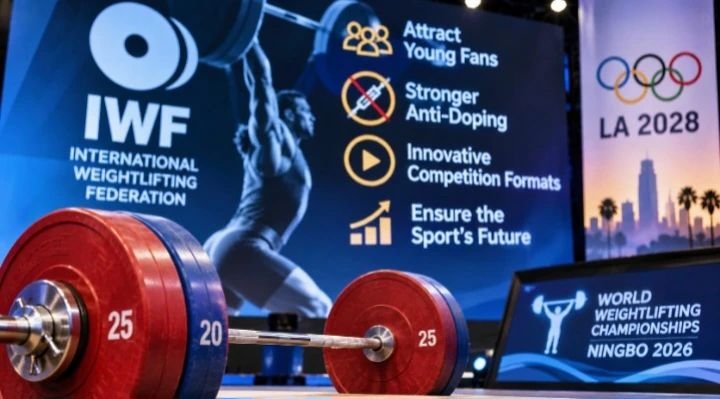
The IWF wants to strengthen anti-doping standards, introduce innovative competition formats and make the sport more appealing to younger generations.
The proposed 2028 competition series, mixed-team events and public-space competitions could help create new opportunities for athletes and spectators.
But the federation faces a delicate challenge: modernising the sport while protecting its traditions and ensuring fair competition.
As Jose Quinones has warned, weightlifting cannot afford to remain unchanged while the global sporting landscape continues to evolve.
Its future will depend on how successfully it combines sporting integrity, innovation and audience engagement.