India and Uzbekistan Upgrade Strategic Partnership With Long-Term Uranium Supply Agreement
Tashkent, India and Uzbekistan have taken a major step toward strengthening their long-term strategic relationship by elevating bilateral ties to a Comprehensive Strategic Partnership and agreeing to establish a long-term arrangement for the supply of uranium to India.
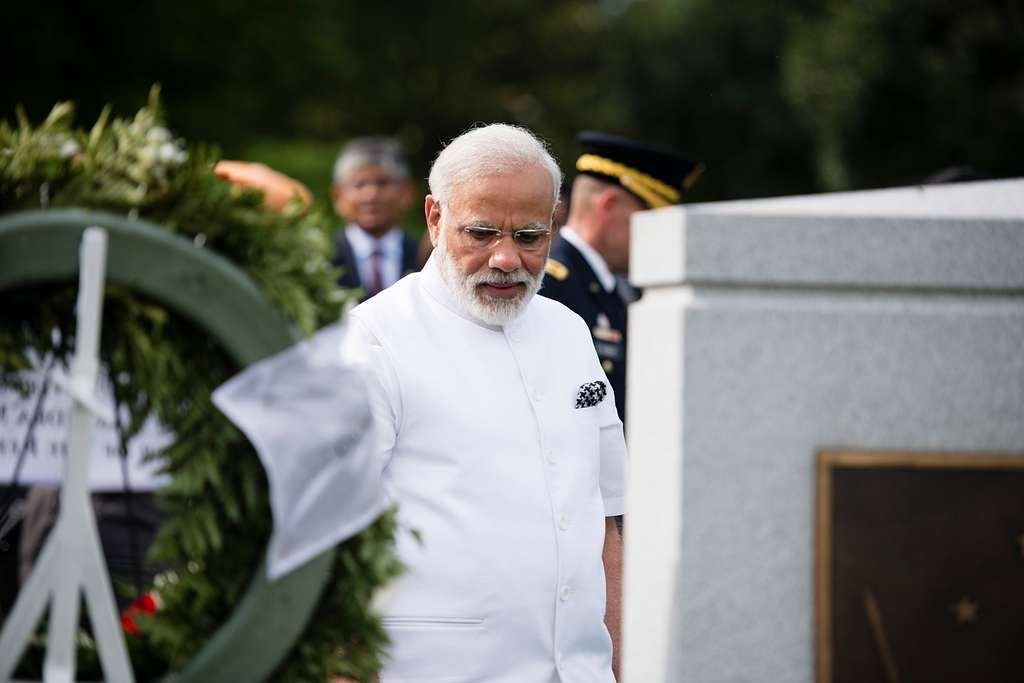
The announcement came during Prime Minister Narendra Modi’s visit to Tashkent, where he held delegation-level discussions with Uzbek President Shavkat Mirziyoyev.
The two countries also agreed to expand cooperation in trade, investment, digital connectivity, defence and energy.
The uranium agreement is particularly significant because India has been working to diversify its sources of nuclear fuel while expanding its nuclear-energy capacity.
A New Level in India-Uzbekistan Relations
The decision to elevate the relationship to a Comprehensive Strategic Partnership represents an important change in the diplomatic framework between the two countries.
India and Uzbekistan have maintained friendly relations for decades, but the new designation signals an intention to develop cooperation across a much wider range of sectors.
Rather than concentrating only on traditional diplomatic exchanges, both governments are looking at long-term economic, technological, energy and security cooperation.
Long-Term Uranium Supply Agreement
One of the most important announcements from Modi’s visit is the agreement to establish a long-term arrangement for uranium supplies from Uzbekistan to India.
Uranium is essential for producing nuclear power because it serves as the basic fuel for nuclear reactors.
For India, reliable access to uranium is strategically important as the country seeks to expand nuclear generation as part of its long-term energy strategy.
The new arrangement could provide India with another source of nuclear fuel and reduce dependence on a limited group of international suppliers.
Why Uranium Matters to India
India has ambitious plans to increase the contribution of nuclear energy to its electricity system.
Nuclear power can provide continuous electricity without the direct carbon emissions associated with coal and gas-fired generation.
However, nuclear plants require a stable supply of fuel.
India therefore benefits from maintaining relationships with multiple uranium-producing countries.
Uzbekistan’s growing role as a uranium producer makes the partnership particularly relevant.
Uzbekistan’s Role in the Global Uranium Market
Uzbekistan possesses significant uranium resources and has developed a substantial uranium-mining industry.
The country has increased production and modernised parts of its mining sector in recent years.
For Uzbekistan, a long-term arrangement with India provides a stable potential market for its uranium resources.
For India, it offers another channel through which nuclear fuel can be secured.
The agreement therefore creates a potentially important energy partnership between the two countries.
Strengthening India’s Energy Security
Energy security has become a major component of India’s foreign policy.
The country is one of the world’s largest energy consumers and needs reliable supplies to support economic growth.
India has traditionally relied heavily on imported oil and gas.
Expanding nuclear power can help diversify the electricity-generation mix.
A dependable uranium supply is therefore an important part of that strategy.
Nuclear Energy and India’s Development Goals
India has set ambitious long-term development objectives.
Reliable electricity is essential for manufacturing, digital infrastructure, transport, urbanisation and household consumption.
Renewable energy is expanding rapidly, but solar and wind generation are variable.
Nuclear power can complement renewable sources by providing continuous electricity.
This makes uranium supplies increasingly important to India’s long-term energy planning.
Uzbekistan Gains a Major Asian Partner
The agreement is also valuable for Uzbekistan.
India is one of the world’s largest economies and represents a huge potential market for Uzbek products and services.
Closer economic relations can attract Indian investment into Uzbekistan and provide opportunities for Uzbek businesses to access Indian markets.
The uranium arrangement therefore forms part of a much broader economic relationship.
Trade and Investment to Expand
India and Uzbekistan have agreed to strengthen cooperation in trade and investment.
The two governments want to create more opportunities for businesses in both countries.
Potential areas include pharmaceuticals, information technology, agriculture, textiles, chemicals, infrastructure and energy.
Greater investment could also encourage joint ventures and technology partnerships.
Digital Connectivity Becomes a New Pillar
Digital technology is another important area of the new strategic partnership.
India has developed extensive expertise in digital public infrastructure, fintech, online services and information technology.
Uzbekistan is undergoing its own digital transformation.
Cooperation could include digital governance, cybersecurity, financial technology and technology-enabled public services.
Defence Cooperation Also Expands
Defence remains an important part of India-Uzbekistan relations.
The two countries already conduct military exchanges and cooperate on counter-terrorism.
The upgraded partnership could lead to broader cooperation in defence training, military technology and security coordination.
The development is significant because Central Asia is becoming increasingly important in India’s regional security strategy.
Central Asia’s Strategic Importance
Central Asia occupies a crucial geographical position between Europe, Russia, China, South Asia and the Middle East.
The region contains major energy and mineral resources and sits along important potential trade routes.
India has been working to strengthen its presence in Central Asia despite the geographical challenge of not sharing a direct land border with the region.
Uzbekistan is particularly important because of its population, location and economic potential.
Connectivity Remains a Challenge
The absence of a direct land corridor between India and Uzbekistan makes transportation difficult.
Goods often have to pass through several countries before reaching their destination.
This increases costs and complicates supply chains.
India has therefore supported international transport initiatives designed to improve access to Central Asia.
International North-South Transport Corridor
The International North-South Transport Corridor is one of the routes India sees as important for improving connectivity.
The corridor is intended to link India with Iran, Central Asia, Russia and European markets through a combination of sea, rail and road networks.
Improved connectivity could make trade between India and Uzbekistan faster and more commercially attractive.
Pharmaceuticals Could Benefit
India’s pharmaceutical industry has strong potential in Uzbekistan.
Indian medicines are already exported to numerous international markets.
Uzbekistan’s healthcare sector is developing, creating opportunities for Indian pharmaceutical companies and medical institutions.
Joint manufacturing and healthcare partnerships could become an important part of the new strategic relationship.
Agriculture and Food Processing
Agriculture is another area with significant potential.
Uzbekistan produces cotton, fruits, vegetables and other agricultural commodities.
India has extensive experience in agricultural technology, irrigation, food processing and agricultural research.
Cooperation could improve productivity and create opportunities for value-added food industries.
Education and Technology Exchanges
The partnership could also encourage greater academic and technological cooperation.
Indian universities and technology institutions have significant expertise in engineering, information technology and medicine.
Uzbek students and researchers could benefit from expanded exchange programmes.
Such cooperation can build long-term people-to-people relationships.
Historical Links Strengthen the Partnership
India and Uzbekistan share a long history of cultural interaction.
Trade routes connecting South Asia and Central Asia existed centuries before the creation of modern states.
Indian culture, cinema and music have also attracted audiences in Uzbekistan.
These historical links provide a strong social foundation for expanding modern economic and diplomatic cooperation.
Counter-Terrorism Remains Important
Security cooperation is particularly important because of developments in the wider Central Asian region.
India and Uzbekistan share concerns about terrorism, extremism and transnational criminal networks.
The two countries have conducted military and security exercises in the past.
The new strategic partnership could deepen cooperation in intelligence sharing and counter-terrorism training.
Afghanistan Is a Shared Concern
Afghanistan is another issue that connects Indian and Uzbek strategic interests.
Uzbekistan shares a border with Afghanistan, making developments there directly relevant to its national security.
India also has significant strategic interests in Afghanistan.
Both countries have an interest in preventing terrorism and instability from spreading across Central Asia.
Uzbekistan’s Highest State Honour for Modi
During the visit, President Mirziyoyev conferred Uzbekistan’s prestigious Oliy Darajali Do’stlik order on Prime Minister Modi.
Modi dedicated the honour to the enduring relationship between the Indian and Uzbek peoples.
The recognition added a symbolic dimension to a visit that also produced important economic and strategic agreements.
Modi’s Central Asia Tour Continues
The Uzbekistan visit forms part of Modi’s wider Central Asia programme.
After his engagements in Tashkent, the Prime Minister is scheduled to travel to Kyrgyzstan for the Shanghai Cooperation Organisation summit.
The SCO meeting will bring together leaders from several major Eurasian countries.
India’s participation provides an opportunity to discuss regional security, connectivity and economic cooperation at a broader multilateral level.
SCO Gives India a Regional Platform
India and Uzbekistan are both members of the Shanghai Cooperation Organisation.
The organisation provides a platform for cooperation on security, trade, transport and regional development.
For India, the SCO is also an important mechanism for maintaining engagement with Central Asian states.
The latest bilateral agreement therefore fits into New Delhi’s wider Central Asia strategy.
Energy Cooperation Goes Beyond Uranium
Although uranium has received considerable attention, the new partnership is not limited to nuclear fuel.
India and Uzbekistan have also agreed to strengthen cooperation in the broader energy sector.
Potential areas include renewable energy, power infrastructure, energy efficiency and technology.
The two countries therefore have the opportunity to develop a diversified energy relationship.
Benefits for India’s Nuclear Programme
The long-term uranium arrangement could become strategically important if India’s nuclear capacity expands substantially.
Additional uranium sources can improve supply reliability.
A diversified supplier network can also reduce the risks associated with disruptions in individual markets.
For India’s energy planners, stable fuel availability is therefore an important component of long-term nuclear expansion.
Economic Opportunity for Uzbekistan
Uzbekistan could benefit from India’s growing demand for energy resources as well as investment and technology.
Long-term commercial relationships provide greater certainty for producers and investors.
Indian companies could potentially participate in Uzbek mining, infrastructure, technology and manufacturing projects.
This could help deepen the economic foundation of the new strategic partnership.
A Broader Geopolitical Dimension
The relationship also has wider geopolitical significance.
Central Asia has become increasingly important as major powers compete for access to energy resources, markets and transport corridors.
China has a substantial economic presence in the region.
Russia maintains longstanding political and security ties.
Türkiye, Europe and Gulf countries are also expanding engagement.
India’s closer partnership with Uzbekistan gives New Delhi another avenue for strengthening its regional presence.
Strategic Autonomy Remains India’s Approach
India’s Central Asian strategy reflects its broader policy of maintaining multiple international partnerships.
New Delhi maintains close relations with Russia while expanding ties with the United States, Europe, Japan and other countries.
Closer relations with Uzbekistan allow India to strengthen its Central Asian presence without depending on a single geopolitical bloc.
The uranium agreement is therefore both an energy decision and a diplomatic development.
What Happens Next
The next stage will be turning the agreements into practical projects.
Officials will need to finalise the details of the long-term uranium arrangement.
Businesses will need to identify investment opportunities.
Defence agencies will develop additional cooperation mechanisms.
Transport authorities will continue working on connectivity.
The success of the partnership will ultimately depend on implementation.
A New Chapter in Bilateral Relations
The elevation to a Comprehensive Strategic Partnership represents a significant upgrade in India’s relationship with Uzbekistan.
The uranium agreement adds a strategic energy dimension.
Trade and investment provide an economic foundation.
Digital technology offers opportunities for modern cooperation.
Defence and counter-terrorism strengthen the security component.
Together, these areas create a much broader partnership than the two countries have maintained in the past.
Conclusion
India and Uzbekistan have upgraded their relationship to a Comprehensive Strategic Partnership and agreed to establish a long-term arrangement for uranium supplies, while also expanding cooperation in trade, investment, digital connectivity, defence and energy.
For India, the uranium arrangement could strengthen nuclear-fuel security and support the country’s long-term energy diversification.
For Uzbekistan, it creates a deeper economic relationship with one of the world’s largest economies and opens opportunities for investment, technology and market access.
The agreement marks an important new stage in India-Uzbekistan relations. As New Delhi increases its engagement with Central Asia, the combination of energy cooperation, strategic diplomacy and economic partnership could make Uzbekistan one of India’s most important regional partners in the years ahead.