China and Australia Agree to Deepen Strategic Partnership Through Trade, Technology and Tourism Cooperation
BEIJING, November 2026 — China and Australia have reaffirmed their commitment to strengthening bilateral relations, expanding economic cooperation and increasing people-to-people exchanges following their latest annual leaders’ meeting.
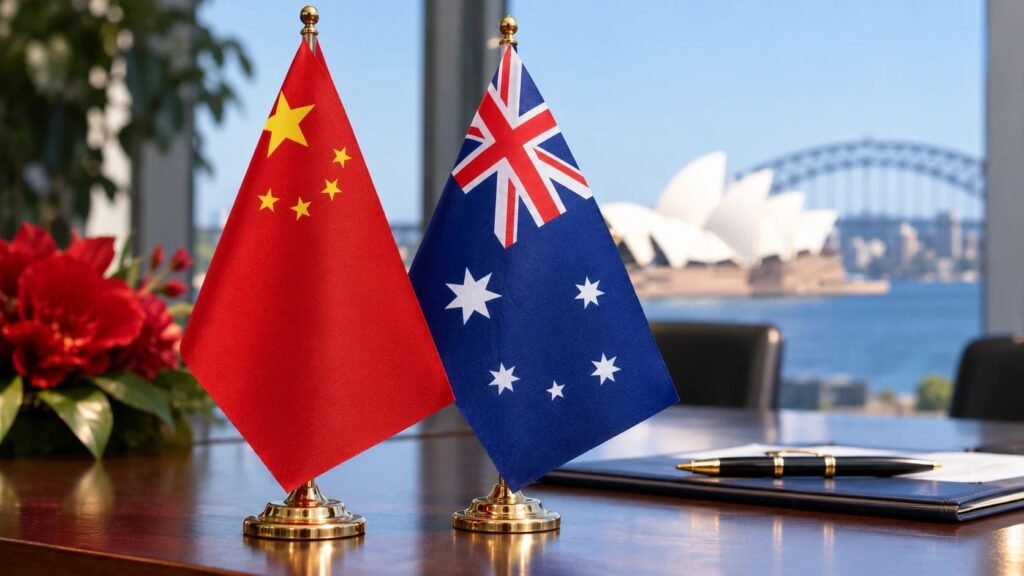
The two countries issued a joint outcomes statement on Friday, outlining areas of cooperation and their shared intention to maintain a stable and constructive relationship amid an increasingly complex international environment.
The meeting comes as both countries prepare to mark the 55th anniversary of the establishment of diplomatic relations in 2027.
Strengthening Political Trust and Diplomatic Relations
Chinese President Xi Jinping and Australian Prime Minister Anthony Albanese discussed the future direction of bilateral relations during their meeting in Shenzhen.
Xi called for greater mutual trust, respect for each other’s major concerns and continued commitment to constructive cooperation.
He emphasised that the two countries should focus on shared interests rather than allowing differences to define their relationship.
Albanese also reaffirmed Australia’s commitment to maintaining stable relations with China, describing constructive engagement as beneficial to both countries.
He highlighted the importance of regular high-level communication and practical cooperation across economic and diplomatic fields.
Trade and Investment Remain Central Priorities
Economic cooperation remains a major pillar of China-Australia relations.
Both countries have significant economic interests in maintaining stable trade flows, particularly in agriculture, energy and mineral resources.
Australia is an important supplier of agricultural products and natural resources, while China represents a major market for Australian exports.
The leaders called for expanding existing cooperation and identifying additional opportunities that could benefit businesses and consumers in both countries.
Investment, market access and a predictable commercial environment are also important considerations for strengthening bilateral economic relations.
New Opportunities in Artificial Intelligence and Green Energy
Beyond traditional industries, China and Australia are looking to expand cooperation in emerging technologies.
Artificial intelligence, digital industries, renewable energy and the green economy were among the areas identified for greater collaboration.
Climate change response and clean-energy development also offer opportunities for research partnerships, technological exchange and industrial investment.
Such cooperation could help both countries pursue economic development while addressing environmental and technological challenges.
2027 Declared China-Australia Year of Tourism
One of the notable outcomes of the discussions was the agreement to designate 2027 as the China-Australia Year of Tourism.
The initiative is intended to encourage more travel, cultural interaction and exchanges between citizens of the two countries.
Tourism cooperation could also benefit airlines, hospitality businesses, educational institutions and regional communities.
The two sides also highlighted the importance of expanding exchanges among young people, universities, media organisations, research institutions and local communities.
Cooperation on Regional and Global Challenges
China and Australia also recognised the importance of maintaining communication and coordination within international institutions.
Both countries have interests in regional stability, international trade and addressing global challenges through multilateral cooperation.
The discussions included support for the United Nations-centred international system and an international order based on international law.
Their continued engagement within regional platforms such as the Asia-Pacific Economic Cooperation forum is also an important part of their diplomatic relationship.
A New Chapter in Bilateral Relations
The latest meeting reflects ongoing efforts by Beijing and Canberra to strengthen their relationship after a period of diplomatic and trade tensions.
While differences remain across several political and strategic issues, both governments have emphasised the importance of dialogue and practical cooperation.
The upcoming 55th anniversary of diplomatic relations provides an additional opportunity to expand exchanges and establish new areas of collaboration.
The success of this renewed engagement will ultimately depend on the implementation of agreed initiatives, continued political communication and the ability of both countries to manage disagreements constructively.
For the wider Asia-Pacific region, stronger China-Australia economic and diplomatic cooperation could also contribute to regional trade, investment and connectivity.