900-Year-Old Chola Treasures Unearthed in Tamil Nadu: Rare Bronze Idols of Nataraja and Sivakami Discovered
Nagapattinam, Archaeologists in Tamil Nadu have made a remarkable historical discovery after uncovering two bronze idols dating back approximately 900 years to the Chola dynasty. The statues, depicting Lord Nataraja and Goddess Sivakami, were discovered during an archaeological excavation in Nagapattinam, offering fresh insights into the artistic excellence and religious traditions of medieval South India.
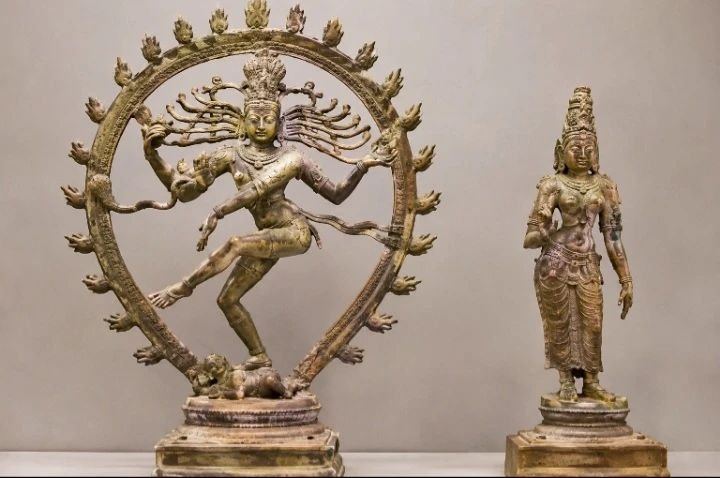
The discovery was made by the Tamil Nadu State Department of Archaeology during its ongoing excavation programme. Both bronze sculptures were found approximately one metre beneath the ground, accompanied by their original pedestals.
The discovery is particularly important because officials have described it as the first time the Tamil Nadu archaeology department has recovered bronze idols during one of its scientific excavations.
Two Remarkable Sculptures From the Chola Period
The larger sculpture represents Lord Shiva in his famous Nataraja form, depicting the divine cosmic dance known as Ananda Tandava.
The statue measures approximately 110 centimetres in height and 100 centimetres in width. It features four arms, with a drum in one hand and a flame in another. One foot rests on the figure of Muyalaka, while the other is raised.
The second sculpture depicts Goddess Sivakami, who is closely associated with Lord Shiva in South Indian religious traditions.
Measuring approximately 82 centimetres in height and 23 centimetres in width, the statue displays the traditional Tribhanga posture, an elegant three-bend position frequently seen in classical Indian sculpture.
Both figures demonstrate the sophisticated artistic techniques and detailed craftsmanship associated with Chola-period bronze production.
Why Nagapattinam Is Historically Important
Nagapattinam holds a significant place in the history of southern India.
During the Chola dynasty, the coastal town developed into an important maritime and commercial centre. Its port connected southern India with trading networks across the Bay of Bengal and other parts of Southeast Asia.
The region also became an important centre of religious activity, with Hindu temples, Buddhist institutions, merchants and skilled craftsmen contributing to its cultural development.
The discovery of the two bronze sculptures adds another important chapter to the archaeological history of this historic coastal settlement.
The Golden Age of Chola Bronze Art
The Chola dynasty ruled large parts of southern India between approximately the ninth and thirteenth centuries.
The period is particularly famous for its achievements in temple architecture, literature, administration, maritime trade and bronze sculpture.
Chola artists developed extraordinary expertise in metal casting, especially through the traditional lost-wax technique. Their sculptures are admired for their natural proportions, graceful movements, detailed ornaments and remarkable expressions.
Nataraja sculptures became especially important symbols of Chola artistic achievement, representing the cosmic cycle of creation, preservation and transformation.
The newly recovered statues provide further evidence of the exceptional metalworking traditions that flourished during this period.
What Happens to the Newly Discovered Idols?
Following their discovery, both sculptures were transported to Chennai for chemical treatment and conservation.
Experts are also expected to conduct metallurgical investigations to understand the composition of the bronze alloy and identify details about the techniques used by ancient craftsmen.
Archaeologists are continuing their investigation to understand why these valuable religious sculptures were buried together with their pedestals.
One possibility being considered is that the idols may have been hidden for protection during a period of political instability or military conflict. However, their exact burial history has not yet been established.
A Valuable Discovery for India’s Cultural Heritage
The discovery is an important contribution to India’s archaeological record.
It highlights the importance of scientific excavations in uncovering objects that can reveal details about ancient religious practices, artistic traditions, trade networks and everyday life.
For Tamil Nadu, the findings strengthen the historical significance of Nagapattinam and demonstrate that many valuable chapters of the Chola period may still remain underground.
As conservation and scientific investigations continue, the two bronze masterpieces could help researchers understand more about the remarkable civilisation that once dominated much of southern India.
Conclusion
The discovery of the approximately 900-year-old Nataraja and Sivakami bronze idols is a significant moment for Indian archaeology.
These sculptures are not merely ancient artistic objects; they represent the religious beliefs, technical knowledge and creative achievements of the Chola civilisation.
Their recovery from the historic soil of Nagapattinam offers a fascinating connection with India’s medieval past and reminds us that the country’s archaeological treasures continue to reveal new stories about its extraordinary history.






