Namibia Targets Higher-Value Exports to European Union Through Industrial Growth and Trade Expansion
Namibia is stepping up efforts to strengthen its domestic industries and increase exports of higher-value products to the European Union (EU), as the southern African country seeks to benefit more fully from preferential access to the European market.
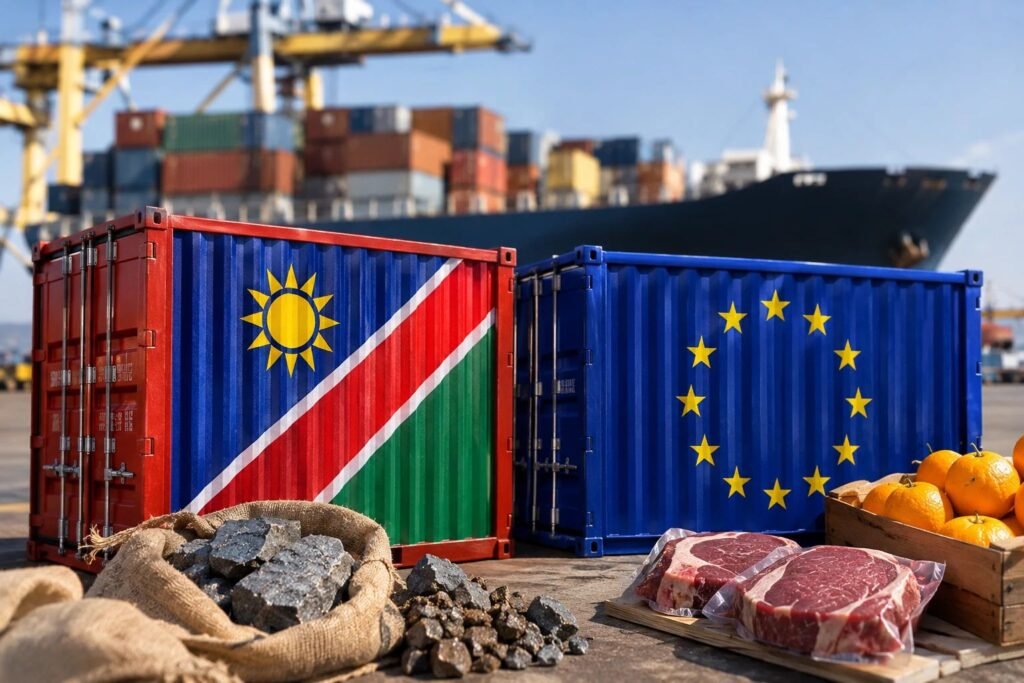
The initiative reflects the government’s ambition to move beyond exporting mainly raw materials and minimally processed commodities towards developing stronger manufacturing capabilities, attracting investment and creating more employment opportunities.
Speaking at the opening of the Namibia-EU Trade Workshop in Windhoek on November 17, Jerobeam Shaanika, executive director of Namibia’s Ministry of International Relations and Trade, said the country still had significant opportunities to expand its presence in the European market.
He emphasized the need to improve domestic production capacity and make local businesses more competitive internationally.
Namibia Seeks Greater Benefits From EU Trade Agreement
Namibia benefits from the Southern African Development Community-European Union Economic Partnership Agreement, which provides qualifying exports from participating countries with duty-free and quota-free access to the European market.
However, exporters must comply with applicable rules of origin, product standards and other trade requirements.
According to Shaanika, Namibia has not yet fully utilized the opportunities provided by the agreement.
The government now wants to encourage businesses to increase production, improve product quality and develop goods that generate greater economic value before reaching international consumers.
Exports to European Union Record Growth
Namibia’s merchandise exports to the European Union increased significantly between 2024 and 2025.
According to figures presented by Shaanika, exports rose from 14.98 billion Namibian dollars in 2024 to 17.57 billion Namibian dollars in 2025.
This represents an increase of approximately 17.3 percent over the period.
Despite the expansion, the European Union remained Namibia’s third-largest export destination in both years, behind South Africa and China.
The figures demonstrate the importance of European markets to Namibia’s export economy while highlighting opportunities to expand trade further.
Government Focuses on Industrialization and Investment
Namibia’s economic strategy increasingly emphasizes domestic industrial development and export diversification.
Rather than depending heavily on the international sale of unprocessed commodities, the government wants more products to undergo processing and manufacturing within the country.
Such an approach could help businesses capture a larger share of international supply-chain value while creating employment opportunities for local communities.
Investment in modern production facilities, technology and workforce development will be important to achieving these objectives.
Trade Cooperation Extends Beyond Export Figures
The Namibia-EU Trade Workshop also highlighted the wider economic benefits of stronger commercial relationships.
Shaanika noted that successful trade partnerships should be evaluated not only through the monetary value of goods exchanged but also through their contribution to productive investment, technology transfer, skills development and job creation.
The discussions build on the second Namibia-EU Business Forum, which took place in Windhoek in May 2026.
Both initiatives support Namibia’s broader economic development priorities, particularly industrialization and the diversification of international trade.
Namibia Looks to Strengthen Its Position in Global Markets
Expanding value-added exports could provide Namibia with opportunities to strengthen its economic resilience and reduce dependence on a limited range of commodities.
Improved access to European consumers, combined with stronger domestic production capabilities, could help Namibian companies become more competitive in international markets.
The government’s latest initiative therefore represents an effort to transform existing trade advantages into broader economic development.
As discussions with European partners continue, Namibia is looking to build a more diversified export economy that delivers greater value to domestic businesses, workers and investors.