Portugal Moves to Cut Food Costs as Parliament Approves Zero VAT on Essential Goods
LISBON, November 20, 2026 — Portugal has taken a new step towards easing household expenses after parliament approved a proposal to eliminate value-added tax (VAT) on a range of essential food products, offering potential relief to consumers facing pressure from the cost of living.
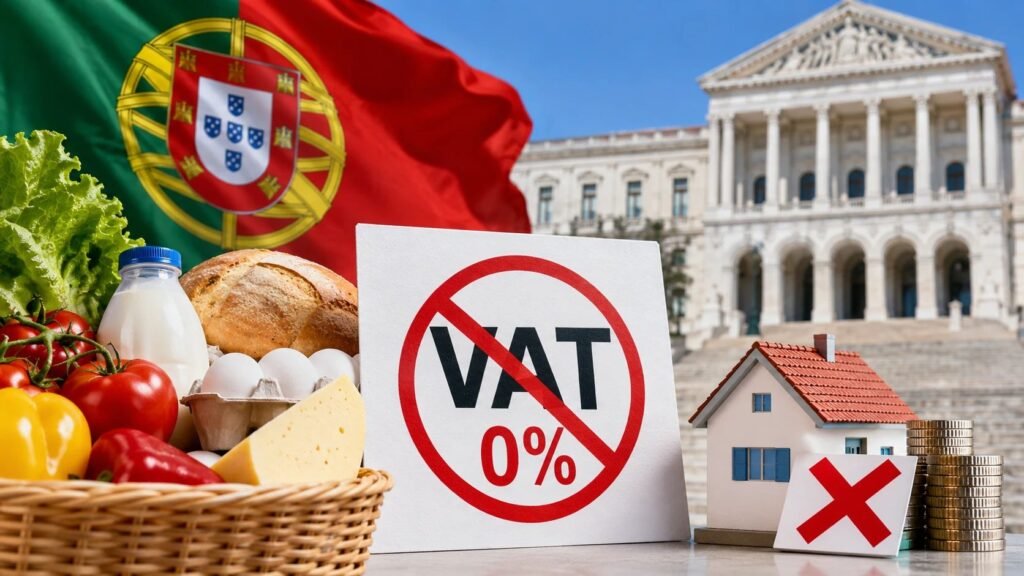
The proposal, introduced by the Socialist Party (PS), received majority support in parliament on Friday despite opposition from the country’s governing centre-right parties.
Under the approved measure, selected basic food products will benefit from a zero VAT rate beginning January 1, 2027. The initial arrangement will remain in effect for three months, with the possibility of extensions in additional three-month periods.
Any renewal will depend on an assessment of inflation trends and the impact of the tax exemption on government revenue.
Political Divisions Over the Cost-of-Living Measures
The parliamentary vote revealed divisions among Portugal’s political parties over the proposed economic measures.
The governing Social Democratic Party (PSD), CDS-PP and Liberal Initiative voted against the proposal, while the Communist Party abstained. Other parliamentary groups, including Chega, supported the initiative, allowing it to secure the necessary majority.
The decision highlights the continuing political debate over how governments should respond to rising household expenses while maintaining sustainable public finances.
Government Rental Tax Incentives Also Face Changes
Alongside the food tax exemption, parliament approved the removal of tax benefits associated with what are classified as moderate rents.
The change concerns rental properties charging up to 2,300 euros per month. The affected incentives included a preferential 10 percent income tax rate on rental income, introduced by the government earlier in 2026.
Removing these benefits represents a separate element of the approved proposal and could influence the financial calculations of property owners operating within the affected rental market.
Consumers Await Relief in 2027
The introduction of zero VAT on essential food items is expected to provide an opportunity for households to save money on selected grocery purchases.
However, the actual benefit for consumers will depend on how retailers reflect the tax reduction in final selling prices.
The temporary three-month framework also means that the policy’s longer-term future will depend on economic assessments, particularly inflation developments and the implications for public finances.
A Wider Debate About Affordability
Portugal’s latest parliamentary decision reflects a broader European challenge: balancing household affordability with government revenue requirements.
Food prices and housing costs remain important issues for families, making taxation and rental policies significant parts of the economic policy debate.
With the zero VAT measure scheduled to begin in January 2027, attention will turn to its practical implementation and whether the initial exemption can deliver meaningful savings for consumers.
The coming months will also provide an opportunity to assess how the changes to rental tax incentives affect property owners and the housing market.