China Pushes Innovation-Led Growth to Shape Asia-Pacific’s Economic Future
BEIJING, November 16, 2026: China is highlighting technological innovation, artificial intelligence and stronger regional cooperation as key drivers of future economic growth across the Asia-Pacific, ahead of the upcoming APEC Economic Leaders’ Week in Shenzhen.
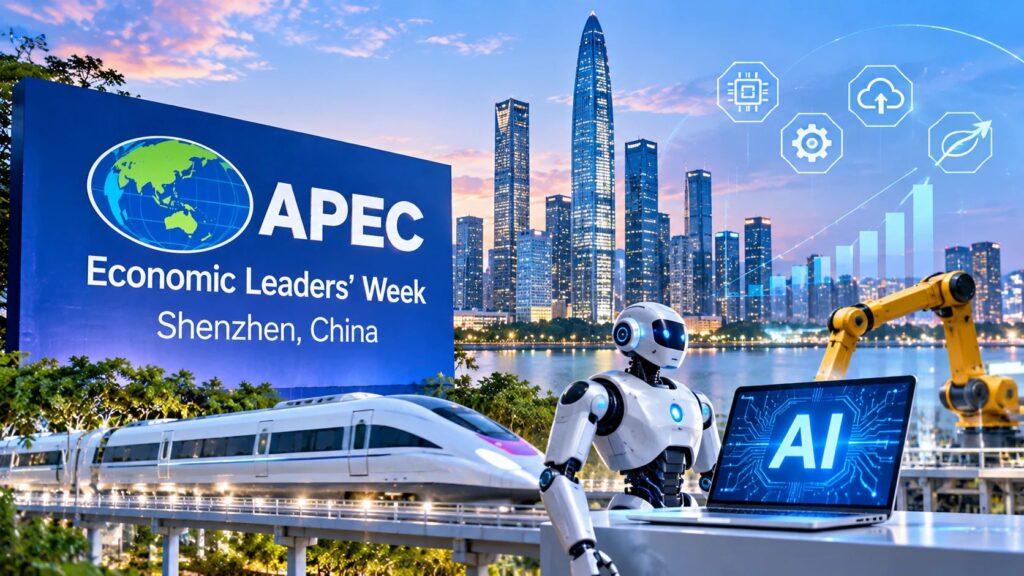
The gathering is expected to bring together leaders and representatives from Asia-Pacific economies to discuss ways of strengthening innovation, improving economic cooperation and promoting sustainable development.
China’s southern technology hub, Shenzhen, will provide the setting for discussions on how emerging technologies can create new economic opportunities throughout the region.
Technology Emerging as a Major Economic Driver
The rapid development of artificial intelligence, robotics, digital infrastructure and smart manufacturing is changing the way businesses operate across the world.
China has increasingly placed technological innovation at the centre of its economic development strategy, seeking to strengthen advanced manufacturing and develop new industries.
Shenzhen’s Qianhai district provides an example of this transformation, with autonomous vehicles, delivery drones and advanced digital technologies becoming part of its developing urban landscape.
The district has evolved from undeveloped coastal land into an important centre for innovation and international business cooperation.
Asia-Pacific Cooperation Gains Importance
The Asia-Pacific region accounts for more than 60 percent of global GDP, making regional economic cooperation particularly important for international trade and investment.
The Asia-Pacific Economic Cooperation (APEC) forum provides a platform for member economies to strengthen economic connections and address shared development challenges.
China believes that closer cooperation in technology, investment, industrial development and digital trade can help countries benefit from the latest wave of technological advancement.
Practical examples of cooperation are already emerging in different parts of the region.
In Malaysia, artificial intelligence is being used to help farmers improve durian production and predict crop development. Meanwhile, Peru’s Chancay Port is using automated equipment and advanced logistics systems to strengthen trade connections between Latin America and Asia.
Artificial Intelligence and Digital Development in Focus
Artificial intelligence is expected to be among the important subjects in discussions about the region’s economic future.
China has called for wider international cooperation in AI development, arguing that technological progress should create opportunities for developing economies rather than widen existing inequalities.
Efforts to improve access to digital infrastructure, strengthen technological capabilities and expand scientific cooperation could help reduce the digital divide between developed and developing countries.
China has also announced initiatives aimed at supporting international cooperation in artificial intelligence and improving global AI governance.
Building a More Inclusive Economic Future
Beyond technological advancement, the broader objective is to ensure that economic progress benefits societies across the Asia-Pacific.
Greater cooperation in education, research, investment and industrial development could help countries improve productivity and create new employment opportunities.
As the region prepares for the upcoming APEC gathering in Shenzhen, innovation and inclusive economic development are emerging as important themes in discussions about its future.
The challenge will be to translate technological progress and regional partnerships into practical benefits for businesses, workers and communities throughout the Asia-Pacific.