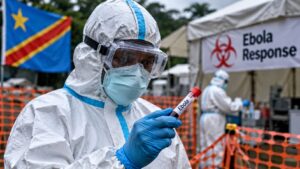
DR Congo Launches Ebola Vaccination Campaign for Frontline Health Workers
Kinshasa, September 22, 2026: The Democratic Republic of Congo has begun a major vaccination campaign targeting healthcare and other frontline workers as authorities intensify efforts to contain the country’s ongoing Bundibugyo Ebola virus outbreak.
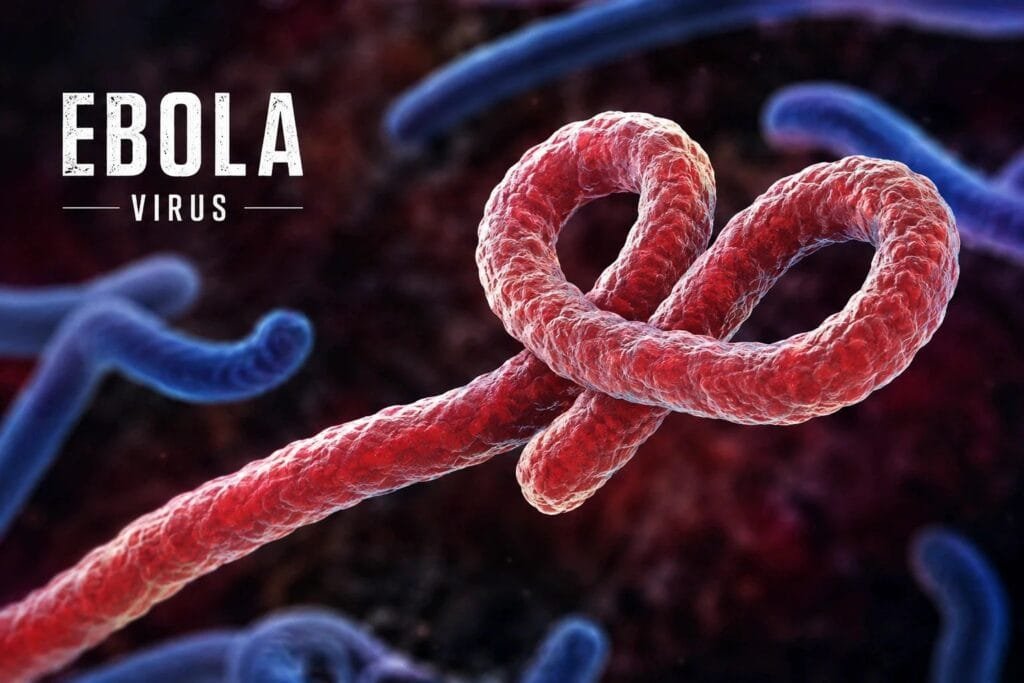
The campaign began in September in Bunia, Ituri Province, one of the main centres of the outbreak. Authorities are using the Ervebo vaccine under a research and compassionate-use framework because the current outbreak is caused by the Bundibugyo virus, while Ervebo is licensed for the Zaire species of Ebola. Its effectiveness against Bundibugyo virus in humans has not yet been established.
Thousands of cases reported
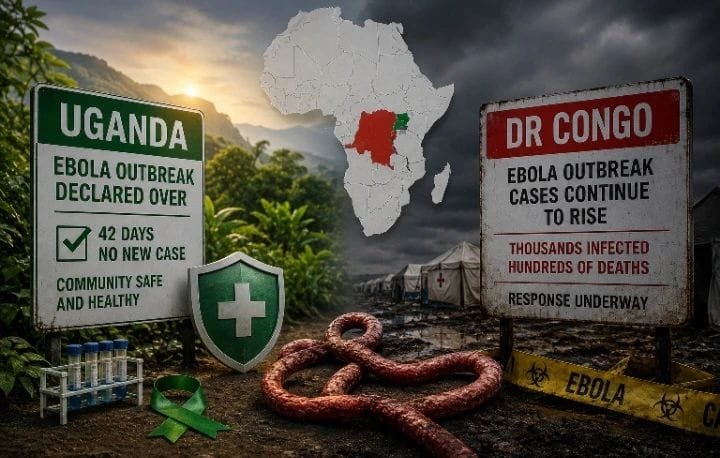
The outbreak has become one of the most serious Ebola emergencies in the Democratic Republic of Congo. WHO reported that, as of September 7, the country had recorded 6,757 confirmed cases and 3,267 deaths. The outbreak had spread across dozens of health zones in several provinces.
More recent European Centre for Disease Prevention and Control data reported 7,475 confirmed cases and 3,605 deaths as of September 16, showing that transmission has continued to expand.
Vaccination focused on frontline workers
Healthcare workers are among those at heightened risk because they can come into contact with infected patients during diagnosis, treatment and infection-control activities.
The vaccination campaign is therefore prioritising people working directly on the Ebola response. According to reports, the broader campaign is expected to involve tens of thousands of frontline workers, while a clinical research programme is being used to gather evidence about the vaccine’s effectiveness against the Bundibugyo strain.
Why the vaccine is being studied
The scientific challenge is that Bundibugyo virus differs from the Zaire ebolavirus for which Ervebo is licensed.
WHO has said that available evidence remains insufficient to support routine programme use of Ervebo against Bundibugyo virus. The organisation recommends that its use against this strain take place within a research protocol.
Researchers are consequently using the current emergency to collect evidence while continuing to develop and evaluate vaccine candidates specifically targeting Bundibugyo virus.
Outbreak remains difficult to control
The response faces several obstacles, including population displacement, insecurity, limited healthcare access and the large number of people who need to be monitored after exposure.
WHO reported that 21,359 of 24,719 identified contacts were successfully monitored during the 24 hours covered by its September 7 situation report. Contact tracing remains a crucial part of identifying possible infections before they generate additional transmission.
Some areas show progress
Despite the scale of the outbreak, health authorities have reported signs of progress in some locations.
WHO said transmission was declining in parts of Ituri, the province most heavily affected by the outbreak. However, officials have warned that the epidemic remains far from controlled because transmission continues in other areas and population movement can facilitate further spread.
Global health teams continue response
WHO, national health authorities and international partners are supporting surveillance, laboratory testing, patient care, vaccination research and community engagement.
The latest developments underline the importance of rapid diagnosis, infection prevention, contact tracing and scientifically monitored vaccination strategies in responding to Ebola outbreaks.
Health authorities continue to monitor the situation closely as the Democratic Republic of Congo works to contain the spread of Bundibugyo virus.