Senegal Bonds Slide as Political Budget Dispute Threatens $2.2 Billion IMF Rescue Package
DAKAR, November 13, 2026 — Senegal’s financial markets are facing renewed pressure as a growing political disagreement over government spending and budget plans raises concerns about the country’s ability to secure a major financial support package from the International Monetary Fund (IMF).
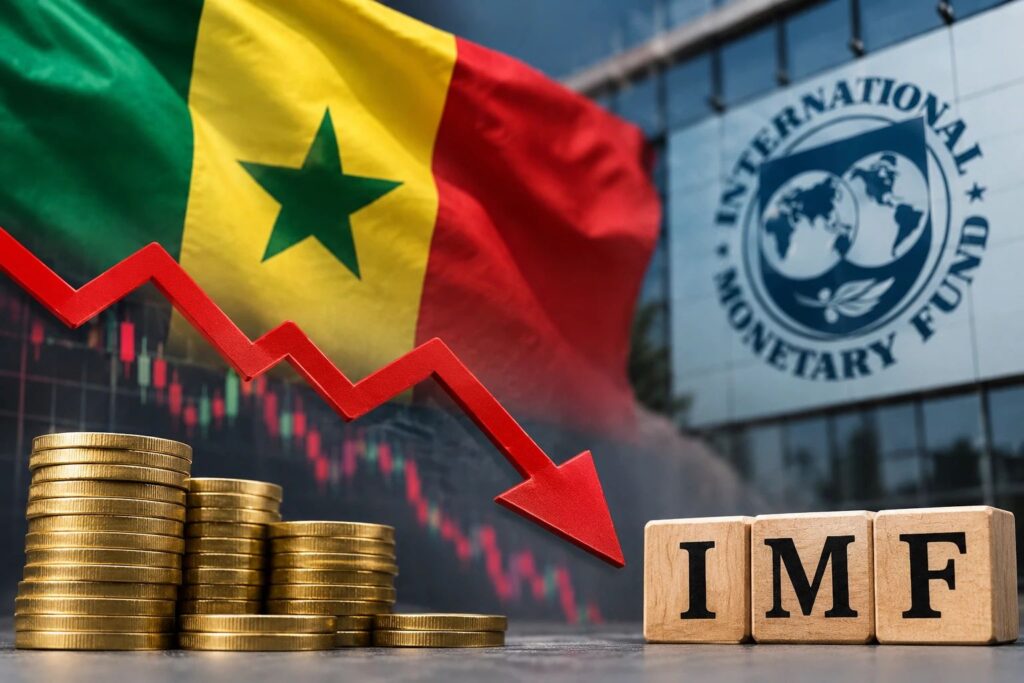
The latest uncertainty has weakened investor confidence in Senegal’s international debt, with concerns increasing that political disagreements could delay financial assistance and complicate the country’s efforts to manage its mounting debt burden.
At the centre of the crisis is a disagreement between President Bassirou Diomaye Faye’s administration and lawmakers aligned with former Prime Minister Ousmane Sonko. The political tensions have made it increasingly difficult for the government to advance important budget measures needed to meet the IMF’s requirements.
IMF Funding Faces New Uncertainty
Senegal reached a staff-level agreement with the IMF in September for a proposed $2.2 billion lending programme spread over three years. However, the agreement still requires further action before the fund’s executive board can approve the financing.
The IMF has stressed that Senegal must establish an acceptable budget framework, address problems associated with previously undisclosed public debt and obtain financing assurances from its international partners.
These requirements are particularly important because the proposed funding is expected to support Senegal’s economic recovery and broader debt restructuring efforts.
IMF officials have made clear that reaching a preliminary agreement does not automatically guarantee access to the money. Senegal must demonstrate that it can implement the agreed economic measures through its own constitutional and institutional processes.
Political Disagreement Complicates Budget Plans
The country’s budget difficulties have become more serious following resistance from lawmakers to the government’s proposed financial policies.
Parliament previously rejected an amended 2026 budget, while a parliamentary committee also raised objections to the 2027 budget proposal.
The disagreement reflects wider political tensions between President Faye and Ousmane Sonko, whose political party maintains considerable influence in the National Assembly.
Differences over government spending, energy subsidies and the country’s approach to debt management have created additional obstacles for the administration.
The IMF has avoided taking sides in Senegal’s domestic political dispute, maintaining that the responsibility for implementing agreed policies rests with the country’s authorities.
Hidden Debt Continues to Damage Investor Confidence
Senegal’s financial problems became more severe in 2024 after authorities uncovered billions of dollars in previously underreported public liabilities.
The discovery significantly changed assessments of the country’s financial position and raised questions about the reliability of earlier government debt figures.
The revelations forced international investors to reassess Senegal’s ability to repay its obligations and increased pressure on the government to introduce stronger financial controls.
The country is now attempting to restore confidence through fiscal reforms and negotiations with international creditors.
However, disagreements over the appropriate debt restructuring strategy could make the process more complicated.
Investors Watch the Next Political Decisions
The latest developments have created uncertainty for international bondholders and other creditors who are closely monitoring Senegal’s negotiations with the IMF.
A prolonged political standoff could delay financial support, increase borrowing pressures and make the country’s debt restructuring more difficult.
For the government, securing IMF approval remains an important step toward rebuilding economic credibility and attracting additional international financing.
The coming weeks will therefore be critical for Senegal as political leaders attempt to resolve budget disagreements and demonstrate their commitment to financial reforms.
The country’s ability to balance domestic political priorities with international financial obligations could determine how quickly it regains investor confidence and moves toward economic stability.