Singapore and China Strengthen Economic Cooperation Amid Growing Global Uncertainty
Singapore and China are seeking to deepen their longstanding partnership as both countries look to strengthen regional economic connectivity, expand technological cooperation and promote shared prosperity across the Asia-Pacific region.
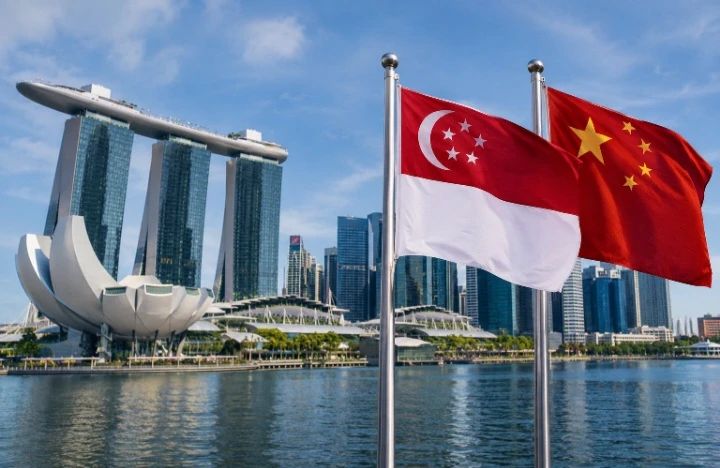
Singapore Prime Minister Lawrence Wong highlighted the importance of stronger bilateral relations in an opinion article published by Xinhua on November 18, ahead of his visit to China for the 2026 Asia-Pacific Economic Cooperation (APEC) Economic Leaders’ Meeting in Shenzhen and8 subsequent meetings in Beijing.
Wong emphasized that maintaining open economies, strengthening international connections and promoting cooperation are increasingly important at a time when geopolitical tensions and trade restrictions are creating uncertainty for the global economy.
Shenzhen Provides a Platform for Regional Cooperation
Shenzhen is hosting this year’s APEC Economic Leaders’ Meeting, bringing together representatives from economies across the Asia-Pacific region.
Wong described Shenzhen’s transformation from a small town into an international technology and innovation centre as an example of the economic opportunities created through investment, openness and international engagement.
The city has become an important centre for advanced manufacturing, technology development and international business.
Its development also demonstrates the potential of economic reforms and global connectivity to accelerate industrial growth and improve living standards.
Singapore and China Expand Longstanding Partnership
Diplomatic relations between Singapore and China were established in 1990, although cooperation between the two countries began much earlier.
Over the decades, bilateral relations have expanded across trade, investment, infrastructure, technology and education.
Wong highlighted three major government-to-government cooperation projects:
- Suzhou Industrial Park: Established to support industrial development and investment.
- Tianjin Eco-City: Developed to explore sustainable urban development and environmentally friendly living.
- Chongqing Connectivity Initiative: Designed to strengthen trade and transportation connections between western China and Southeast Asia.
These initiatives demonstrate how both countries have developed practical cooperation in response to changing economic priorities.
Digital Economy and Artificial Intelligence Create New Opportunities
Singapore and China are also looking to expand cooperation in emerging industries.
Artificial intelligence, digital technology, sustainability and innovation are becoming increasingly important areas of bilateral engagement.
Both countries face challenges involving technological transformation, ageing populations, workforce development and the transition towards greener economic growth.
Wong emphasized that cooperation in emerging technologies could help businesses improve productivity, develop new industries and create employment opportunities.
The digital economy is also becoming an increasingly important component of regional trade and investment.
Regional Trade Faces Growing Challenges
The Singaporean prime minister also addressed increasing geopolitical tensions and the expansion of international trade barriers.
He acknowledged that governments have legitimate reasons to protect their economies and strengthen supply-chain security.
However, he argued that economic openness and resilience should complement each other rather than operate as competing objectives.
Stronger regional connections and diversified supply chains can help economies withstand international disruptions while maintaining access to investment, technology and global markets.
ASEAN Cooperation Remains a Major Priority
Singapore is preparing to assume the ASEAN chairmanship in 2027, creating additional opportunities to strengthen economic cooperation across Southeast Asia.
Wong highlighted the importance of deeper regional integration and stronger partnerships with countries outside ASEAN, including China.
The upgraded ASEAN-China Free Trade Area is expected to provide additional opportunities in areas such as digital commerce, green development, innovation and supply-chain connectivity.
These developments could help businesses access wider regional markets and strengthen commercial relationships.
APEC Partnership Focuses on Shared Prosperity
China’s 2026 APEC theme, “Building an Asia-Pacific Community to Prosper Together,” reflects the importance of regional openness, innovation and cooperation.
Singapore supports efforts to achieve practical outcomes through the APEC platform and strengthen economic relationships among participating economies.
The country is also preparing to chair APEC in 2030, providing another opportunity to contribute to regional economic cooperation.
Singapore and China Look Towards Future Cooperation
The latest diplomatic engagement highlights the continuing importance of Singapore-China relations in the wider Asia-Pacific economy.
Both countries are seeking opportunities to expand trade, attract investment, develop emerging technologies and improve regional connectivity.
As international economic conditions become more complicated, Singapore and China are emphasizing dialogue, cooperation and stronger economic networks as important foundations for long-term development.
Their partnership is expected to remain an important part of the broader effort to promote a more connected, resilient and prosperous Asia-Pacific region.