Global Oil Prices Crash Nearly 9% as US Election Results Raise Hopes of Iran Peace Deal
International crude oil prices have experienced a dramatic decline, with Brent crude falling nearly 9% in a single trading session. The sharp drop came as investors reassessed geopolitical risks following the latest United States midterm election results.
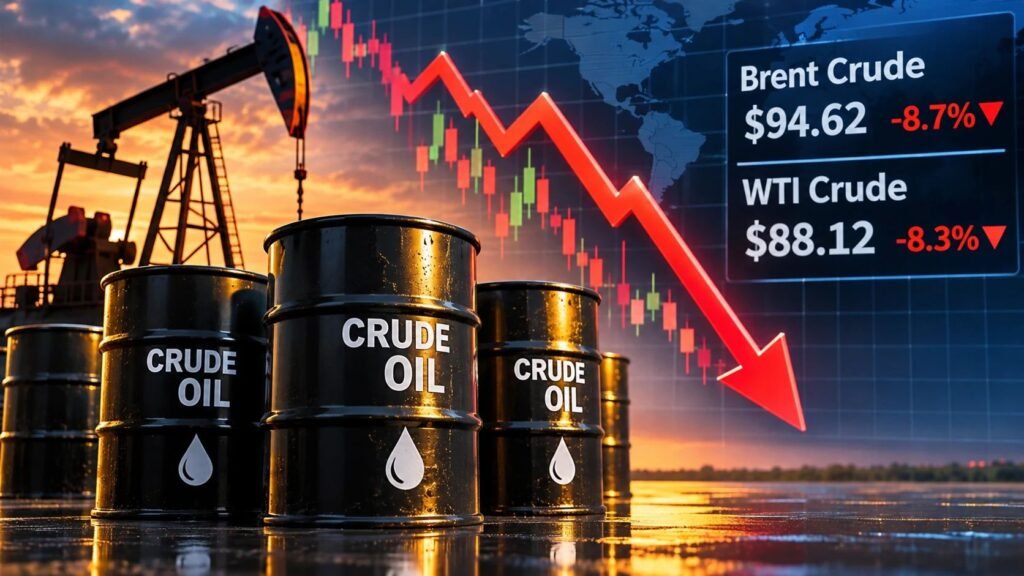
Brent crude, the global benchmark for oil prices, settled at $94.62 per barrel on Wednesday, November 4, marking a decline of $8.98, or approximately 8.7%.
Meanwhile, US West Texas Intermediate (WTI) crude dropped $7.97, or 8.3%, to close at $88.12 per barrel.
Both benchmarks recorded their lowest closing prices since August 31, 2026.
Why Are International Oil Prices Falling?
One of the biggest factors behind the decline is changing market sentiment surrounding the conflict involving the United States, Israel and Iran.
The Democratic Party’s strong performance in the US midterm elections has increased expectations that political pressure could encourage the Trump administration to pursue diplomatic negotiations.
Investors believe that a possible reduction in military tensions could improve the security of oil transportation routes and increase the availability of energy supplies from the Gulf region.
As a result, traders have started reducing the geopolitical risk premium previously reflected in crude oil prices.
However, a diplomatic agreement has not yet been confirmed, and uncertainty remains.
Brent Crude Falls Below the $95 Mark
The latest trading session delivered one of the largest daily declines in international oil prices in recent months.
Key market figures included:
- Brent crude: $94.62 per barrel, down 8.7%.
- WTI crude: $88.12 per barrel, down 8.3%.
- Brent price decline: $8.98 per barrel.
- WTI price decline: $7.97 per barrel.
The continuing downward movement also attracted attention from energy companies, investors and international commodity traders.
What Does Cheaper Oil Mean for India?
India is one of the world’s major crude oil importers, making international petroleum prices extremely important for its economy.
A sustained decline in crude oil prices could offer several potential benefits.
1. Lower Import Expenses
Cheaper crude could reduce India’s overall petroleum import bill and help improve its external trade balance.
2. Relief From Inflation
Lower energy costs may reduce transportation and manufacturing expenses, potentially easing inflationary pressure.
3. Support for the Indian Rupee
A smaller oil import bill could reduce demand for foreign currency and provide support to the rupee, although exchange rates also depend on other economic factors.
4. Potential Relief for Consumers
If lower international prices continue and are passed through by domestic fuel retailers, consumers could eventually benefit from reduced fuel costs. However, retail petrol and diesel prices do not automatically fall whenever crude prices decline.
Oil Market Outlook: Will Prices Fall Further?
Despite the significant decline, market experts remain cautious about predicting the next direction of crude oil prices.
The future movement will largely depend on developments in the Middle East, diplomatic negotiations, global production levels and international energy demand.
If tensions ease and oil exports from the Gulf region recover, prices could face further downward pressure.
On the other hand, renewed military escalation or supply disruptions could quickly push crude prices higher again.
Conclusion
The nearly 9% decline in international crude oil prices has become one of the most significant developments in the global energy market this week.
Brent crude’s fall to $94.62 and WTI’s decline to $88.12 reflect changing investor expectations about geopolitical risks and future energy supplies.
For countries such as India, sustained lower oil prices could create economic opportunities through reduced import costs and potentially lower inflation.
Nevertheless, the global energy market remains sensitive to political developments, and investors will continue monitoring the situation closely.