King Charles Faces Growing Calls for Formal Apology Over Britain’s Role in Slave Trade
November 3, 2026
King Charles III is facing renewed calls for a formal royal apology over Britain’s historical involvement in the transatlantic slave trade, as discussions about slavery, colonialism and their lasting consequences gain attention among Commonwealth nations.
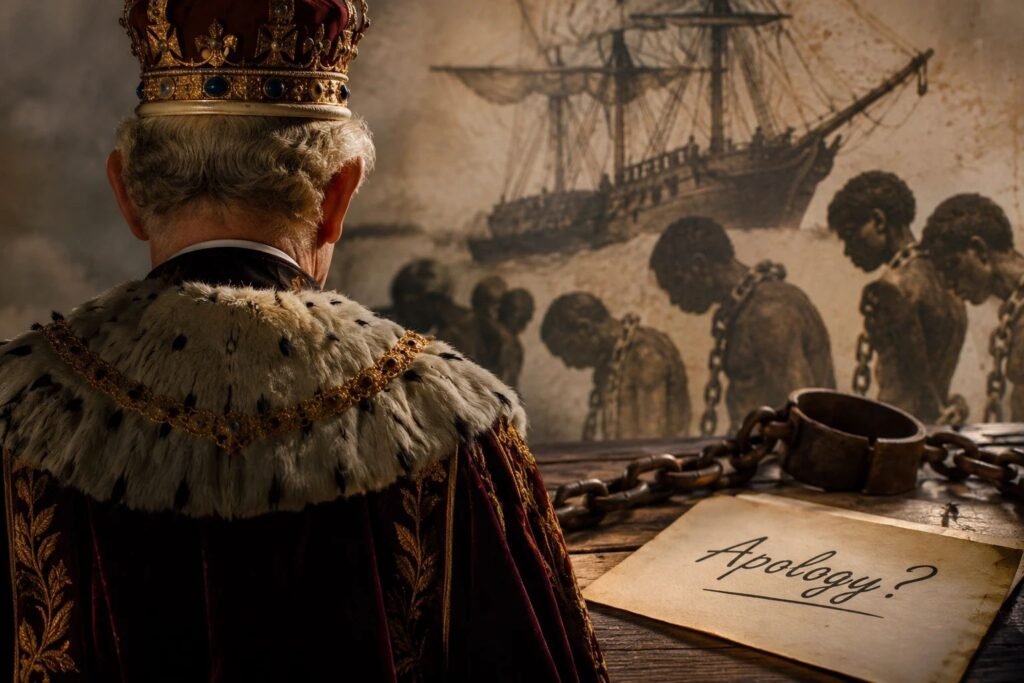
During his address to Commonwealth leaders in Antigua and Barbuda on Tuesday, the British monarch is expected to express deep sorrow over slavery and the suffering it caused across generations. However, campaigners and representatives seeking historical accountability argue that an expression of regret should be accompanied by a clear and formal apology.
The debate has also attracted attention from the British government, with Prime Minister Andy Burnham indicating that he is willing to listen to Commonwealth leaders calling for an official apology.
Commonwealth Leaders Seek Historical Recognition
The transatlantic slave trade remains one of the most painful chapters in modern history. Millions of African people were forcibly transported across the Atlantic and subjected to exploitation, violence and generations of forced labour.
Historical estimates suggest that approximately 12.8 million Africans were transported through the transatlantic slave trade. A significant proportion of those involved in this system were transported under British and Scottish flags.
Several Commonwealth representatives believe Britain should openly acknowledge the historical role of its institutions, including the monarchy, in the development and continuation of slavery.
For those advocating an apology, the issue goes beyond acknowledging past suffering. It also concerns recognising the long-term economic, social and cultural consequences experienced by communities whose ancestors were enslaved.
King Charles’ Statement Brings the Debate Back Into Focus
King Charles’ planned remarks are expected to address the painful historical legacy of slavery and its continuing impact.
The monarch’s comments are particularly significant because the British royal institution has a long historical association with the country’s imperial past.
While an expression of sorrow can recognise the suffering caused by historical events, campaigners distinguish between expressing regret and accepting responsibility through a formal apology.
They argue that an official statement could provide an opportunity for Britain to recognise the experiences of affected communities and engage more openly with its colonial history.
UK Government Signals Willingness to Listen
Prime Minister Andy Burnham’s reported openness to hearing calls for an apology has added another dimension to the discussion.
His position suggests that the issue could become part of wider conversations between Britain and Commonwealth countries about historical responsibility and relations between former colonial powers and their former territories.
However, whether the government will move beyond listening to demands and support a formal apology remains an important unanswered question.
Why the Issue Still Matters Today
The legacy of slavery continues to influence discussions about racial inequality, historical memory, economic disparities and reparative justice.
For many communities across the Caribbean and other parts of the Commonwealth, the demand for recognition is closely connected to the historical experiences of their ancestors.
Supporters of an official apology believe acknowledging the past can help establish a foundation for more meaningful dialogue. Others may question what practical measures should accompany such recognition, including education, cultural preservation and possible reparative initiatives.
These discussions involve complex historical, political and legal questions that extend beyond a single royal speech.
A Defining Moment for Britain’s Relationship With the Commonwealth
The renewed debate places the British monarchy and government under public attention as Commonwealth representatives continue raising questions about slavery and its consequences.
King Charles’ address could provide an opportunity to recognise the historical suffering associated with the slave trade. Whether Britain eventually issues a formal apology, however, will depend on decisions that go beyond the monarch’s expression of sorrow.
The wider discussion highlights an important question for Britain and its Commonwealth partners: how should modern institutions acknowledge historical injustices while building relationships based on recognition, understanding and mutual respect?