Namibia and UN Food Programme Join Forces to Strengthen School Meals and Support Local Farmers
WINDHOEK, November 2026 — Namibia has signed a new cooperation agreement with the United Nations World Food Programme (WFP) to improve school nutrition, strengthen food security and create better economic opportunities for small-scale farmers.
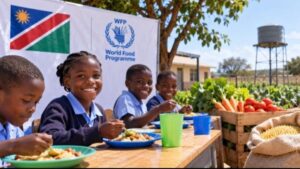
The agreement, signed in Windhoek on Monday, will support the implementation of the WFP’s 2025–2029 Country Strategic Plan, with a particular focus on school feeding programmes, agricultural development and emergency food assistance.
The partnership aims to connect local agricultural production with school meal programmes, ensuring that children receive nutritious food while creating reliable markets for smallholder farmers.
School Meals to Benefit Local Communities
The initiative will strengthen Namibia’s Home-Grown School Feeding Programme, which encourages schools to source fresh food directly from local farmers.
By purchasing vegetables and other agricultural products from nearby communities, schools can help improve children’s diets while supporting rural livelihoods.
Community and household gardens are also expected to play an important role by supplying fresh produce to educational institutions and local markets.
At the signing ceremony, I-Ben Natangwe Nashandi, executive director of Namibia’s National Planning Commission, highlighted the potential of community gardens to generate income for local growers.
Addressing Challenges in School Feeding
Despite progress in expanding school meal programmes, several practical challenges remain.
Some schools continue to face shortages of basic eating utensils, while volunteer cooks work without adequate shelter and dependable supplies of firewood.
These difficulties can affect the preparation and distribution of meals, particularly in communities with limited infrastructure.
The new partnership is expected to help strengthen national capacity and improve the practical delivery of school feeding services.
Supporting Smallholder Farmers
Agricultural development is another important component of the agreement.
Small-scale farmers often face challenges related to market access, climate conditions, agricultural inputs and supply chain infrastructure.
By linking farmers with institutional buyers such as schools, the programme aims to create more predictable demand for locally produced food.
The initiative could also encourage greater investment in community agriculture and improve income opportunities for rural households.
Strengthening Food Security and Emergency Preparedness
Beyond school nutrition, the WFP partnership will support Namibia’s ability to respond to food emergencies.
Climate-related shocks, including droughts and other extreme weather events, can threaten agricultural production and household food supplies.
Under the 2025–2029 strategic plan, the WFP will provide technical assistance and supply chain support to help the government improve emergency preparedness, strengthen social protection and assist farmers in adapting to climate challenges.
Building a More Sustainable Food System
The partnership reflects a broader effort to connect education, agriculture and social protection through locally driven food systems.
A stronger school feeding programme can provide nutritional benefits to children while supporting agricultural businesses and creating economic opportunities within communities.
For Namibia, the challenge will be to ensure that the agreement translates into practical improvements, particularly for schools and rural households facing food insecurity.
Through cooperation with the WFP, the country aims to build a more resilient food system that supports children’s health, strengthens local agriculture and improves preparedness for future emergencies.