Norway and Morocco Join Forces to Expand Renewable Energy Through Major Carbon Credit Agreement
OSLO, November 16, 2026 — Norway and Morocco have strengthened their climate cooperation through a new agreement under which Norway will purchase carbon credits generated by renewable energy projects in Morocco, supporting the expansion of solar and wind power while contributing to global emissions reduction efforts.
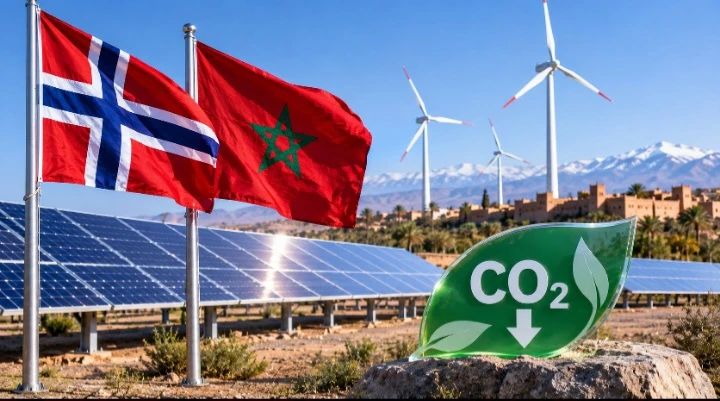
The agreement could deliver emissions reductions of up to 8.78 million metric tonnes over a ten-year period, covering projects scheduled to generate results between 2027 and 2036.
The deal was signed on the sidelines of the 31st United Nations Climate Change Conference (COP31) in Antalya, Türkiye. The Global Green Growth Institute (GGGI) helped facilitate the arrangement.
Renewable Energy Investment at the Centre of the Deal
Morocco has considerable potential for solar and wind energy, thanks to its geographical conditions and abundant renewable resources.
However, some renewable energy developments face financial and investment barriers that prevent them from moving forward.
Under the new arrangement, Norwegian funding will provide financial incentives to eligible projects, helping make additional renewable energy investments economically viable.
The programme is expected to support approximately 2 gigawatts of new renewable energy capacity, including projects involving battery storage.
Payments Linked to Verified Emissions Reductions
A key feature of the agreement is its performance-based payment structure.
Norway will pay for carbon credits only after the corresponding emissions reductions have been achieved, independently verified and transferred.
This approach is intended to strengthen transparency and ensure that payments correspond to actual environmental results.
The agreement also follows Article 6 of the Paris Agreement, which provides a framework for countries to cooperate internationally in reducing greenhouse gas emissions.
Under these rules, the same emissions reductions cannot be counted twice by participating countries.
Benefits for Morocco’s Economy
Beyond its environmental objectives, the programme is expected to generate economic benefits for Morocco.
Investment in renewable energy could encourage the development of new infrastructure, create employment opportunities and strengthen the country’s clean energy industry.
The expansion of solar and wind projects could also attract additional international investors and support the development of related industries, including energy storage and power infrastructure.
Supporting Global Climate Targets
The agreement builds on a bilateral cooperation arrangement signed by Norway and Morocco in May 2026.
It also supports Morocco’s wider ambitions to increase the contribution of renewable energy to its electricity capacity and reduce greenhouse gas emissions.
For Norway, purchasing verified carbon credits represents another mechanism for international climate cooperation under the Paris Agreement.
The partnership demonstrates how climate finance can help developing economies overcome investment barriers while contributing to global efforts to limit climate change.
A New Chapter in International Climate Cooperation
Implementation of the agreement will require continued cooperation between the two governments, renewable energy developers and international institutions.
Monitoring, reporting and independent verification will be essential to ensuring that the programme delivers measurable environmental benefits.
With the potential to support up to 8.78 million tonnes of emissions reductions over ten years, the Norway-Morocco partnership represents a significant step towards linking international climate finance with renewable energy development.