Viral Trump-Xi Naval Threats Highlight Rising US-China Tensions Over Maritime Power
A dramatic exchange of alleged military warnings attributed to US President Donald Trump and Chinese President Xi Jinping is circulating online, drawing attention to the growing strategic rivalry between Washington and Beijing.
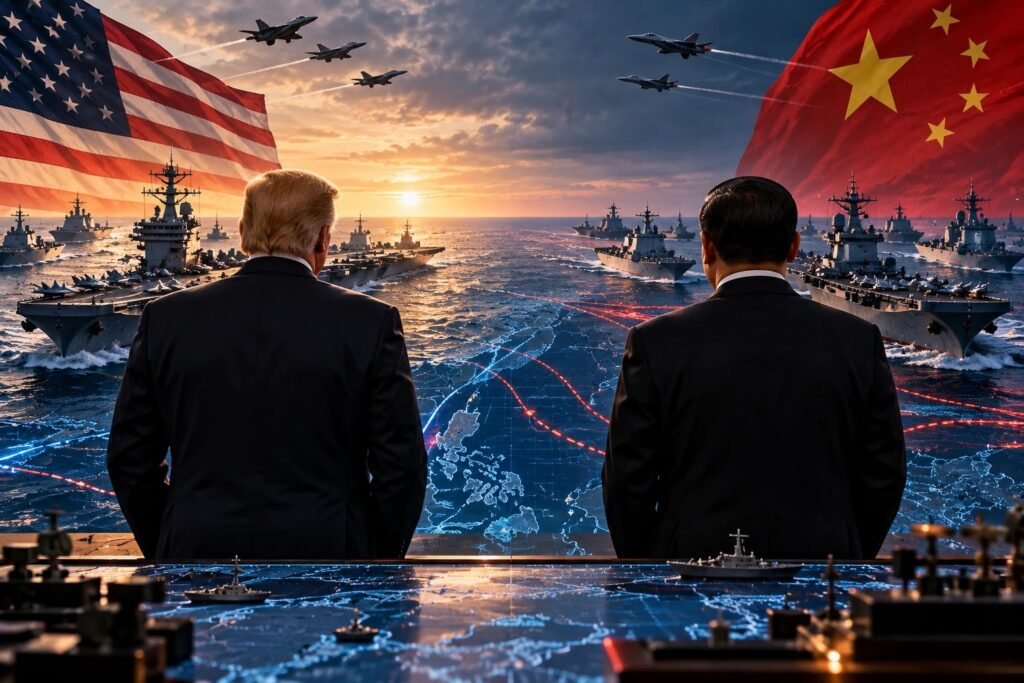
The statements describe an extreme confrontation over international shipping routes, naval deployments and control of strategically important waters. The alleged remarks portray both leaders as warning that any attack on their country’s maritime interests would trigger an overwhelming military response.
However, the authenticity of the quoted statements has not been independently established. They should not be treated as verified direct comments from either president.
Maritime Security at the Centre of Strategic Rivalry
The United States and China have competing interests across several important maritime regions, particularly the South China Sea and the wider Indo-Pacific.
Washington has consistently supported freedom of navigation and the protection of international shipping routes. Beijing, meanwhile, maintains extensive territorial and security claims in the region and has continued expanding its naval and missile capabilities.
These competing positions have created friction involving military exercises, naval patrols, territorial disputes and the movement of warships through contested waters.
US Naval Strength and China’s Military Modernisation
The United States operates a powerful global naval network supported by aircraft carriers, submarines, advanced aircraft and overseas military facilities. Its naval presence remains an important element of American influence and its security commitments to regional partners.
China has been investing heavily in modernising its armed forces, including developing advanced missiles, expanding its submarine fleet and introducing increasingly sophisticated naval platforms.
Its anti-ship missile capabilities have attracted particular attention because they could complicate the operations of foreign aircraft carrier groups near Chinese territory.
The military balance in the Indo-Pacific is therefore becoming an increasingly important issue for defence planners on both sides.
Why Shipping Routes Matter
International maritime routes are essential to global trade, energy supplies and industrial production. Any serious disruption to major shipping corridors could affect fuel prices, transportation costs, supply chains and financial markets.
The South China Sea is especially important because enormous volumes of commercial goods move through the region. The Taiwan Strait and other Indo-Pacific waterways also carry significant strategic and economic importance.
A military confrontation involving naval forces could therefore have consequences extending far beyond the countries directly involved.
The Risk of Miscalculation
Even without an intention to begin a full-scale conflict, close encounters between military vessels and aircraft can create dangerous situations.
A collision, misinterpreted military exercise or sudden escalation around a disputed maritime area could place political leaders under pressure to respond quickly.
Communication channels, military hotlines and diplomatic engagement are important tools for preventing isolated incidents from developing into a wider confrontation.
Diplomacy Remains Essential
Despite their strategic competition, Washington and Beijing have reasons to avoid direct military conflict. Both countries have major economic interests, extensive international responsibilities and significant security concerns.
Maintaining communication, respecting international maritime rules and establishing clear procedures for military encounters could help reduce the danger of an unintended escalation.
The viral statements may be unverified, but the broader issue they highlight is real: competition between the United States and China over naval power, maritime access and regional influence remains one of the most consequential challenges facing international security.