The AI Revolution Turns on Its Creator: Jensen Huang Becomes the Face of Viral Memes After Nvidia Controversy
The technology that helped Nvidia dominate the artificial intelligence industry is now being used to create viral videos and internet jokes targeting its former chief executive, Jensen Huang.
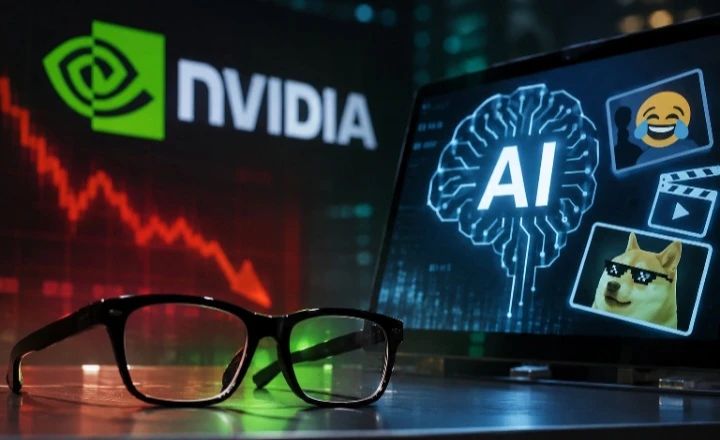
Artificial intelligence has transformed the way people create content, communicate and consume entertainment. However, the latest controversy surrounding Nvidia co-founder Jensen Huang has demonstrated another unexpected side of the technology: AI can turn even the most influential technology leaders into internet sensations for entirely different reasons.
Huang, who spent decades building Nvidia into one of the world’s most influential technology companies, has become the subject of a wave of AI-generated memes, manipulated videos and satirical social media posts. The irony is difficult to overlook. The same AI ecosystem that Nvidia helped develop is now being used to produce content mocking the company’s former leader.
How Jensen Huang Became an Internet Meme
The controversy surrounding Huang has attracted widespread attention across social media platforms following reports about his alleged extramarital relationships and questions involving possible foreign intelligence connections.
These developments have inspired internet users to create humorous videos, fictional movie scenes and digitally manipulated images featuring the Nvidia co-founder.
Some creators have recreated popular Hollywood movie sequences, while others have placed Huang into familiar music videos, television shows and viral internet moments. Bollywood-inspired parodies and fictional spy-themed trailers have also become part of the online conversation.
The growing popularity of these posts demonstrates how quickly a major business controversy can become an internet entertainment phenomenon.
Importantly, the AI-generated videos are fictional recreations, not evidence of events actually involving Huang.
Nvidia’s Own Technology Adds to the Irony
Perhaps the most interesting aspect of this situation is the technology behind the memes.
Nvidia has become a central force in the generative AI industry by developing powerful graphics processing units (GPUs) used to train and operate advanced artificial intelligence systems.
Its hardware supports a broad ecosystem of AI applications, including image generators, video creation platforms and sophisticated machine-learning models.
Now, creators are using AI-powered software and computing resources to generate content featuring Huang in situations that never happened.
This creates an unusual situation in which technology associated with a company’s success becomes part of the online conversation surrounding its leadership crisis.
The episode also illustrates how accessible generative AI has become. Content that previously required professional video editing, expensive equipment and considerable technical expertise can now be produced using relatively accessible AI applications.
From Hollywood Parodies to Viral Deepfakes
The memes circulating online are not limited to simple photographs or edited images.
Several creators have produced sophisticated AI-generated videos that recreate recognisable scenes from entertainment and popular culture.
Among the formats attracting attention are:
- Movie-inspired parodies: AI-generated versions of famous cinematic scenes featuring Huang.
- Music video recreations: Humorous edits that place his likeness into familiar songs and performances.
- Bollywood-style productions: Fictional spy stories and dramatic movie sequences inspired by the controversy.
- Television-inspired comedy: AI recreations featuring Huang in fictional workplace and entertainment scenarios.
- Relationship-themed memes: Satirical edits referencing the allegations and public discussion surrounding his personal life.
The realism of some of these videos has also raised questions about the ability of ordinary viewers to distinguish authentic recordings from synthetic media.
The Bigger Problem: AI Makes Digital Manipulation Easier
Beyond the entertainment value, the incident highlights an important challenge facing the technology industry.
Generative AI tools are becoming increasingly capable of creating realistic human faces, voices and video sequences. While these capabilities offer opportunities for filmmakers, advertisers, educators and independent creators, they also make it easier to produce misleading digital material.
A convincing AI-generated video can spread across social media before viewers have an opportunity to verify its authenticity.
Public figures are particularly vulnerable because their photographs, interviews and public appearances provide abundant material for AI-generated recreations.
The Huang controversy therefore offers a timely example of why digital literacy, content verification and clear AI disclosure are becoming increasingly important.
Social media users should not automatically interpret realistic-looking videos as genuine evidence.
What the Controversy Could Mean for Nvidia
Although memes have dominated much of the online discussion, the situation also raises more serious questions about Nvidia’s future.
The company occupies a central position in the global artificial intelligence market. Its GPUs are essential to numerous data centres, cloud computing platforms and AI development projects.
Any major disruption to its leadership can therefore attract attention well beyond the company’s immediate shareholders.
Reports surrounding Huang’s departure have also created uncertainty among investors, technology executives and businesses connected to Nvidia’s AI ecosystem.
The company’s next leadership decisions, its ability to maintain customer confidence and the continuity of its strategic partnerships will be important factors in determining its future direction.
The broader AI industry will also be watching closely because Nvidia’s influence extends across semiconductor manufacturing, AI infrastructure and software development.
A New Reality for Technology Leaders in the AI Era
The situation involving Huang reflects a broader change in the relationship between technology companies, their executives and the public.
In the past, corporate controversies were primarily discussed through traditional news outlets, financial publications and television interviews.
Today, social media users can transform breaking developments into thousands of visual jokes, parody videos and AI-generated narratives within hours.
Generative AI has accelerated this process by making content creation faster, cheaper and more accessible.
For technology executives, this creates a new reputational challenge. Their public image can become part of an online narrative that is difficult to control, especially when realistic synthetic media is involved.
Conclusion: When the AI Revolution Becomes Its Own Satire
Jensen Huang’s unexpected appearance at the centre of an AI-generated meme storm represents one of the more ironic developments in the technology world.
Nvidia helped supply the computing infrastructure behind the modern AI revolution. Yet that same technological progress has enabled internet creators to turn the company’s former chief executive into a character in fictional movies, viral videos and digital comedy.
Beyond the jokes, the episode highlights two important realities: artificial intelligence is changing the economics of digital content creation, and the growing sophistication of synthetic media is making online authenticity increasingly difficult to establish.
The technology industry may have spent years discussing how AI could transform entertainment and business. The latest events demonstrate that it can also transform the way the public responds to corporate controversy.