Israel Kills Senior Hamas Commander in Gaza as Middle East Tensions Escalate; Jordan Sentences Three Men to Death Over Church Attack
MIDDLE EAST — Tensions across the Middle East have intensified following a series of military, security and political developments, including an Israeli airstrike that killed a senior Hamas commander in southern Gaza, Jordan’s decision to sentence three men to death over a deadly church attack, and Iran’s claim that it struck an American radar installation in Bahrain.
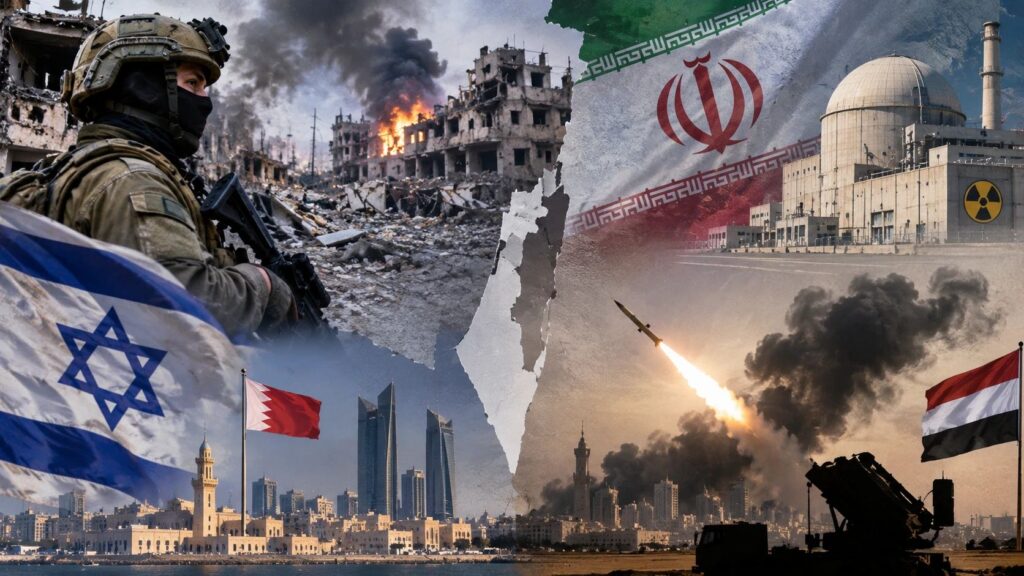
The developments come as the region continues to experience instability involving Israel, Gaza, Iran, Yemen and neighbouring countries. Meanwhile, Yemen’s Houthi rebels have announced the release of approximately 600 detainees, marking the largest unilateral prisoner release in the country’s 12-year civil war.
The latest developments highlight the increasingly complicated security situation across the Middle East, where military confrontations, regional rivalries and humanitarian challenges continue to affect millions of people.
Israel Says Airstrike Killed Senior Hamas Commander in Southern Gaza
Israeli forces have killed a senior Hamas commander in an overnight airstrike in southern Gaza, according to the Israeli military.
Hamas confirmed the death of Samir Mahmoud Hassan Abu Younis, identified as the commander of its Rafah Brigade. The group said a funeral would be held for him.
The Israeli military said Abu Younis had been involved in rebuilding Hamas’s military capabilities and directing plans for attacks against Israel.
The strike took place shortly after midnight in southern Gaza. Israeli forces also said they targeted other Hamas militants during the operation but did not provide additional details.
The killing comes approximately two months after another Israeli strike killed Abu Younis’s predecessor.
The latest operation highlights the continuing military confrontation in Gaza and the fragile security situation despite international efforts to reduce hostilities.
Meanwhile, the recovery of Palestinian remains from buildings destroyed during Israeli strikes has added to the humanitarian concerns in the territory.
Jordan Sentences Three Men to Death Over Deadly Church Attack
In another major development, Jordan’s State Security Court sentenced three men to death in connection with a deadly shooting at St. George’s Greek Orthodox Church in Karak.
The attack occurred on October 23 when gunmen targeted mourners attending a funeral at the church in Hamoud village, south of the capital, Amman.
Nine people were killed and dozens of others wounded, making it one of the deadliest attacks against Jordan’s Christian community in decades.
The three defendants, identified as two brothers and their brother-in-law, were arrested three days after the shooting following a confrontation with security forces.
Jordanian authorities described the men as followers of an extremist ideology but said they were not affiliated with an organised group. No organisation claimed responsibility for the attack.
The defendants were charged with carrying out terrorist acts.
The court’s decision reflects the seriousness with which Jordanian authorities are treating the attack and the threat of extremist violence against religious communities.
Yemen’s Houthis Release Approximately 600 Detainees
Yemen’s Iran-backed Houthi movement announced the release of approximately 600 detainees captured during the latest escalation of fighting.
According to Abdul-Qader al-Murtaza, a Houthi official responsible for prisoner affairs, the release represents the largest unilateral prisoner release during the country’s 12-year civil war.
The development could provide relief to hundreds of families who have been waiting for information about detained relatives.
However, the broader conflict remains unresolved, with fighting and territorial disputes continuing across several parts of Yemen.
A group aligned with Yemen’s internationally recognised government, known as the Southern Armed Forces, also announced the withdrawal of its fighters from areas near the strategically important Bab el-Mandeb Strait.
The group said it would concentrate on securing the southern city of Aden and attempting to break the Houthi siege of Taiz.
The withdrawal has strengthened the Houthis’ control over important coastal territory along the Red Sea, creating additional concerns about regional maritime security.
UN Raises Alarm Over African Refugees in Yemen
The United Nations refugee agency has expressed concern about the impact of renewed fighting on vulnerable refugee communities in Yemen.
Clashes between Houthi fighters and government-aligned forces have been reported in Lahj province, where important supply routes pass near the Bab el-Mandeb Strait.
The area includes a refugee camp sheltering thousands of African refugees.
The UN refugee agency warned that the fighting was obstructing its humanitarian operations and affecting assistance to approximately 9,600 refugees.
The situation highlights the additional risks faced by displaced populations who are already struggling with limited access to food, healthcare and safe shelter.
Humanitarian organisations have warned that continued instability could further complicate efforts to protect refugees and deliver essential assistance.
Iran Claims It Struck US Radar Installation in Bahrain
Iran’s Islamic Revolutionary Guard Corps claimed that it struck a radar system at an American helicopter base in Bahrain.
The claim was reported by Iran’s state-run IRNA news agency.
However, the US military’s Central Command did not immediately comment on the latest allegation.
The development follows an earlier statement by US Central Command that American forces had intercepted two Iranian drones heading towards Bahrain.
Washington had also rejected an earlier Iranian claim that an American early-warning radar system in Bahrain had been struck.
Bahrain’s military separately announced that its air defence systems had intercepted several Iranian projectiles before they reached their intended targets.
The country’s Interior Ministry also issued two nationwide security alerts warning residents about a potential threat.
The incidents have increased concerns about the possibility of further military escalation involving Iran, Bahrain and American forces stationed in the region.
Saudi Arabia Intercepts Houthi Missiles Targeting Riyadh
Saudi Arabia also reported intercepting two ballistic missiles launched by Houthi forces towards Riyadh.
Saudi military spokesman Major General Turki al-Malki said the country’s air defence systems successfully destroyed both missiles.
Two additional drones were reportedly intercepted over Saudi Arabia’s Eastern Province, an important region for the country’s oil industry.
The developments represent another escalation in tensions between Saudi Arabia and Yemen’s Houthi movement.
The renewed confrontation comes after a period of relative calm following a ceasefire that had reduced fighting for more than four years.
The latest missile and drone incidents have raised concerns about the security of Saudi territory and critical energy infrastructure.
Iran Rejects German Demand to Stop Uranium Enrichment
Separately, Iran rejected Germany’s demand that Tehran halt uranium enrichment.
Iranian Foreign Ministry spokesperson Esmail Baghaei said the country had the right to enrich uranium under the Nuclear Non-Proliferation Treaty.
He argued that Iran’s nuclear rights were not dependent on approval from Germany, France or other countries.
Baghaei also criticised the International Atomic Energy Agency, accusing the UN nuclear watchdog of making speculative assessments about a possible new uranium enrichment facility in Isfahan.
He said Iran’s access to nuclear facilities had been disrupted during the war involving the United States and Israel but maintained that the country had not suspended its safeguards obligations.
When questioned about the possibility of renewed American military strikes, Baghaei warned that Iran would respond to any attack.
The disagreement highlights the continuing tensions surrounding Iran’s nuclear programme and the wider diplomatic challenges facing international efforts to address the issue.
Middle East Faces Multiple Security and Humanitarian Challenges
The latest developments demonstrate how instability across the Middle East is affecting several countries simultaneously.
In Gaza, the killing of a senior Hamas commander highlights the continuing confrontation between Israeli forces and Hamas.
In Jordan, the death sentences following the church attack have brought renewed attention to the threat of extremist violence against religious communities.
Yemen continues to face a prolonged civil war, with the latest prisoner release offering some relief while fighting around strategically important areas continues.
Meanwhile, Iran’s claims concerning American military infrastructure in Bahrain and the continuing dispute over uranium enrichment have added further pressure to an already tense regional environment.
The situation is also creating challenges for humanitarian organisations working to support refugees and displaced communities.
As military and diplomatic developments continue, the security of civilians, protection of religious communities and stability of important maritime routes remain major concerns.
The region’s future stability will depend on whether diplomatic engagement can prevent further escalation and create conditions for lasting political solutions.