Marco Rubio Launches Strong Attack on International Criminal Court, Defends US Sovereignty
WASHINGTON, November 14, 2026 – US Secretary of State Marco Rubio has delivered a forceful speech criticizing the International Criminal Court (ICC), arguing that international legal institutions should not have the authority to restrict America’s ability to protect its national interests.
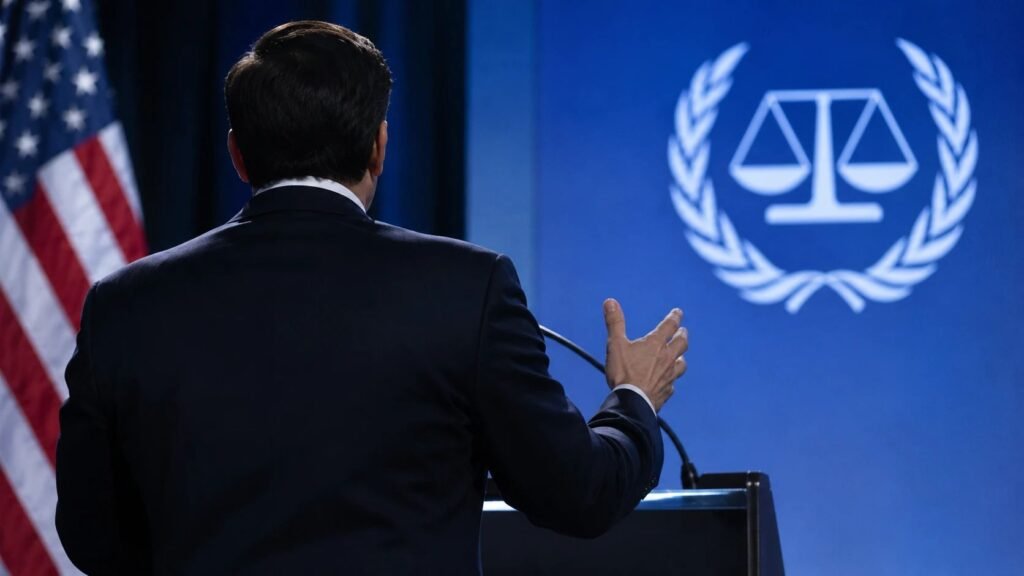
Speaking at the Federalist Society’s National Lawyers Convention in Washington on Friday, Rubio challenged the growing influence of international institutions and accused powerful global organizations of using legal principles to interfere with the decisions of sovereign governments.
His remarks highlighted the Trump administration’s increasingly confrontational position toward international legal bodies, particularly the ICC, which has faced strong opposition from Washington over its investigations and potential legal actions involving American and allied officials.
Rubio Questions the Authority of International Courts
During his address, Rubio argued that the United States should not be expected to follow decisions made by an international tribunal whose authority Washington has never formally accepted.
He expressed concern that the ICC could investigate, prosecute and potentially pursue American citizens despite the country’s decision not to become a member of the court.
Rubio also questioned whether international legal institutions were applying their principles consistently, suggesting that powerful organizations were increasingly using legal arguments to advance political objectives.
He warned that the United States would resist any attempt by international authorities to enforce their decisions against American citizens.
International Criminal Court Becomes a Major Point of Conflict
The ICC has become a significant source of tension between Washington and international institutions.
The court investigates and prosecutes individuals accused of serious international crimes, including genocide, war crimes and crimes against humanity.
However, the United States has never ratified the Rome Statute, the treaty that established the ICC.
The Trump administration has strongly opposed the court’s actions involving Israeli leaders and its investigations concerning American conduct abroad.
Washington has already introduced sanctions targeting ICC officials and has threatened additional measures unless the court changes its approach.
Rubio reiterated that the administration considers the tribunal’s attempts to exercise jurisdiction over nationals of non-member countries unacceptable.
US Foreign Policy Must Remain Independent, Rubio Says
Beyond the ICC dispute, Rubio used his speech to defend the broader foreign policy direction of President Donald Trump’s administration.
He argued that international legal standards should not prevent Washington from taking action when American security interests are involved.
His comments touched on several controversial administration policies, including operations against suspected drug-smuggling vessels, the capture of Venezuelan leader Nicolás Maduro and the military confrontation involving Iran.
Rubio maintained that American leaders must retain the freedom to make decisions based on national security rather than allowing international organizations to determine the country’s foreign policy.
Speech Raises Questions About Rubio’s Political Future
The address has also attracted political attention because of its timing and the prominent position Rubio occupies within the Trump administration.
The speech came shortly after Republicans suffered significant losses in the November 3 midterm elections, creating fresh questions about the party’s political direction.
Rubio’s appearance before the conservative legal organization has renewed speculation about his possible ambitions in the 2028 presidential race.
He is frequently mentioned as a potential Republican presidential contender, although he has previously rejected suggestions that he is preparing to leave his current position to pursue a campaign.
His message at the convention also reflected a broader effort to strengthen the administration’s relationship with conservative legal thinkers and institutions.
International Legal Disputes Could Intensify
Rubio’s remarks underline the continuing disagreement between the United States and international institutions over the limits of national sovereignty and the authority of international law.
Supporters of the administration’s position argue that countries should not be subjected to international judicial decisions without accepting the relevant legal framework.
On the other hand, supporters of international accountability maintain that global institutions play an essential role in addressing serious crimes and preventing powerful individuals from escaping justice.
The disagreement is likely to remain a significant diplomatic issue as Washington considers further action against the ICC.
For now, Rubio’s speech sends a clear message about the administration’s position: the United States intends to protect its independence in international affairs and strongly oppose external legal authority that it considers illegitimate.